
Foods to gain muscle: what to eat if you train calisthenics
Discover what foods to eat to gain muscle while training calisthenics. A complete list of proteins, carbohydrates, and healthy fats with examples and practical tips.

Creatine is one of the most researched supplements in the world of sports, and even so, it still raises a lot of questions, especially among people who train calisthenics. Unlike weight training, bodyweight training makes many people wonder whether creatine really makes sense for them or whether its benefits only apply to other disciplines.

In reality, creatine can also be a very useful tool for calisthenics. It not only helps improve strength, but can also influence performance and recovery, both of which are key if you want to progress in exercises like pull-ups, dips, or the muscle-up. Still, many people are not sure whether it is actually worth taking, how they should use it, or how much they need.
In this article, I will clearly explain, based on scientific evidence, what creatine is, how it works, and how you can use it to improve your performance if you train calisthenics.
Creatine is a substance that the body produces naturally and that can also be obtained through food, mainly from animal-based foods such as meat and fish. Around 95% of the body’s creatine is stored in the muscles.
Its main role is related to energy production. More specifically, creatine helps regenerate ATP (adenosine triphosphate), which is the body’s main energy source during short, intense efforts.
When you perform a demanding exercise, such as a set of pull-ups or a handstand attempt, ATP is depleted quickly. Creatine, in the form of phosphocreatine, helps regenerate it faster, allowing you to maintain performance for longer.
This makes it especially useful for:
In short, creatine helps improve the body’s ability to produce energy at key moments in training, which translates into better performance.
Creatine is not exclusive to weight training. Its effects are also highly relevant in calisthenics, where relative strength and the ability to repeat hard efforts are essential.
One of the main benefits of creatine is increased strength. In calisthenics, this translates directly into better performance in exercises like pull-ups, dips, and push-ups.
By improving your ability to produce force, it becomes easier to add reps or progress to more advanced variations, such as weighted pull-ups or the muscle-up.

Creatine allows you to maintain higher intensity during training. This can lead to:
By improving recovery between efforts, creatine makes it easier to accumulate more training volume. This matters for progress, since a greater training stimulus often leads to better adaptations.
Creatine may also help reduce fatigue and improve recovery between sessions. This can make it easier to train more frequently or maintain performance on consecutive days.
Taken together, these benefits make creatine a useful tool for anyone who trains calisthenics regularly.
One of the most common training goals is gaining muscle mass, and creatine can help with that, although not directly.
Creatine does not create muscle automatically. Its effect is indirect: it improves performance, which allows you to train better and create a greater muscular stimulus.

If you can do more reps or train at a higher intensity, your muscles receive a greater stimulus. Over time, this can support muscle growth.
Creatine increases the water content inside muscle cells. This may create a more favorable environment for protein synthesis and performance.
In short, creatine helps with muscle gain because it improves the quality of your training, not because it directly causes muscle growth.
The most commonly used dose, and the one best supported by evidence, is 3 to 5 grams per day. This is enough to gradually saturate muscle stores and provide its benefits.

A loading phase consists of taking high doses for a few days in order to saturate muscle stores more quickly.
However, it is not necessary. You can choose to:
In the long term, the results are the same.
The most recommended form is creatine monohydrate, since it is the most studied and most effective. It is important to choose one with the Creapure quality seal.
There is no need to use more expensive or more complex versions.
You can take it:
What matters is consistency, not the exact way you take it.
Scientific evidence shows that timing does not have a significant impact on results.
The most important thing is consistency. For creatine to work, muscle levels need to stay elevated.
That means:
If you want to choose a moment, you can take it after training or with a meal, but it is not a deciding factor.

Creatine is one of the supplements with the strongest scientific support when it comes to safety.
Studies have shown that its use is safe in healthy people, even over the long term.
It is recommended to stay well hydrated, since creatine increases water content inside the muscle.
Some of the most common myths are:
As always, it should be used within the recommended doses and by healthy individuals.
Avoiding these mistakes is key if you want to get the most out of its benefits.
Yes, it is.
Even though calisthenics is based on bodyweight training, it is still a form of strength training. That is why creatine can be useful if your goal is to:
Exercises like pull-ups, dips, handstands, or the muscle-up require strength and the ability to repeat intense efforts, both of which creatine can help improve.
Creatine is a supplement backed by solid evidence that can help improve your performance in calisthenics. It is not essential, but it can make a difference in your progress if used correctly.
The most important thing is to understand that its effect depends on the bigger picture: training, nutrition, and consistency.
If you want to apply all of this to your training and improve your performance in calisthenics, you can rely on structured programs like the ones in Calisteniapp, designed to help you build strength and master key exercises step by step.
Quiz personalizzato
Rispondi a 7 domande rapide e ti consiglieremo il programma più adatto.
Unisciti alla nostra newsletter
Impara tutto quello che devi sapere sulla calisthenica
Discover what foods to eat to gain muscle while training calisthenics. A complete list of proteins, carbohydrates, and healthy fats with examples and practical tips.
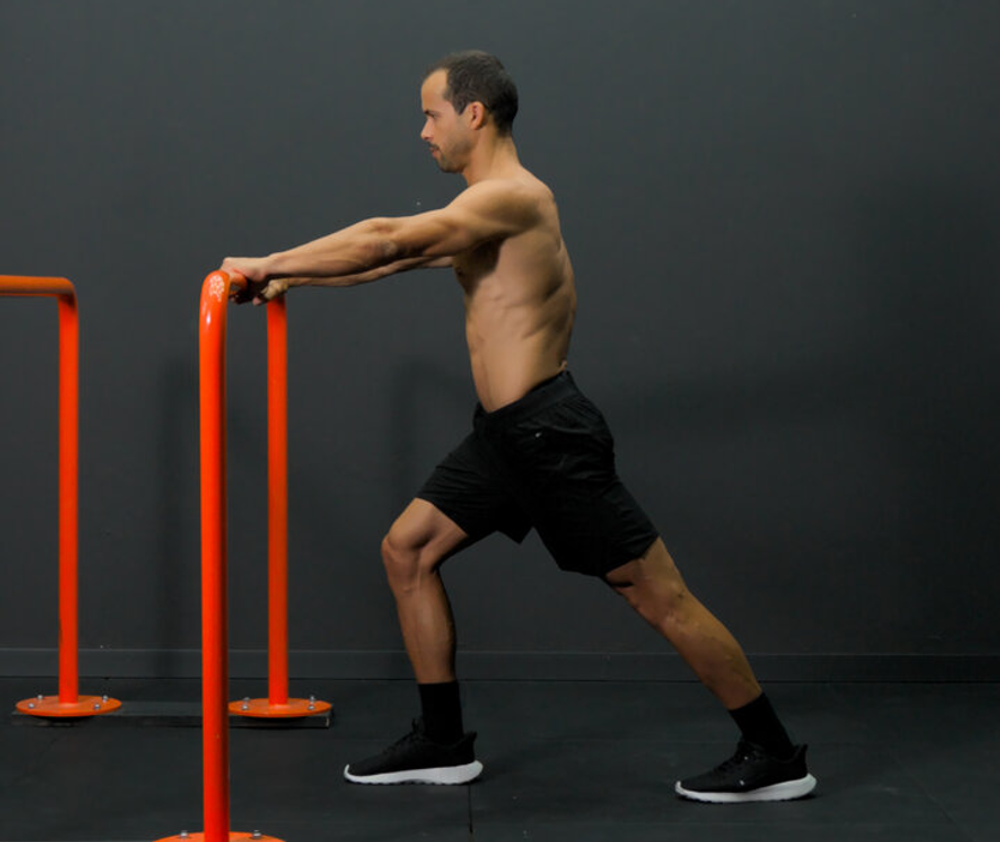
Discover the best calf exercises in calisthenics to train at home without equipment. Standing calf raises, single-leg, elevated, and progressions.

Discover what’s new in Calisteniapp versions 26.5 to 26.7: customised warm-ups, a load index, personal records, and photos in your logs.