Calisteniapp / Planche mastery
Planche mastery: your step-by-step plan.
The planche is an static exercise that is quite demanding on the shoulders, so it is necessary to carry out progressive training that increases the difficulty little by little. This is why it is the longest plan developed so far. With the first levels you will create a solid base in the muscles involved in the exercise to later learn the technique until you can do both the straddle planche and the full planche. The approximate duration of the routines is 50 minutes and although you start at a basic level, it is advisable to have completed one of the beginner plans such as 'Full body circuit' or 'Fullbody Domination'.
Available in Calisteniapp for iOS and Android.
Explore my path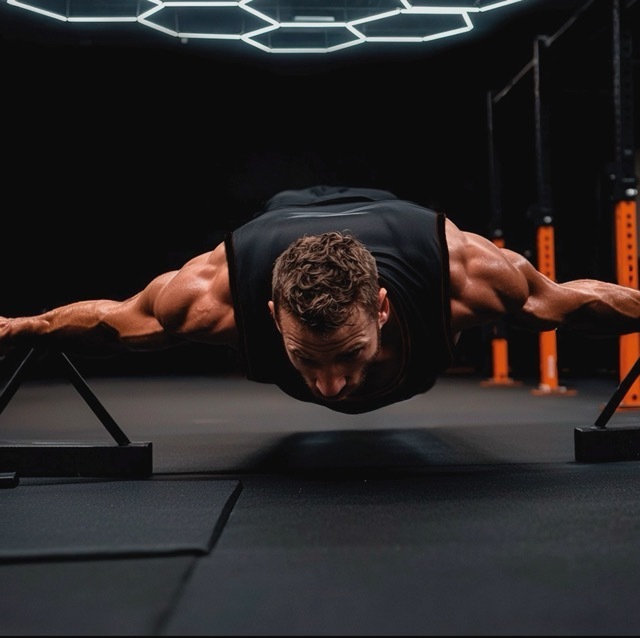
Objective
Master both the Straddle Planche and the Full Planche
- Frequence
- See program guidance
- First session duration
- 34 min
- Program
- 35 estimated weeks
01 / Requirements
Required prerequisites
- × 5 Assisted short handstand push-ups
- × 15 Dips
Necessary equipment
For this program you will need Box, Parallettes.
02 / Program
Build your path.
Each phase prepares you for the next. Weeks are a guide: repeat a phase when you need more practice before moving on.
Week 1–2Shoulder pre-conditioning
What you will practise
In this phase you build the foundation that will allow your shoulders to tolerate more specific planche work later on. The goal is not only to accumulate repetitions, but to prepare the joints, tendons, and pushing musculature with accessible exercises such as Decline push-ups, Dips, and Wall assisted handstand. Here you begin to develop strength in the deltoids, chest, triceps, and the core stabilizing muscles, while also getting used to maintaining body tension in horizontal and vertical pushing patterns.
Week 3–5Direct shoulder conditioning
What you will practise
Now the work is oriented more clearly toward the shoulders, which are one of the structures most stressed in the planche. The introduction of Frogstand is your first contact with a forward-leaning support position on the hands, while you continue developing strength with Assisted handstand push-ups, Pike push-ups, and Decline push-ups. This combination improves vertical pushing capacity, shoulder projection, and scapular stability, while continuing to strengthen the chest, triceps, and abdomen.
Week 6–8Lean and tucked planche
What you will practise
In this phase you begin with the first direct progressions toward the planche: Tucked planche and Planche lean. These are two key exercises for learning to shift the center of mass forward and generate the overall tension this movement requires. In addition to the pushing work, here you train scapular protraction, shoulder depression, and trunk rigidity more specifically, intensely involving the front deltoids, serratus, chest, biceps, triceps, and core.
Week 9–12Handstand
What you will practise
In this phase, handstand work takes on a more prominent role, because there is a very direct relationship between inverted control and progress in the planche. Straight handstand will help you improve body awareness, shoulder strength, and the ability to maintain a solid line under load. Along with this, Planche lean push-ups add a very useful dynamic stimulus to keep building specific strength in the pushing angle you will need later in negatives and advanced progressions.
Week 13–16Handstand through pushing strength and advanced tucked planche
What you will practise
Here you take an important step in applied strength. Frog to handstand serves as a very useful reference to check whether you already have the shoulder power and body control needed to keep getting closer to the planche, while Advanced tucked planche clearly raises the demand compared with Tucked planche. This progression increases the lever arm and forces you to generate more tension in the shoulders, serratus, chest, triceps, and abdomen, bringing you much closer to the real mechanics of the final movement.
Week 17–20Negative to straddle
What you will practise
Thanks to the handstand work accumulated so far, you can now begin one of the most specific parts of the program: Descent from handstand to straddle planche. Negatives teach you to control the transition from an inverted position to a very demanding shoulder angle, developing enormous eccentric strength and a better understanding of the path. L-sit to handstand and Handstand push-ups complete this phase by reinforcing compression, vertical pushing, and body control, while Advanced tucked planche and Planche lean push-ups consolidate the specific foundation.
Week 21–24Straddle planche attempts
What you will practise
In this phase you begin making your first direct attempts at Straddle planche, while maintaining the rest of the strength work to keep driving progress. The goal is not just to lift off the floor, but to start holding a clear position, with the shoulders well projected forward, active scapulae, and the legs spread in a useful way to reduce the lever. Negatives from handstand remain a fundamental tool for reinforcing the pattern, and Advanced tucked planche continues to act as a bridge between progressions.
Week 25–29Negative full planche
What you will practise
While you continue consolidating Straddle planche, you begin introducing the first negatives of Full planche from handstand. This is a major jump in difficulty, because bringing the legs together greatly increases the demand on the shoulders and trunk, and any loss of tension is immediately noticeable. That is why this phase usually requires patience: the goal is to adapt your body to a clearly harder lever while continuing to reinforce the foundation with Straddle planche, Handstand push-ups, and specific leaning work.
Week 30–35Full planche
What you will practise
In this final phase you focus on mastering Full planche, performing direct attempts while maintaining the negatives and the auxiliary work that has brought you this far. Full planche requires a maximum combination of shoulder strength, scapular protraction, elbow lockout, core tension, and full body control. Straddle planche will continue to be a useful ally for accumulating quality work, and Descent from handstand to full planche will help you reinforce the pattern when direct attempts are not yet stable.
Estimated end of the plan
Choose a valid date to preview your plan.
This date reflects the planned duration, not a guaranteed date for completing Planche mastery. Your progress may take additional weeks.
03 / Calisteniapp
Your first session, step by step.
Here is the first session of the program, so you have a reference for how the sessions are structured.
Estimated duration of 34 min depending on the rest periods you choose. Sets and reps are a reference: adjust them to your level.
The exercises you will discover.
Every movement that appears at least once across the program.
 Assisted short handstand push-ups
 Wall assisted handstand
 Decline push-ups
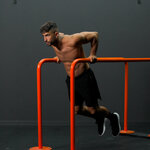 Dips
Dips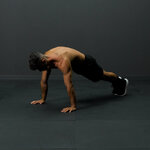 Isometric push-ups
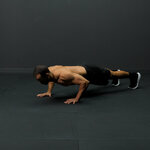 Push-ups
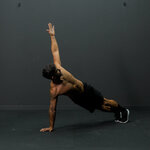 T push-ups
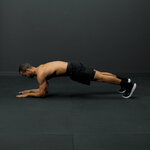 Plank
Plank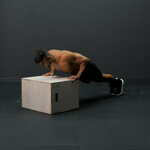 Incline push-ups
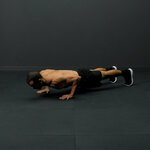 Isometric push-ups
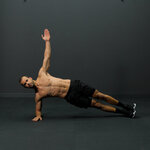 Side plank
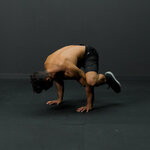 Frogstand
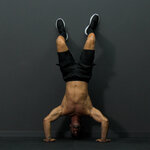 Assisted handstand push-ups
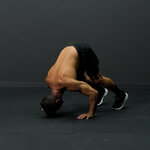 Pike push-ups
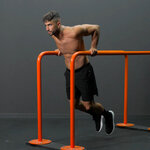 Isometric dips
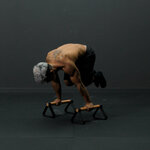 Tucked planche
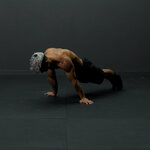 Planche lean
 Pseudo push-ups
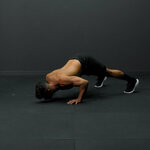 Hindu push-ups
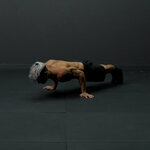 Planche lean push-ups
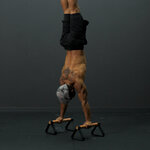 Straight handstand
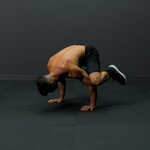 Frog to handstand
 Advanced tucked planche
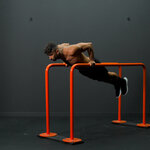 Dips with swing
 Descent from handstand to straddle planche
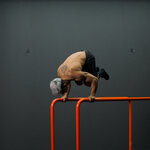 L-sit to handstand
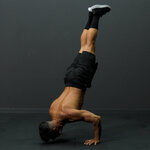 Handstand push-ups
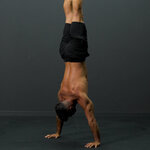 Handstand
 Straddle planche
 Descent from handstand to full planche
 Full planche
Understand the reason behind each step.
Program designed to train 2 times a week. With reinforcement routines in case you want to add more days.
They train with Calisteniapp.
App reviews already published on our website. These are not specific to this program.
The best. I've been on the pro plan for two years and have achieved excellent results. Resistance, strength, skill, and aesthetics, I've obtained it all thanks to the guidance of this app on this beautiful calisthenics journey.
If the free option is already great, the pro option has to be amazing. I'm super happy. I'm a beginner, a very beginner, and really everything is simple, the exercises can be done anywhere without equipment, and it's helping me a lot.
From “one day” to your first session.
Download Calisteniapp on your phone.
Find Planche mastery and check its access options.
Review the terms shown in the app and start the first phase.
If the app offers you a 7-day trial, check the subsequent price, billing period, renewal and cancellation before activating it. Availability and terms are those shown in your account and store.
Before you start.
What rest times to use?
We recommend using intermediate breaks of between 45" to 2'30" in the first phases, and long breaks of between 2' to 4' when you feel that the difficulty is at the limit of your capacity. If in any phase you find it difficult to advance and you feel stuck, you can try using longer rest times to try to complete it.
Every step counts.
Start with preparation. Follow the path. Give your progress time.
Available in Calisteniapp for iOS and Android.