
How to Lose Fat Without Losing Muscle When You Train Calisthenics
Discover how to lose fat without losing muscle through calisthenics training. Nutrition strategies, moderate caloric deficit, and training for real body recomposition.
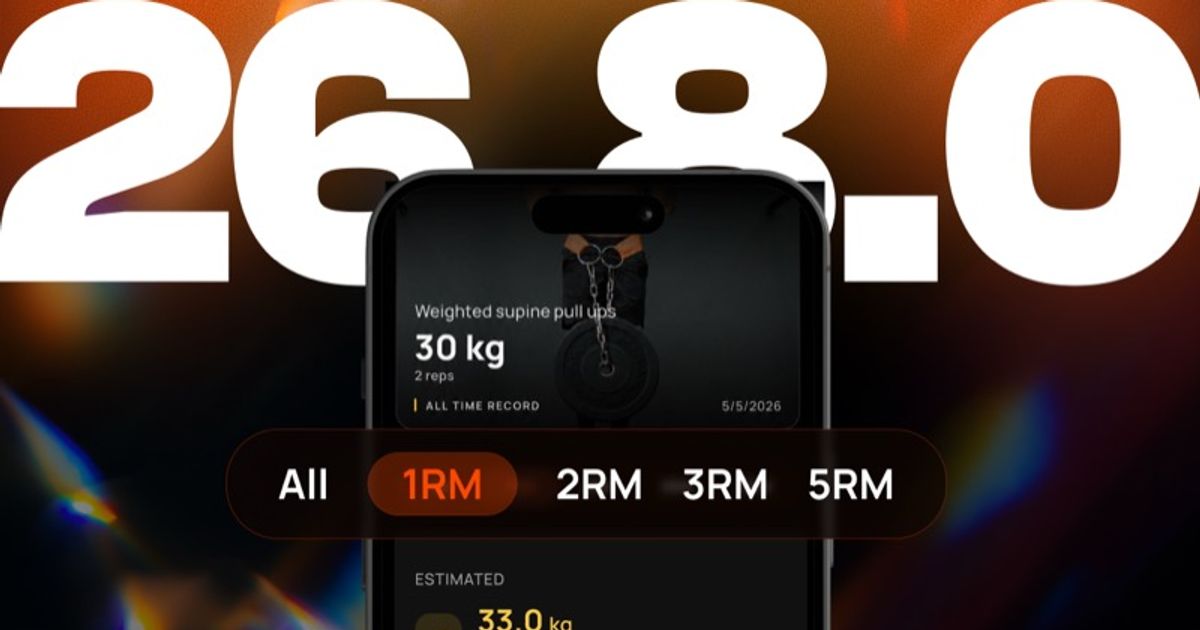
This v26.8.0 gives you more context on your strength records and adds German to the app languages.
The highlights this month:
If you want to know how those estimates are calculated and how to use them, keep reading.
When you train with added weight, knowing how much you can move helps you plan progression. Until now, that reference only existed if you already had an exact mark logged.
With v26.8.0, your personal records can give you that reference even if you haven’t tested that number yet. From your added-weight workouts, Calisteniapp estimates your 1RM, 2RM, 3RM and 5RM. These marks are labeled as estimates: they are there to guide your progress.
An nRM is the heaviest added weight you can complete for n reps with good technique. 1RM is one rep. 5RM is five.
Testing it has a cost: fatigue, more risk, and a day that stops being training. That’s why strength work uses formulas that turn a submaximal set into an estimate for other ranges. They don’t replace a test. They give you a reference for choosing the added weight in your next session.
We use the Epley formula, one of the most widely used ways to estimate 1RM in the low-rep range:
1RM = added weight × (1 + reps / 30)
An example. You do 5 pull-ups with +45 kg:
Estimated 1RM = 45 × (1 + 5/30) = 45 × 1.167 = 52.5 kg
That doesn’t ask you to go for 52.5 kg tomorrow. Based on that set, your single-rep ceiling would sit around that added weight.
To estimate another RM, we invert the same formula. A 2RM from that 5×45:
2RM = 52.5 / (1 + 2/30) ≈ 49.2 kg
Same logic, same criteria. If you already moved an added weight for one rep, that mark is the 1RM. The formula doesn’t rewrite it.
We chose Epley for three reasons:
Above 10, fatigue, technique and the energy system change. The estimate loses reliability. That’s why the app doesn’t estimate from sets of 11 or more. 15×20 kg can be good volume work; it isn’t a good max-strength test.
On screen we focus on the planning classics: 1RM, 2RM, 3RM and 5RM.
This is the most calisthenics-specific decision in the feature.
In a squat, the 1RM is the bar. In a weighted pull-up, the number you usually chase is the added weight: +20, +40, +60. Body weight is already in the movement, but it isn’t the record you log.
If we put body weight into the formula, a change in body composition would look like a change in strength, and the result would stop speaking the same language as your records. That’s why the calculation uses added weight only. You estimate kilos of extra load, which is what you want to progress.
It doesn’t pick a random workout. The criteria are:
Keeping the highest estimate answers a concrete question: given your best evidence of strength, what added weight does this RM imply. If a 5RM and a 3RM say different things, the reference is the one that points to more capacity.
That asks for honesty when you log. Epley assumes a set near the limit. Five easy reps with 45 kg are not a 5RM: the estimate would overshoot. That’s why the app labels them as estimates and doesn’t treat them as an official record.
Estimates are for you. They don’t appear on the public detail of a record.
Open it on a personal record for a weighted exercise and switch between 1RM, 2RM, 3RM and 5RM.
It helps you choose the added weight for the next session, translate a solid 5RM into a 1RM or 3RM reference, and plan percentages (for example, work at 80% of your estimated 1RM) with more judgment. If you want an official mark, test it carefully. The estimate is a reference from what you already logged.
Keep logging added weight on your sets. The more consistent those logs are — completed sets, real added weight, 1-to-10 ranges close to the stimulus you want to measure — the more useful that reference will be.
We added German to the languages available in the app: interface, content and training cues adapted. If you train in German, you can now do it in Calisteniapp in your language too.
Thanks for training with us. If something is blocking you (or you notice any issue after updating), write to us on Instagram (https://www.instagram.com/calisteniapp/), in our Discord community or by email at info@calisteniapp.com.
Quiz personalizado
Responda 7 perguntas rápidas e vamos recomendar o programa que melhor se adapta a você.

Iñaki Tajes
Ingeniero y cofundador de Calisteniapp, experto en diseño de productos digitales centrados en el usuario. Lidera la estrategia tecnológica de una de las apps de calistenia más utilizadas del mundo hispanohablante, Calisteniapp, una aplicación de entrenamiento con más de 3 millones de usuarios.
Junte-se ao nosso boletim informativo
Aprenda tudo o que precisa saber sobre calistenia
Discover how to lose fat without losing muscle through calisthenics training. Nutrition strategies, moderate caloric deficit, and training for real body recomposition.
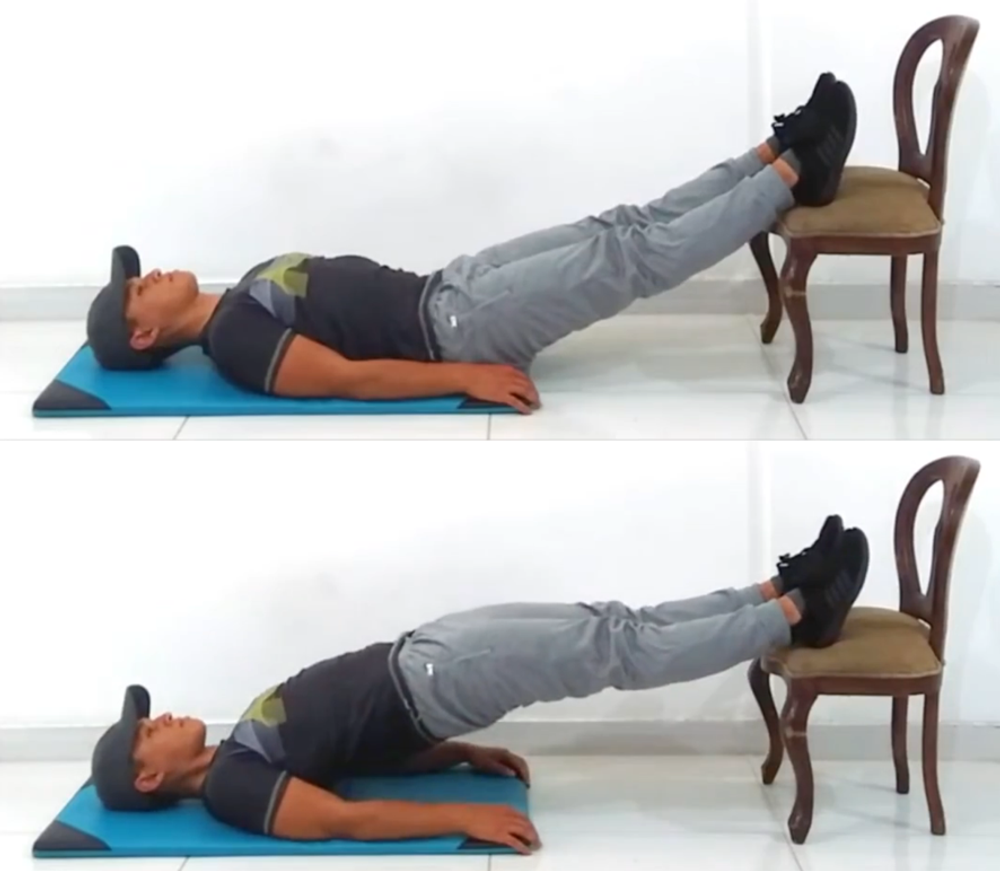
Discover the best hamstring exercises in calisthenics to train at home without weights. Nordic curl, leg curl, hip thrust and more, with step-by-step progressions.

Learn how to improve your grip strength to master pull-ups. Exercises, progressions, and tips for holding on to the bar longer without letting go.