Hydration in Calisthenics: How Much Water You Need and When to Drink It
Find out how much water you need if you train calisthenics, when to drink it, and how hydration affects your strength and performance. A complete guide.
In calisthenics, the hamstrings are often one of the most neglected muscle groups. Priority is frequently given to push, pull, or quad exercises, while the hamstrings are left in the background. However, they are essential for knee stability, posture, and performance in explosive movements, which is why including hamstring exercises in your calisthenics leg training is highly recommended.
The good news is that they can be trained very effectively without weights, at home or with minimal equipment. In this article you'll find a complete guide with exercises for all levels, from simple options for beginners to more demanding variations for people with more experience. The goal is to help you strengthen your hamstrings effectively, choosing the exercises that best suit your level and the resources you have available.
The hamstrings are a group of three muscles located at the back of the thigh. These muscles are the semimembranosus, the semitendinosus, and the biceps femoris; the latter is made up of two heads: a long head and a short head.
The hamstrings are biarticular muscles, meaning they cross two joints: the hip and the knee. Therefore, they perform the function of extending the hip and flexing the knee. The exception is the short head of the biceps femoris, which originates on the femur; for this reason, it only performs knee flexion.

An important clarification is that this muscle group is known by several names: hamstrings, ischiosural muscles, or "femorales" (in Spanish). However, the technically correct name is ischiosural muscles.
To this day, they are still commonly called "hamstrings," since they originate at the ischium and insert on the tibia. The problem is that this name is incomplete, because technically it doesn't fully cover the biceps femoris, which inserts on the fibula rather than the tibia.
On the other hand, the term "femorales" is a more colloquial term used mainly in the fitness world. This doesn't mean it's an incorrect name, just that it's not the most anatomically rigorous.
The term "ischiosural" does correctly cover all three muscles. However, from now on I'll simply refer to this muscle group as "hamstrings," although it's common to find exercises that use the term "femoral" in their name.
Hamstring injuries are among the most common in sports, especially in those involving actions like high-speed running, jumping, and explosive movements with sudden changes of direction. For this reason, soccer is one of the sports with the highest incidence of hamstring injuries, along with American football, rugby, athletics, and tennis, among others.
Strengthening and training these muscles isn't just about performing at your best in these sports professionally; it's also about being able to practice them with greater peace of mind and less fear of injury. Even if you don't play any of these sports, the hamstrings are very important for knee stability and good posture control.
We'll divide hamstring exercises into two categories: hip extension exercises and knee flexion exercises.
Ideally, you should perform at least one exercise from each category to train the hamstrings completely, for two main reasons. First, remember that the short head of the biceps femoris doesn't participate in hip extension. Second, hip extension exercises likely activate the upper portion of the hamstrings more, while knee flexion exercises activate the lower portion more (1).
Before listing the exercises, there are several important details you should know beforehand.
There's a wide variety of hip extension exercises; however, not all of them work the hamstrings to the same degree. Additionally, the glutes also perform hip extension, and depending on which exercises you do and how you perform them, emphasis can shift toward one muscle or the other.
The key to all of this lies in the movement and knee position (2):
In the first case, the hamstrings extend at the hip but shorten at the knee; therefore, their overall length doesn't really change much. This phenomenon is known as the Lombard paradox. Several studies have shown that the hamstrings have very low involvement in squats, mainly serving a stabilizing function during the movement (3,4).
In the second case, the hamstrings shorten at both the hip and the knee, and when a muscle is in an extreme shortened position, it can't apply force as efficiently due to the length-tension relationship. Similarly, one study showed that the hamstrings have very low involvement in the hip thrust (4).
Therefore, if our goal is to train the hamstrings, we should perform hip extension exercises with the knees extended or slightly flexed. This way, neither of the two phenomena mentioned above occurs, and consequently, the hamstrings can work more optimally.
With that explained, we can now review the best hip extension exercises for the hamstrings.

The first exercise is the Romanian deadlift or good morning. Since we're talking about bodyweight exercises rather than exercises with added weight, the name doesn't really matter much, as both are hip hinge movements.
For this exercise, perform the hip extension while keeping your torso straight, without letting your back round, but also without arching it excessively; the posture should remain neutral.
Additionally, as you lower, slightly bend your knees. If you have limited flexibility, it's normal to feel a strong stretch in the back of the thigh and to not be able to lower as far. As you progress, your flexibility will improve and you'll be able to lower further.

The second exercise is hyperextensions, or back extensions. This exercise is very similar to the previous one, as it's also a hip hinge movement. The difference is that hyperextensions are performed on a special bench, known as a Roman chair or back extension bench.
To perform this exercise with an emphasis on the hamstrings, adjust the leg support slightly below hip height, so you can perform the hip extension with a straight torso and without difficulty. If you set the support too high, the hip will be blocked, and as a result, you'll only be able to lower by flexing the spine, which isn't what we're looking for here.

The third exercise is the reverse hyperextension. It's called this because the body stays supported while the legs are what move. This exercise can be performed on a regular bench or on some Roman chairs, but with the body positioned in the opposite way.

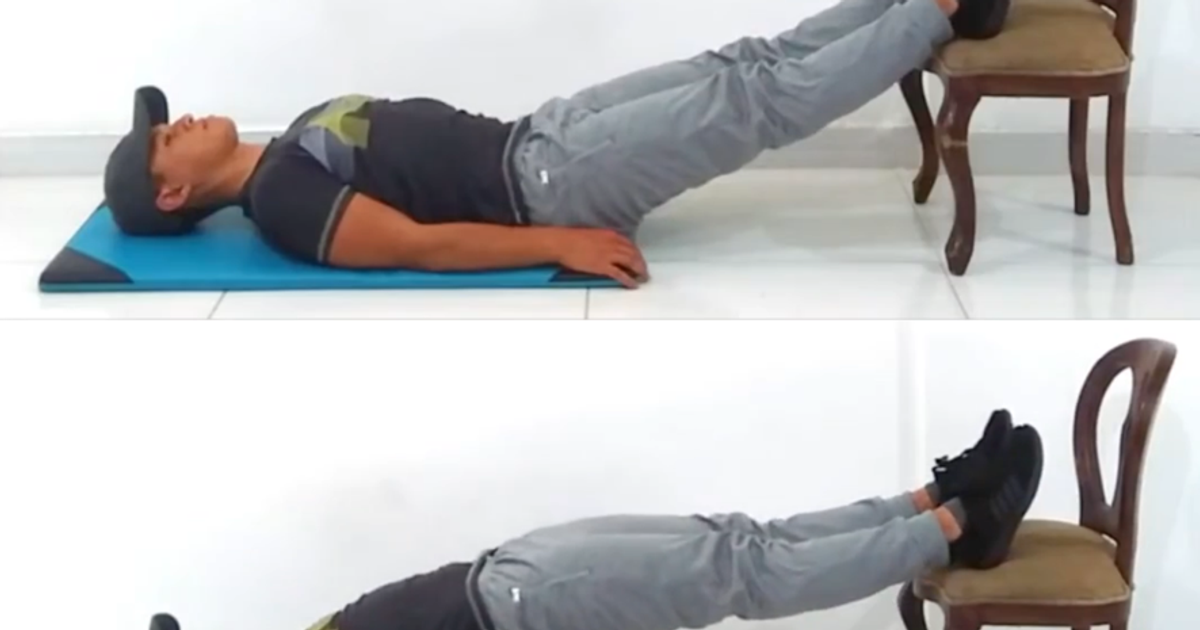
The fourth exercise is the glute bridge, or straight-leg glute bridge. As I explained earlier, the conventional glute bridge involves low hamstring activation. However, as you extend the knees—and even more so if you perform the exercise with completely straight legs—their activation will be much greater.
To do this, lie face up on the floor and place your feet on an elevated surface. The idea is to lift your hips with straight legs, forming a straight line from your feet to your shoulders.
You can also rest your back on an elevated surface, as if performing a straight-leg hip thrust, to increase the exercise's range of motion.
Now let's go over the exercises that work the second function of the hamstrings: knee flexion.

The first exercise is the sliding leg curl, or floor hamstring curl. This involves lying face up on the floor, with your knees flexed and hips raised, as if performing a glute bridge. From this position, extend your knees by sliding your heels out until your legs are fully straight, while keeping your hips raised.
This exercise can be performed in multiple ways: on a smooth floor while sliding in socks, using a towel or any fabric that allows your feet to slide. You can also do it with your feet on a device with wheels, like a skateboard; with your feet in gymnastic rings or a TRX; or even on a stability ball.
Keep in mind that more friction makes the exercise harder. This can be useful if you already have good strength; otherwise, it can make execution more difficult.
If you can't do it in any of the ways mentioned above, don't worry. You can also do it at a park using a bar set at about hip height. The idea is to keep your heels firmly planted on the ground and perform the movement with the rest of your body, using the bar as a support point.


If all the previous exercises have seemed easy so far (I'll explain later how to increase the difficulty of these exercises), let me introduce the Nordic curl.
This is one of the most difficult lower-body exercises you can perform with bodyweight alone. In fact, very few people who have specifically trained this exercise for a long time can perform it through a full range of motion without any assistance.
To perform it, kneel down and keep your feet firmly anchored. To do this, you can ask someone to hold your feet, use a special bench designed to secure them, or place your feet under a sturdy bar that prevents them from lifting. Once in position, lower your entire body as a solid block toward the floor, then rise back up.
As mentioned, it's very difficult to perform the full exercise unassisted. The best way to progress is to perform the lowering, or eccentric phase, slowly and under control for as far as you can, then return to the starting position with assistance if needed.
You can also do partial reps, lowering only to the point where you can return using your own hamstring strength.
Another option is to use an elastic band for assistance: anchor the band at a high point above you and wrap it around your chest.
Before moving to the next section, I want to clarify that these exercises don't train the hamstrings alone; in fact, you're working much of the posterior musculature of the body.
The glutes and spinal erectors will be heavily involved in both the hip extension and knee flexion exercises, since you need to keep the hips and spine isometrically extended to maintain a straight body.
Although you can perform any exercise adapted to your level without any problem, it's true that some are more advisable than others if you're just starting to train this muscle group.
If you're a beginner, the most recommended hip extension exercises are those where the greatest tension occurs when the muscle is in a more shortened position, as is the case with the straight-leg glute bridge and hyperextensions.
Starting with the Romanian deadlift isn't a bad idea, but since its point of greatest tension occurs when the muscle is quite stretched, this can cause more intense soreness, require more recovery time, and possibly reduce training adherence.
As for knee flexion exercises, the most recommended one for a beginner is the floor leg curl, ideally in a low-friction variation. Once you've been training these muscles for a while, you can start incorporating the Nordic curl.
Remember this is just a recommendation; there's no single "correct" order for these exercises. Below, you'll find other ways to progress in each of them so you can choose what best fits your specific situation.
Most of the exercises we've reviewed so far probably seem very easy to you. However, you don't need to lift heavy loads to progress. Below, I'll explain different methods you can apply to the exercises above to increase difficulty according to your level.
The most basic way to progress in most exercises is to perform more and more reps per set over time.
One way to progress is to perform the exercises unilaterally, meaning with a single leg. This way, the entire load is distributed onto one leg.
You can perform the single-leg Romanian deadlift, single-leg hyperextensions, single-leg glute bridge, and single-leg floor leg curl.
Another option is to add light weight to these exercises. You can use dumbbells you have at home, a water jug, a suitcase filled with books, or any object that lets you slightly increase the load.
You can also add weight to the unilateral variations to increase the difficulty even further.
The first mistake is letting the back round excessively. While this isn't as serious in these exercises since we're not lifting heavy loads, it can indicate a lack of body control or weak spinal erectors. Additionally, in some cases, this can reduce hamstring activation.
The second mistake is doing exactly the opposite. To avoid rounding the back, some people push their chest out and hips back too much, arching the back excessively. Again, since we're not lifting heavy loads, this isn't necessarily dangerous, but it can increase tension on the lower back.
What we're looking for is a straight torso, with the spine in a neutral position: neither too rounded nor excessively arched. If you find it hard to find this position, I recommend performing the exercise in front of a mirror or recording yourself so you can correct your technique.
As mentioned earlier, the best way to train the Nordic curl is by performing the eccentric phase as controlled as possible. If you lower too quickly, you won't properly work the hamstrings, and since this is a fairly demanding exercise, it will also increase your risk of injury.
If, no matter how hard you try, you can't lower in a controlled manner in this exercise, it's probably because you don't yet have enough hamstring strength to support your body weight using these muscles alone. In that case, I recommend doing it with an elastic band or continuing to work with the floor leg curl.
This is a sample hamstring routine you can do at home. That said, I want to clarify that, generally, a specific routine isn't done for just this muscle group alone. Hamstrings are usually trained together with other lower-body muscles as part of a leg day.
So, if you want to learn about the best exercises for all lower-body muscles in calisthenics and find a more complete routine, I recommend this article: Leg Exercises in Calisthenics: The Complete No-Equipment Guide
In summary, the hamstrings are a key leg muscle group and shouldn't be sidelined in training. With proper hip extension and knee flexion exercises, it's possible to strengthen them effectively without weights, at home or with minimal equipment. Whether you're just starting out or already have experience, choosing variations suited to your level will let you progressively improve strength, stability, and performance.
If you want to keep strengthening your hamstrings and progress in an organized way, on Calisteniapp you can find calisthenics routines adapted to different levels, with exercises you can do at home and with minimal equipment.
Schoenfeld et al (2015). Regional differences in muscle activation during hamstrings exercise.
Contreras, B., & Cordoza, G. (2019). Glute Lab: The Art and Science of Strength and Physique Training.
Kubo et al (2019). Effects of squat training with different depths on lower limb muscle volumes.
Plotkin et al (2023). Hip thrust and back squat training elicit similar gluteus muscle hypertrophy and transfer similarly to the deadlift.
Quiz personnalisé
Répondez à 7 questions rapides et nous vous recommanderons le programme le plus adapté.
Apprenez tout ce que vous devez savoir sur la calisthénie
Find out how much water you need if you train calisthenics, when to drink it, and how hydration affects your strength and performance. A complete guide.

Discover the best glute exercises in calisthenics to train at home without weights. Glute bridge, isometric variations, progressions, and stretches.

Discover what foods to eat to gain muscle while training calisthenics. A complete list of proteins, carbohydrates, and healthy fats with examples and practical tips.