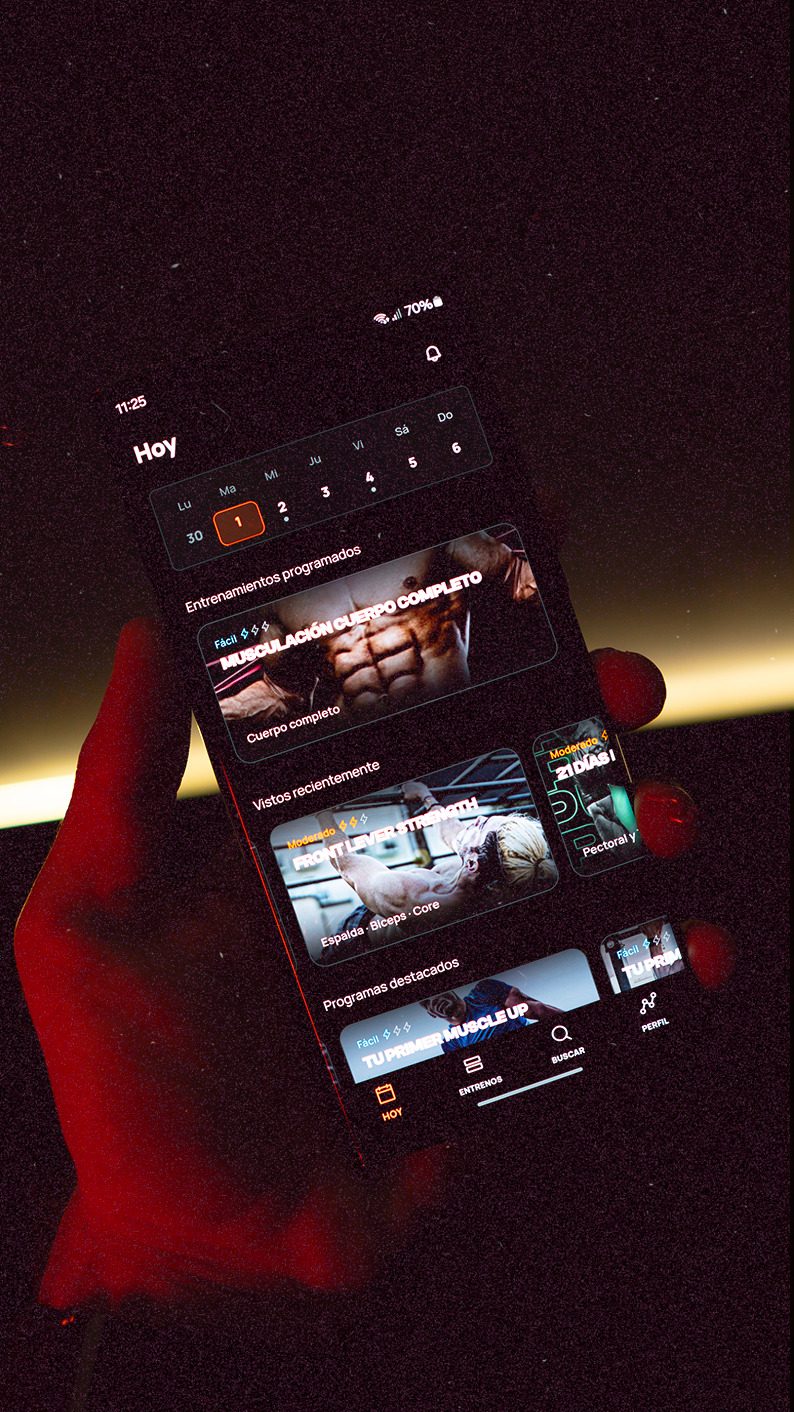
L'application de calisthénie qui bouge avec vous

Application d'entraînements de calisthénie pour tous les niveaux et objectifs. Entraînez-vous en calisthénie avec l'application de calisthénie la plus complète. Commencez gratuitement, gagnez du muscle, devenez plus fort et devenez qui vous voulez être.

Entraînements

Entraînements de calisthénie pour atteindre vos objectifs

Que vous vous entraîniez à la maison ou à l'extérieur, Calisteniapp s'adapte à vos objectifs de fitness. Des routines de poids corporel pour débutants aux entraînements de rue avancés.

application calisthénie gratuite

Pompez-vous avec nos entraînements guidés

Plongez dans notre bibliothèque épique de calisthénie. Que vous soyez débutant ou pro du fitness, nous vous soutenons avec des entraînements pour chaque niveau et objectif. Trouvez votre match parfait et commencez à tout déchirer.
application calisthénie

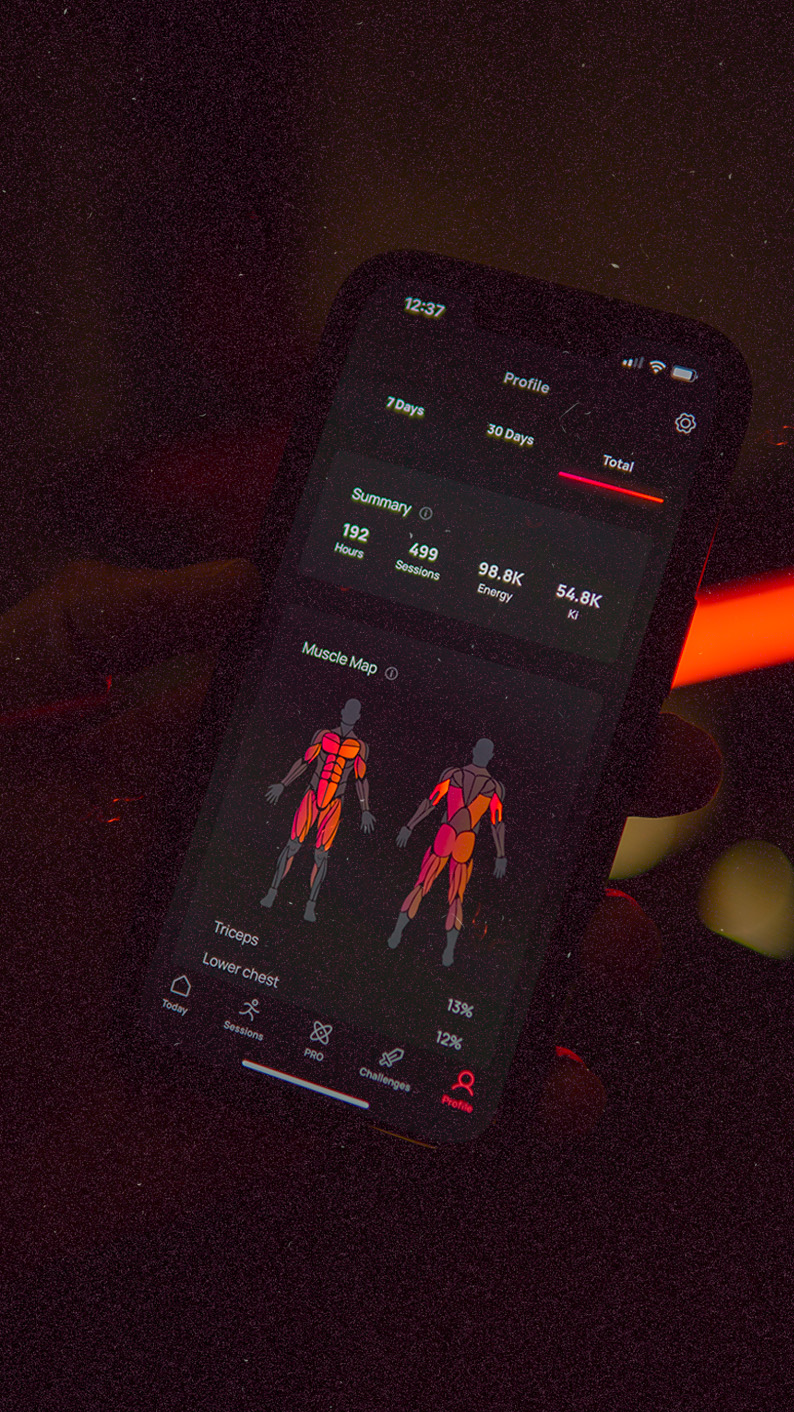
Suivez votre parcours fitness

Regardez vos progrès s'envoler. Avec Calisteniapp, suivre vos gains est un jeu d'enfant. Obtenez des informations sur le volume de vos entraînements, consultez vos cartes de chaleur musculaire et regardez-vous progresser en temps réel.
application entraînement calisthénie

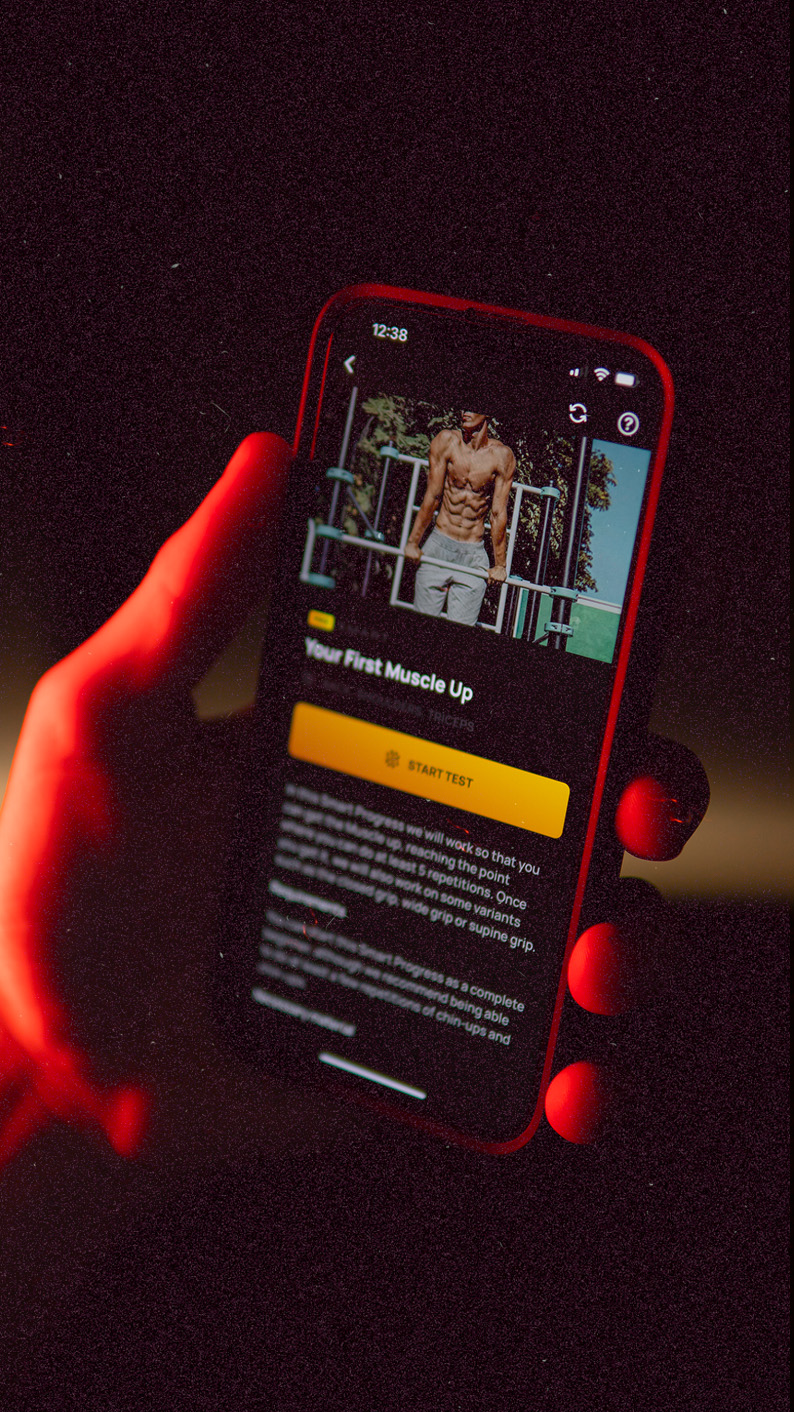
Méthodes différentes pour différentes personnes

Ennuyé des mêmes vieilles routines ? Nous comprenons. C'est pourquoi nous offrons un éventail de méthodes d'entraînement. Programmes classiques, Routines EVO ou défis – choisissez ce qui vous motive et écrasez vos objectifs fitness.
application entraînement calisthénie gratuite

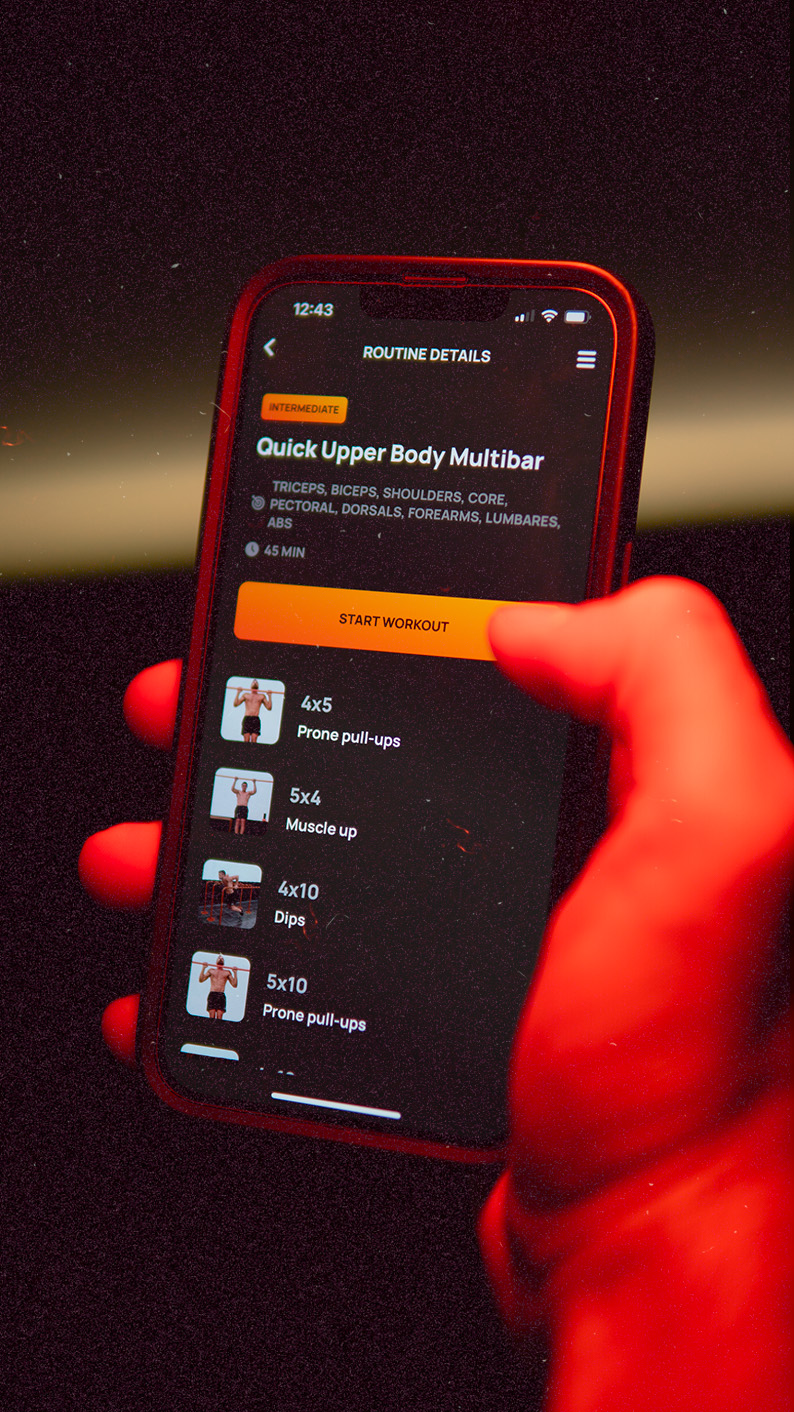
Votre entraînement, vos règles

Prenez les rênes avec notre créateur d'entraînement Plus de 650 exercices à portée de main – mélangez, assortissez et créez de la magie. Que créerez-vous ?

calisthénie gratuite

Partagez et inspirez

Flex, partagez et inspirez. Étalez vos progrès et entraînements avec votre équipe. C'est tout dans les gains et la gloire.

Ce n'est pas un hasard

Rejoignez plus de 2 millions d'athlètes

4.5/5 Google Play et 4.8/5 App Store

Le meilleur. Je suis sur le plan pro depuis deux ans et j'ai obtenu d'excellents résultats. Résistance, force, habileté et esthétique, j'ai tout obtenu grâce aux conseils de cette app dans ce magnifique parcours de calisthénie.

Roberto Duarte

Si l'option gratuite est déjà géniale, l'option pro doit être incroyable. Je suis super content. Je suis débutant, très débutant, et vraiment tout est simple, les exercices peuvent être faits n'importe où sans équipement, et ça m'aide beaucoup.

Maite Ruiz

Très utile pour entrer dans ce monde, intuitif et facile à utiliser. Que vous soyez débutant ou avancé, vous pourrez trouver des routines adaptées, bien organisées et expliquées, avec des vidéos au cas où vous auriez des doutes. Après l'avoir utilisée pendant un certain temps, je la recommande à 100%

Rubén García
Tarifs

Commencez gratuitement, maîtrisez avec pro

ATHLÈTE DE BASE

  • Accès à 500 sessions, tous objectifs et niveaux
  • Accès au dictionnaire avec +700 exercices.
  • Création limitée de sessions personnelles (max 3).
  • Lecture limitée des vidéos d'exercices (10/jour).
  • Entraînements illimités
Commencer gratuitement

ATHLÈTE PRO

Accès à +15 Défis.

Création illimitée de sessions

Accès à +35 programmes d'entraînement :

  • Votre premier muscle up.
  • Front lever.
  • Commencer avec les planches.
  • Équilibre sur les mains par la force.
  • Back lever
  • Et 25 programmes de plus....

Accès à +23 Routines EVO :

  • Musculation poitrine et triceps.
  • Musculation dos et biceps.
  • Musculation jambes.
  • Musculation épaules et triceps.
  • Core à la maison.
  • Et 15 routines EVO de plus....

Mensuel

9.99€

Annuel

69.99€5.33€/m
Essayez 7 jours gratuitement

* Les prix peuvent varier selon le pays. Les prix sont affichés en euros. Le montant exact sera affiché avant le paiement.

Commencer avec Pro

FAQs

De chair et d'os

Pas d'intelligence artificielle, nous sommes à un clic pour tout ce dont vous avez besoin

Calisteniapp

Commencez l'entraînement de calisthénie et street workout

#
Blog

NOUVEAUX ARTICLES CHAQUE SEMAINE

Apprenez tout ce que vous devez savoir sur la calisthénie

How does your body weight affect your pull ups: real data analysis

How does your body weight affect your pull ups: real data analysis

We recently theorized abouthow body weight could affect the ability to do pull-ups. Both for a single pull-up or doing sets of many repetitions. We were commenting on the issue ofpeople who use being bigger or heavier as an excuse to do fewer pull-ups, and we explained that actuallyin Weighted Calisthenics or Streetlifting competitions those who lift the most weight in pull-ups are those in the heaviest categories, specifically on the -87 kg category the -94 kg. and the +94 kg categories If we go to specific examples we have the Spanish Pere Coll, capable of lifting 116.25 kilos with a body weight of around 87 kg. Miguel Street Lifter capable of lifting more than 100 kg. weighing about 95 kg. or the Ecuadorian Xavier Overbar, who lifted 106.25 kg. weighing 91 kg. I think here we can see that,at the very least, the heaviest athletes do not have as great a handicap, as could happen in other modalities or sports, where heavyweights would have no chance against light weights. Several of you told me a detail to take into account, and that is thatin terms of relative weight, there is a clear difference. For example, for a 95 kilo athlete, lifting 100 kg. involves lifting 105% of his body weight. While for a 70 kg athlete lifting 100 kg. involves lifting 140% of his body weight. This would seem to indicate that, in a fictional world where light athletes lifted the same as heavy athletes, lighter athletes would have a great advantage when working only with their body weight, since it would represent a much higher percentage of their true capacity. . But the point is that in real life, as you can already guess, light athletes do not lift the same as heavy athletes, andit would be necessary to carefully analyze how the numbers and percentages vary.Therefore I give you the good news that I have taken the trouble to obtain real data from the world Street Lifting championship, analyze it and interpret it so that we can solve this mystery of pull-ups and body weight. Lets go for it.

How does your body weight affect your pull ups: real data analysis

Yerai Alonso

What is Calisthenics? How is it different from other disciplines?

What is Calisthenics? How is it different from other disciplines?

Thanks to the popularity that it has been acquiring in the last decades, Calisthenics has been evolving, establishing itself and defining itself, so that we can see more and more clearly what it consists of and what its properties are as a training system. In this article we are going to give a clear and concise definition of what Calisthenics is, its main characteristics, how it differs from other disciplines, its historical development and other frequently asked questions.What is Calisthenics?Calisthenics is a sports discipline based on body weight training that is usually performed in outdoor bar parks using distinctive exercises such as pull-ups, dips, push-ups, muscle ups, handstand, planche or front lever.Etymological root of the word CalisthenicsThe word Calisthenics comes from the Greek "kalos" which means beauty and "sthenos" which means strength.What are the main characteristics of Calisthenics?-It is based on training with body weight. Calisthenics are compound exercises that use multiple muscle groups and work with body weight. Some of the most typical exercises are pull-ups, dips, push-ups, squats, muscle up, handstand, planche, front lever, back lever, flag, pistol squat, etc. -Continuous learning. The way to advance in Calisthenics training is to be able to do more difficult, more technical exercises, learning skills and tricks and better controlling your body. -Training several physical qualities. In Calisthenics, strength, resistance, agility, balance, self awareness, flexibility and mobility are worked on, in addition to achieving aesthetic results of increased muscle mass. -Strict technical and aesthetic execution. In Calisthenics you try to perform the exercises in the strictest way possible, without sacrificing the technique to seek to do more repetitions. Balancing, inertia, "kipping", asymmetries or unwanted partial ranges are avoided. In the static exercises, locked elbows, pointed feet, correct positioning of the scapulae and hip, "hollow" position and correct alignment of the body are valued. -You can train on bars or without equipment. Calisthenics is usually trained in outdoor barbell parks, but it can also be trained at home without equipment. By simply training on the floor, with a wall and with a height such as a bench or a chair, you can carry out intense and complete training of all kinds. -Is free. Modern Calisthenics emerged as an alternative to gym training for people without resources, so you can train on the street or at home without equipment or with very basic urban equipment. -Creates community. Training groups are usually created in Calisthenics parks, which give a positive influence, motivation and support for people who may be going through difficulties.What are the most common exercises in Calisthenics?The exercises that are considered basic of Calisthenics are pull-ups, dips, and push-ups. In addition, there are very distinctive exercises to this sport, such as the muscle up, the front lever, handstand, planches, the human flag, the pistol squat, the handstand or the back lever. Most of this exercises are also performed in Gymnastics, but on the rings and in a completely different environment or setup, which makes it easy to differentiate between them. From the Calisteniapp team we have developed an app so that you have free calisthenics routines at your disposal, training programs to learn the different exercises and tricks, smart routines and much more. Take a lookhere.

What is Calisthenics? How is it different from other disciplines?

Yerai Alonso

How to combine Calisthenics and Gym weigh training

How to combine Calisthenics and Gym weigh training

In this article we present a complete guide on how to combine Calisthenics and Gym, both for calisthenics athletes who want to combine with weights, and for gymbros who want to combine with calisthenics. I'm going to try to make the guide as complete as possible and touch on all the important points so that it's useful to you, so without further ado, let's get started.Why combine them?First, let's talk about why combine these two disciplines. I think the most important thing is that you do it if you practice one of the two and the other catches your attention. For example, there are many cases of people who go to the gym, but the ability of calisthenics athletes to do muscle up, handstand, planche, front lever, etc. is very interesting and would like to try and see how it goes. It also happens with calisthenics athletes who usually train in the park, but in winter they sign up for a gym to be able to train more comfortably and use some of the machines, dumbbells or free weights. Also another very common case is that of people who go to the gym and find it extremely boring and monotonous, while calisthenics seems very fun. And the same with calisthenics athletes who have been on the bars for many years, and need a change or a different stimulus. Also, regarding the main golas I think it is important that you only combine both disciplines if it is in line with your objectives. For example, if you are in the gym and one of your goals is to improve your body control, your agility, or learn some skills, it is a perfect fit to combine with calisthenics. Or if you are a calisthenic athlete and one of your goals is to improve your aesthetic appearance or increase your maximum strength, it is also a perfect match. However, if, for example, you are a calisthenic athlete and your goal is to focus on improving planche and front, or statics and dynamics, it does not make much sense for you to combine. Another important issue, which we already mentioned before, is convenience. Perhaps your discipline is calisthenics but you live in a very cold and rainy place and it is convenient for you to train in the gym a few days, or perhaps what you like is going to the gym but it is too far away and you have a calisthenics park next to your home, or some days you don't have time and prefer to stay at home training. These are cases in which you could get a lot out of combining both disciplines. Finally, experience has taught me that there is an important psychological issue, which is that some calisthenics athletes think that to get really big they need to lift weights, or to grow their legs, and no matter how much you try to argue against that belief they have it in their brain and you are not going to convince them. The same happens with people who go to the gym and, for example, feel that no matter how much they train their backs, the stimulus that pull-ups give them is not given by any machine or weight, and they are totally convinced of this. In those cases, I think it's great that they combine, since in the end the important thing is that you are happy with your training and feel that it is really effective, and the possible, let's say, placebo effect that this entails, will be really useful and beneficial. .

How to combine Calisthenics and Gym weigh training

Yerai Alonso

Calisthenics Shoulder Exercises - from worst to best

Calisthenics Shoulder Exercises - from worst to best

To get to a good level in Calisthenics, one of the most important muscles that we must strengthen are those in the shoulder joint area, specifically the anterior deltoid, or what we colloquially know as "front shoulder". But it happens to be that this musculature is not only important at the level of strength, but also at the aesthetic level it gives a very positive aspect to our physique. Many people are not very clear about the exercises that best work this area, so today I bring you a list in which we will order exercises that involve the anterior deltoid, according to my personal criteria and expertise from worst to best.BiomechanicsBefore looking at the exercises that involve this muscle, let's try to understand a little why they do it. At a biomechanical level, the anterior deltoid is mainly in charge of the flexion of the arm, which would be the movement that we see in the image below: Therefore, all exercises that require strength to perform that shoulder flexion, even in different body positions, will have some involvement of the anterior deltoid. It also has an implication in the movement of adduction of the arm and internal rotation, but at the level of calisthenics we will focus more on the flexion of the arm. Now lets see the exercises:1. Push-upsThe classic floor push-ups do provide some stimulation to the anterior deltoids, but the range of motion is fairly limited, with most of the load being spread between the pectorals and triceps. So this exercise is not very effective for our shoulder. If we add incline, raising our legs, we will add load on the shoulder and range of motion to the arm flexion, so it would increase the intensity and be slightly more effective than regular pushups.

Calisthenics Shoulder Exercises - from worst to best

Yerai Alonso

Sets and resp: how many to do?

Sets and resp: how many to do?

In training terms, a set is a number of repeated movements associated with the contraction and elongation of one or more muscle groups. The number of sets and repetitions changes according to the objectives of each person, but this article will focus on the two most important aspects for who writes, which are hypertrophy and strength. HYPERTROPHY

Sets and resp: how many to do?

Yerai Alonso

How to Start in Calisthenics from level Zero

How to Start in Calisthenics from level Zero

In this article I want to do a guide for people who start completely from scratch, people who don't have any strength, old people or similar situations in which doing the basic exercises such as pull ups, dips or push ups is not a fair option. We will see which specific exercises you can do and how to adapt the basics in calisthenics to lower its difficulty by a great deal so you can build strength from there. If you want to start calisthenics in a good way, that allows you to have the best possibilities in this sport, I think that you should aim to learn basic progressions for push, pull, legs and abs exercises.

How to Start in Calisthenics from level Zero

Yerai Alonso