Calf Exercises in Calisthenics: Complete Equipment-Free Guide
Discover the best calf exercises in calisthenics to train at home without equipment. Standing calf raises, single-leg, elevated, and progressions.
Calisthenics is a sport that places a strong emphasis on technical excellence in exercise execution. That’s why scapular movement is so important if you train this discipline.
There are different scapular positions and movement patterns, and depending on the specific exercise you’re performing, you’ll need to use one or another.
In today’s article, we’re going to focus specifically on scapular retraction. We’ll look at which exercises require it, what purpose it serves, which scapular exercises or progressions you can use to train it, and how to develop very good scapular mobility.

Scapular retraction is the movement of the scapulae in which the shoulder blades move closer together along the rib cage. Put simply, it’s not just “pulling your shoulders back,” but moving these structures in a controlled way with the help of the scapular muscles—especially the rhomboids and the middle and lower trapezius, which are key parts of the scapular musculature.
The scapula is not a passive part of the shoulder: it moves, adapts, and affects how you push, pull, and stabilize your body. Understanding scapular movement helps you train with more control, improve technique, and develop better scapular mobility in calisthenics exercises.
There are four basic movements worth mastering because they show up again and again in pull-ups, push-ups, dips, rows, handstands, and tension work. In addition, there are two secondary movements (upward and downward rotation) that are less important for this article, so we won’t cover them in detail here.

Scapular retraction happens when the shoulder blades move backward and toward each other, as if you were trying to squeeze them together. It’s a movement that appears frequently in horizontal pulling patterns and in many phases of upper-body control.

In training, its main role is to improve stability in pulling exercises, help organize posture more effectively, and create a stronger position when starting or finishing rows and pull-up variations.
In calisthenics, a clear practical application is in regular pull-ups, Australian pull-ups, and inverted rows: at the end of each rep, aim for active retraction instead of just bending your elbows. You can also train it directly with scapular retractions while hanging from a bar or rings.

Scapular protraction occurs when the shoulder blades move away from each other and glide forward around the rib cage. It’s not simply “rounding forward,” but an active and useful movement when well controlled.
In training, it helps improve shoulder stability, serratus anterior control, and force transfer in pushing exercises such as push-ups or planche work.
In calisthenics, one of the most common applications is in planche training, with exercises such as the lean planche, tucked planche, advanced tucked planche, and more advanced variations like the straddle planche and full planche. In all of these movements, one of the most important technical points is establishing scapular protraction and not losing it as the seconds pass.

Scapular elevation happens when the shoulder blades rise toward the ears. Although it is sometimes presented as something that should always be avoided, it is actually a normal and necessary movement in certain patterns, especially when the arm is working overhead.
In training, it can be useful for organizing the shoulder more effectively in overhead positions and for developing control in ranges that are often neglected.
In calisthenics, it appears most clearly in the handstand and one-arm handstand. It is also useful to be aware of this position so you can clearly distinguish it from scapular retraction and depression.
For example, when we train active scapular retraction on the bar, we move from an elevated position into a position of retraction plus scapular depression.

Scapular depression is the opposite of elevation: the shoulder blades move downward and away from the ears. It is one of the most important patterns in vertical pulling exercises and in support positions on bars or rings.
In training, its main role is to improve shoulder stability, reinforce lat involvement, and prevent the neck and upper trapezius from doing more work than necessary.
In calisthenics, one very useful practical application is at the start of the pull-up: before bending your elbows, activate slight depression plus retraction so you leave the passive hang with more control. It is also essential in dips, parallel bar supports, and front lever progressions, where maintaining this action helps you hold the position more effectively.
Also, whenever we talk about a hollow body position in which we are trying to keep the entire body as solid as possible, we will look for scapular depression so the shoulders stay fixed to the rest of the upper body.
Scapular exercises are one of the most useful ways to improve shoulder control and learn to move the upper back with intention. Let’s go through a list of exercise examples that can help you master this movement and develop strong body awareness and proprioception around the position of your scapulae.

Hang from a bar with your elbows locked and let your body stay stable. From there, bring your shoulder blades back together while adding slight scapular depression, as if you were trying to open your chest without bending your arms. The range of motion is short, but the goal is to clearly feel the upper back working without swinging or using momentum.

In this variation, you exaggerate the retraction together with a more marked depression. When done properly, the torso rises slightly and the body forms a diagonal relative to the floor, even though the elbows remain straight. Don’t chase height at all costs: what matters is that the movement comes from the shoulder girdle, not from hidden arm flexion.

Get into a push-up position on the floor with your body aligned and your elbows locked. Alternate between clear protraction, pushing the floor away to separate the shoulder blades, and clear retraction, allowing the chest to drop between the shoulders without losing trunk position. Here, it helps to exaggerate the difference between both positions so you learn to distinguish them clearly. This exercise is also known as scapular push-ups.

Lie face down with your elbows bent and your arms in a comfortable position that allows you to move the upper back well. From there, pull the shoulder blades back, aiming for a clean contraction without tensing the neck or lifting the torso too much. This is a useful option for isolating the movement and practicing it with less load than on the bar.

Before you start pulling up on each rep, first exaggerate the scapular retraction. That brief pause helps you become aware of shoulder position and begin the pull-up with more control. After that activation, pull up normally while keeping the chest open and avoiding any loss of position as you pull.
Perform a regular pull-up until you reach the top. Once there, exaggerate the scapular retraction and hold briefly, as if you were doing a small “extra pull” without needing to gain much more actual height. This variation helps reinforce the final contraction and improve your awareness of upper-back position at the highest point.

The concept is the same as in pull-ups with scapular retraction, but in a more accessible variation. Before pulling with the arms, set the retraction first and then complete the horizontal row. Because you are working with less relative load, it is usually easier to feel whether you are truly initiating the movement from the shoulder blades.
Here you apply the same idea as in double pull-ups. Perform a regular Australian pull-up and, once you reach the top, exaggerate the retraction while holding the position and looking for a small extra contraction. The goal is not to cheat with the body, but to reinforce the end of the movement under control.

Just like in pull-ups with scapular retraction, begin each rep by first exaggerating shoulder blade retraction before completing the row. The resistance band makes it easier to adjust the load and focus on movement quality. If you notice that you are only pulling with your arms, reduce the tension and prioritize the movement again.
The logic is the same as in double pull-ups. Perform a regular row and, once you reach the end position, add a second contraction by emphasizing retraction, as if you were trying to bring the shoulder blades a little closer together. That pause or “extra pull” forces you to control the final part of the range more effectively.

All of the exercises above can also be done on rings. The instability of the equipment forces you to control shoulder and shoulder blade position more carefully, so it can be a very useful tool for improving retraction. That said, start with simple variations and don’t increase the difficulty until you can maintain clean mechanics throughout the whole range.
Scapular mobility and scapular control have a major influence on how load is distributed through the shoulder and the entire upper body. The scapula is not a fixed base: it needs to move and stabilize well so the arm can elevate, pull, and handle tension without forcing other structures to overcompensate.
When the scapular muscles do their job properly, the shoulder usually tolerates repeated effort better, force is transferred more efficiently, and pushing and pulling patterns tend to look cleaner.

That said, it’s worth being precise: not all shoulder pain can be explained by the scapula. Many factors can play a role. Even so, a lack of mobility or control in this area can contribute to discomfort, compensation patterns, and poorer load management.
In some cases, that mismatch is associated with pinching sensations or presentations compatible with subacromial pain syndrome, especially when the shoulder works overhead frequently or accumulates fatigue without enough technical control. So rather than looking for a single cause, it makes more sense to understand this area as one important piece of the bigger picture.
A clear example is poorly executed pull-ups. If you pull up while shrugging the shoulders, lose depression or retraction when you need it, or try to do everything with the arms alone, it becomes more likely that the shoulder ends up doing work it shouldn’t be doing by itself.
That doesn’t mean one bad set will injure you on its own, but repeating that pattern can increase irritation and discomfort over time. In calisthenics, improving technique, restoring useful range, and teaching the body to move and stabilize well is usually a sensible way to train with more control and reduce unnecessary risk.
In calisthenics, the main application of scapular retraction is in pulling exercises, especially the following:

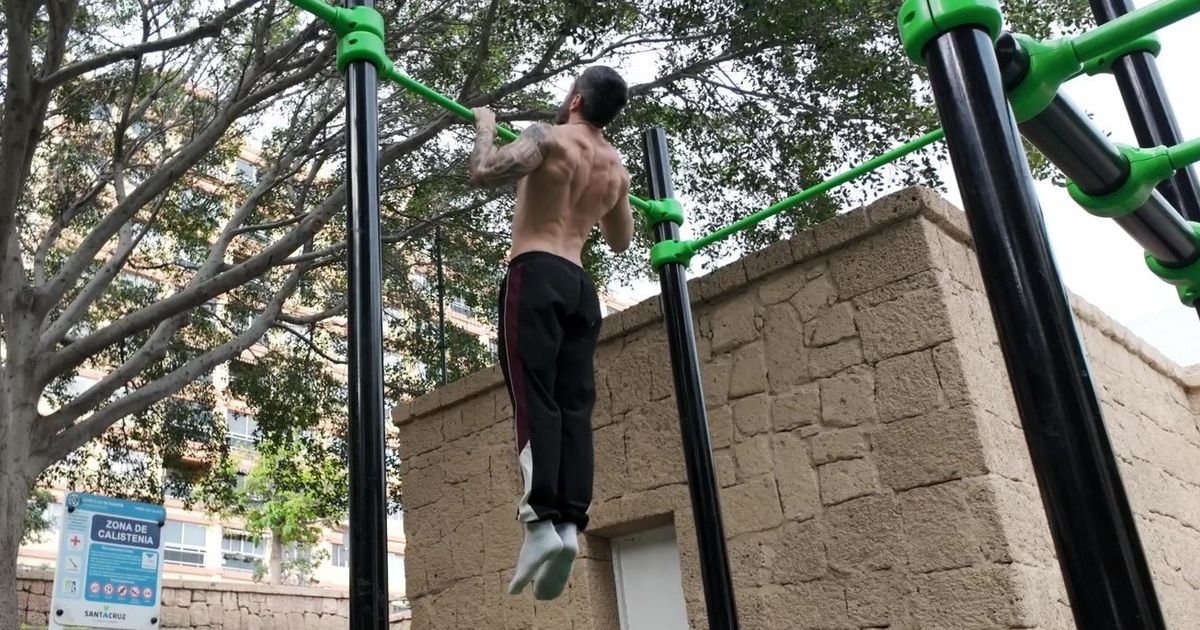
When you are in a dead hang position, your scapulae will naturally be elevated. Strict pull-up execution means that at the start of the movement, at the same time the elbows begin to flex, you transition from that elevated position into a retracted position.
This does not happen as an isolated, sudden movement. It should be done fluidly at the same time elbow flexion begins and the ascent starts. You could say that in the first half of the range of motion, you move smoothly from scapular elevation into retraction.
From there, as you continue bending the elbows and your chin rises above bar height, you should maintain that retraction, reaching its maximum point right at the end of the movement.
When you finish the rep and lower back to the starting position, you can fully extend the arms without returning all the way to scapular elevation, instead keeping a neutral position with slight muscular tension. Or you can return to scapular elevation and fully relax the muscles, provided that this does not create a rebound that helps you into the next rep. That would be considered a form of “cheating” and does not align with the values of control and strict execution in calisthenics.

In this exercise, the same principles apply as in pull-ups, with one difference: in the starting position you do not naturally tend toward scapular elevation. Because you are horizontal and face up, you tend to begin in scapular protraction instead.

When we get into the front lever position or any of its variations and progressions, our scapulae naturally tend to move toward protraction. But that puts the upper back in a rounded position, which makes the line look less straight. So we should aim for scapular retraction—not to reach full scapular retraction, but to resist that protraction and maintain a neutral position that allows for a straight horizontal line parallel to the floor.
Scapular retraction seems like a simple movement, but it’s very common to do it incorrectly at first. If you want to improve your technique and get more out of it in exercises like pull-ups or front lever, it’s worth spotting these mistakes as early as possible:
One of the most common mistakes is lifting the shoulders toward the ears, thinking that this activates the back more. In reality, scapular retraction means bringing the shoulder blades backward under control, not raising the shoulders. If you shrug the traps, you lose a more stable and efficient position.
Many people try to perform this movement but compensate by bending the arms. That shifts the work away from upper-back control and makes it depend more on the biceps and elbows. To learn it properly, it is important to practice while keeping the elbows straight.
Swinging or using inertia prevents you from feeling what the shoulder blades are actually doing. If there is momentum, there is less control. Retraction is best trained with short, deliberate, clean movements, prioritizing quality over reps.
Scapular retraction is an important technical foundation for moving better, gaining control, and building a stronger back in calisthenics. Understanding what the shoulder blades do, learning to move them without compensation, and practicing the movement with control can make a real difference in both basic exercises and more advanced progressions.
If you want to go deeper, we recommend reading our article on how to improve your pull-ups, as well as our article on the front lever, where this work plays a key role. And if you want a clear progression to train with structure and consistency, you can do it with our training programs in Calisteniapp.
By Yerai Alonso
Quiz personalizzato
Rispondi a 7 domande rapide e ti consiglieremo il programma più adatto.

Yerai Alonso
Cofundador de Calisteniapp, referente en calistenia y el street workout en Español. Con más de una década de experiencia, es creador de uno de los canales de YouTube más influyentes del sector. Autor del libro La calle es tu gimnasio, campeón de Canarias y jurado en competiciones nacionales e internacionales.
Unisciti alla nostra newsletter
Impara tutto quello che devi sapere sulla calisthenica
Discover the best calf exercises in calisthenics to train at home without equipment. Standing calf raises, single-leg, elevated, and progressions.
Discover what’s new in Calisteniapp versions 26.5 to 26.7: customised warm-ups, a load index, personal records, and photos in your logs.
Discover how to lose fat without losing muscle through calisthenics training. Nutrition strategies, moderate caloric deficit, and training for real body recomposition.