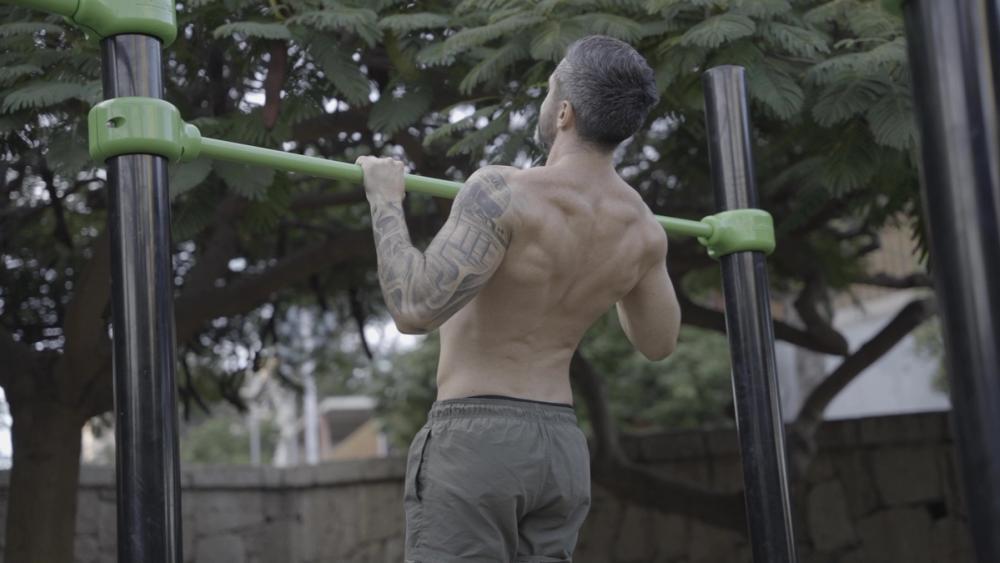
Complete Guide to Lower Trapezius Exercises in Calisthenics
Want to train your lower trapezius? Improve your posture and technique in pull-ups and handstands. No equipment, with progressions
What's new in Calisteniapp v26.9.0: community comments, a new weighted calisthenics program with RPE, and improvements to the routine builder.
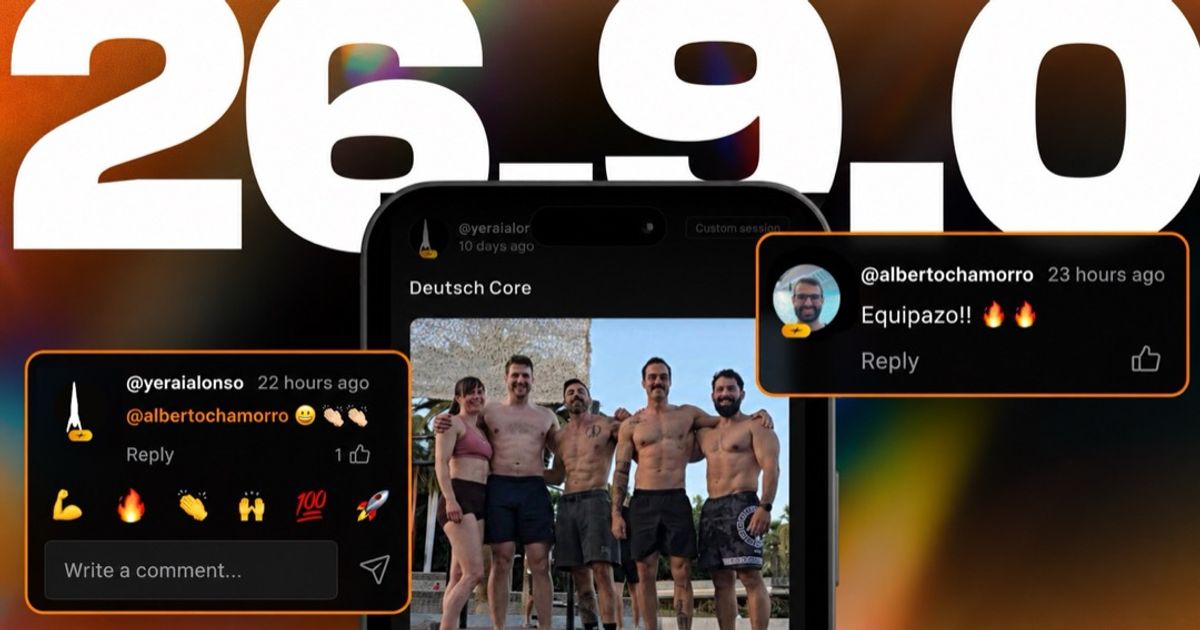
Version 26.9.0 brings new ways to connect with the community, a new program for training with added weight, and an easier way to build your routines.
This month's highlights:
Want to know how RPE works and what's changing in the routine builder? Keep reading.
The community feed arrived in v26.4.0 with «likes» on posts; v26.6.0 added photos. With v26.9.0, comments join the mix: the conversation now goes beyond a «like».
Comment on workout posts: share your thoughts on the session, encourage the person who shared it, and chat about how it went.
When bodyweight alone isn't enough, the next step is to add weight. The new weighted calisthenics program gives you a framework spanning 13 weeks to build strength with added weight, with planned sessions and progression.

Exercises with prescribed effort levels display their target RPE. RPE (Rating of Perceived Exertion) is a scale from 1 to 10 that measures perceived effort: how hard a set feels. It's a subjective assessment — RPE 10 is maximum effort, when you can't do any more reps with good form.
It shouldn't be confused with RIR (Reps in Reserve), the reps you have left in the tank: how many more repetitions you could have completed. It's a different, more objective concept, although the two are roughly related:
For weighted exercises, the right amount of added weight varies greatly from person to person and exercise to exercise. The target RPE gives you an effort level to aim for in each set so you can adjust the intensity during the session.
The target RPE guides your choice of added weight. For example, the session calls for 5 weighted pull-ups at RPE 8: choose a weight that makes those 5 reps challenging but controlled — using the approximate equivalence, you should finish with about 2 reps in reserve.
As with any perception-based scale, your RPE estimates improve with practice. The first few weeks help you calibrate what each level means for you; from there, adjusting a set's intensity is as quick as reading the number and choosing the added weight.
Building a routine manually means repeating the same actions over and over: find an exercise, add it, position it, repeat. Version 26.9.0 cuts down on those steps.
The result: less time building your routine and fewer mistakes when reorganizing it.
Thanks for training with us. If anything gets in your way (or you notice any issues after updating), reach out on Instagram (https://www.instagram.com/calisteniapp/), in our Discord community, or by email at info@calisteniapp.com.
Personalized quiz
Answer 7 quick questions and we will recommend the program that fits you best.

Iñaki Tajes
Ingeniero y cofundador de Calisteniapp, experto en diseño de productos digitales centrados en el usuario. Lidera la estrategia tecnológica de una de las apps de calistenia más utilizadas del mundo hispanohablante, Calisteniapp, una aplicación de entrenamiento con más de 3 millones de usuarios.
Learn everything you need to know about calisthenics
Want to train your lower trapezius? Improve your posture and technique in pull-ups and handstands. No equipment, with progressions
Find out how much water you need if you train calisthenics, when to drink it, and how hydration affects your strength and performance. A complete guide.

Discover the best glute exercises in calisthenics to train at home without weights. Glute bridge, isometric variations, progressions, and stretches.