Calisthenics Supplements: Which Ones Work and Which Are Unnecessary
Find out which supplements are worth taking if you train calisthenics (and which aren’t). Creatine, protein, caffeine, and more, backed by scientific evidence.
Want to train your lower trapezius? Improve your posture and technique in pull-ups and handstands. No equipment, with progressions
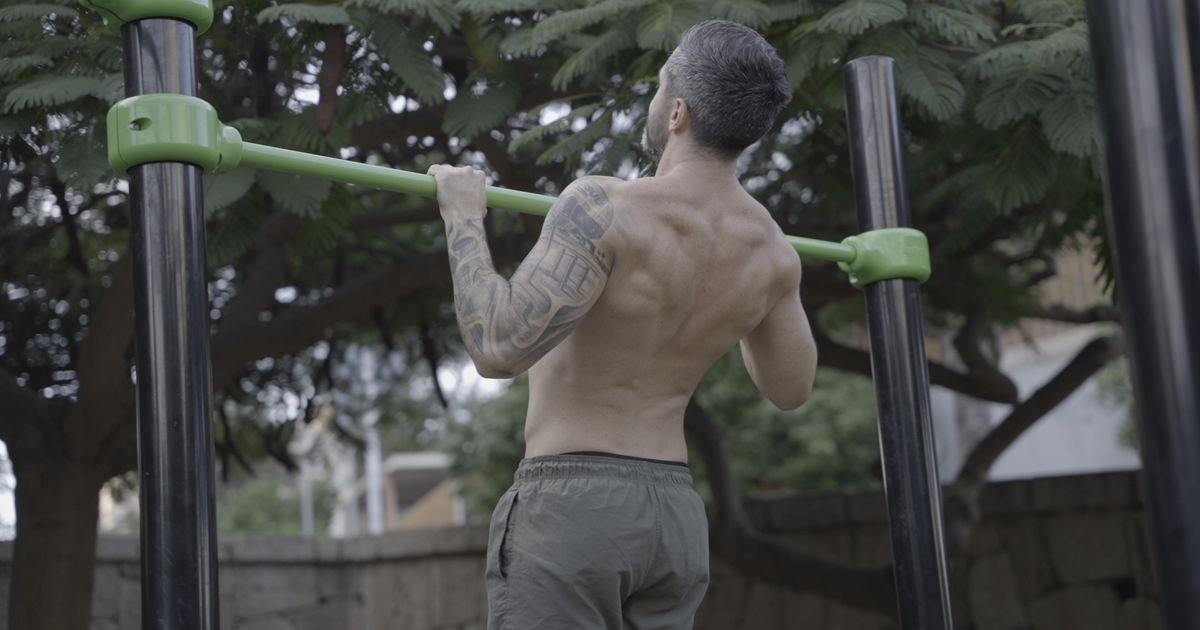
The lower trapezius is one of the lesser-known parts of the back, but it plays a very important role in scapular stability and movement. This is especially relevant in calisthenics, since it participates in one way or another in very common exercises such as pull-ups, dips or rows. However, many people have difficulty using and controlling their scapulae correctly, especially after spending most of the day sitting or with a fairly inactive posture, which can affect technique and movement control.
In this article I'll explain everything you need to know about the lower trapezius in calisthenics: its main functions, the best lower trapezius exercises to activate and strengthen it, how to integrate this work into your routine and how to stretch it correctly, so you can improve both your scapular control and your technique in the main calisthenics exercises.
The lower trapezius, as its name suggests, is the lowest portion of the trapezius muscle, which covers the middle-upper area of the back and the back of the neck.

The lower trapezius originates on the middle vertebrae of the spine and inserts on the scapula. Its main function is scapular stabilization, that is, keeping the scapulae in place to protect the joint.
However, the lower trapezius also participates in scapular mobility, so it performs three dynamic functions:
Scapular depression: moves the scapulae downward, as when you lower your shoulders, away from your ears.

This is the movement you perform when you support your body on parallel bars, whether doing dips, leg raises or an L-sit; this way, you keep your body from collapsing. You also perform this movement in pull-ups.
Scapular retraction: moves the scapulae backward, as when you stick your chest out, trying to bring the scapulae as close together as possible.

This is the movement you perform in all horizontal pulls, such as Australian pull-ups, front lever pull-ups or face pulls.
If you want to dive deeper into this topic, the importance of this movement in calisthenics and learn more exercises, I recommend the following article: Scapular Retraction in Calisthenics
Upward rotation of the scapulae: rotates the scapulae when you raise your arms. In the previous cases, the entire scapula moves as one. In this case, one part of the scapula stays relatively "fixed" and the other part rotates upward.

This is the movement you perform when you raise your arms, as in pike push-ups, handstand push-ups and all the different handstand presses.
Determining whether you have a weak lower trapezius is not as simple as looking at your posture or the position of your scapulae. The position and movement of the scapulae depend on several muscles and on the coordination between them, so having elevated or protracted shoulders does not necessarily mean you have a weak lower trapezius.
Rather than looking for an isolated visual sign, it is more useful to observe whether you have difficulty controlling certain scapular movements, especially when you try to perform exercises that require scapular depression or upward rotation.
First of all, as I already explained, the lower trapezius participates in many of the basic calisthenics exercises, especially those that require controlling and stabilizing the scapulae. For this reason, the basics already provide some work for this muscle.
If you want to dive deeper into the basic exercises where the lower trapezius matters most, I'll leave you the links to several articles you can read:
However, if you want to work the lower trapezius in a more specific way, you can use exercises that emphasize its different functions. These are some of the main ones:
This exercise works scapular retraction with your body weight. It consists of pulling the body only through the horizontal movement of the scapulae, without bending the elbows and without arching your back too much.
You can change the difficulty of the exercise by modifying the inclination of your body: the more horizontal your body is, the harder it will be, and vice versa.

This exercise works scapular depression with your body weight. It consists of raising the body only through the vertical movement of the scapulae, without bending the elbows, without extending the shoulders and without arching the spine.
If your goal is to emphasize the lower trapezius, it is important to understand that the movement should focus on scapular depression. Some people perform this exercise as if they were 'scapular retractions', raising the body too much and leaning it backward.
Although at first glance this may seem beneficial because you are working more than one function of the lower trapezius in a single exercise, the reality is more complex. Remember that the lower trapezius also participates in upward rotation of the scapulae and, when you raise and tilt your body in this exercise, you introduce other shoulder and scapular movements that can change the stimulus of the exercise (shoulder extension and downward rotation of the scapulae).
That is why, if what you are looking for is to use this exercise specifically to train scapular depression, it makes more sense to keep the movement as specific as possible. This is a clear example of how "more is not always better."
A better alternative is to perform an intermediate movement between the two previous exercises, between scapular depression and retraction; that is, a diagonal movement with the scapulae.
Just make sure your arms always stay at the same elevation angle and that the movement goes in the same direction as the arms. This is very different from doing a scapular depression plus shoulder extension and downward rotation of the scapulae.

This exercise also works scapular depression, but this time in a dip position, with the arms down.
As in the previous exercise, this consists of raising the body only through the vertical movement of the scapulae, without bending the elbows, without tilting the body and without flexing the spine.

A small difference between this exercise and hanging scapular depressions (or scapular pull-ups) is that, when performing this scapular movement with the arms down, the lower trapezius may be in a somewhat more lengthened position, because the scapulae will be rotated downward.
Based on the evidence available so far, training a muscle in more lengthened positions could be beneficial for hypertrophy. However, this is a mere hypothesis based on research on other muscle groups, so take this recommendation with caution.
Finally, this exercise works the third function of the lower trapezius: upward scapular rotation. It consists of raising the arms up and slightly out to the sides, precisely making a 'Y' shape with the body.
The most common way to do this exercise is with bands or small dumbbells. However, you can also do it with your body weight, whether with rings, a TRX or even an anchored towel/sheet. To do so, you have to place the rings or the towel at a height so that your arms form a 90° angle with your body. Likewise, the difficulty of the exercise will depend on the inclination of your body.
When performing this exercise, try to avoid shrugging your shoulders toward your ears. The idea is not to keep them completely still, but to control their movement and avoid excessive elevation of the shoulders.
If what you are looking for is to stretch the lower trapezius, you can use positions that take the scapulae in the opposite direction to some of its actions.
Therefore, with the arm down (scapula rotated downward), raise the shoulder (scapular elevation) and bring it forward (scapular protraction). To do this, grab the wrist of the side you are stretching with the other hand and pull backward and to the side.

Lower trapezius work can be included in your routines in several ways.
You can perform the previous exercises at the beginning of the routine, in your warm-ups, as activation exercises to get better scapular stability and better awareness when mobilizing the joint.
A very smart and efficient way to work this muscle is by performing the specific exercises in supersets with the basic exercises.
To do this, perform a normal set of a basic exercise, for example, Australian pull-ups. When you reach failure or are very close to it, without resting, continue the set with scapular rows. You can do the same with dips and pull-ups.
I already mentioned that the basics work the lower trapezius; however, the fact that this muscle participates in the exercise does not necessarily mean it receives enough stimulus to take it close to failure. Through this method, we take advantage of the initial stimulus of the basic exercise and then add a specific exercise to keep working the lower trapezius. This way, we can increase the stimulus this muscle receives without having to add another completely independent set.
Finally, you can perform these exercises in isolation, either at the end of a strengthening routine or as the main work in a mobility or active rest routine.
One of the most common mistakes in some exercises is letting the shoulders rise excessively toward the ears, especially when the goal is to perform a specific movement of the scapulae.
This can make the exercise be performed in a different way than the one we are looking for and increase the participation of other muscles, such as the upper trapezius. In some people, this can also increase discomfort or the feeling of tension in the neck area.
Note: I want to emphasize that this is not a mistake in all exercises. In vertical pushing exercises, such as pike push-ups, handstand push-ups or handstand presses, scapular elevation is part of the normal movement and should not be deliberately avoided.
In the specific exercises, the movement should come only from the scapula. At first, this can be a bit difficult or confusing, so it is very common for people to bend their elbows to try to perform the exercise.
If this happens to you, do an easier progression or lightly support your feet. This way, you will carry a lower percentage of your body weight, making the movement easier.
If you want to know specific progressions for pull-ups and dips, I recommend the following articles:
Again, the movement should come exclusively from the scapulae. It is common for some people to arch their back to complete the movement. This generally happens because they do not yet have good scapular awareness and, therefore, they compensate by moving the spine.
As in the previous case, do an easier progression and focus on mobilizing the scapulae, keeping the rest of the body in the same position.
The lower trapezius is a little-known part of the back, but it plays an important role in the control and stability of the scapulae, especially in calisthenics exercises such as pull-ups, dips and rows. Although the basic exercises already involve this muscle, we can also use more specific exercises to work its different functions, such as scapular rows, scapular depressions and Y-raises. In addition, we saw how to integrate these exercises into the routine, whether as a warm-up, in supersets with the basics or as isolated work, as well as the most common mistakes you should avoid and some options to stretch the lower trapezius.
If you want to improve your strength, technique and control in calisthenics, in Calisteniapp you will find routines and progressions designed to help you progress step by step. Download Calisteniapp and start training in a structured way.
Personalized quiz
Answer 7 quick questions and we will recommend the program that fits you best.
Learn everything you need to know about calisthenics
Find out which supplements are worth taking if you train calisthenics (and which aren’t). Creatine, protein, caffeine, and more, backed by scientific evidence.
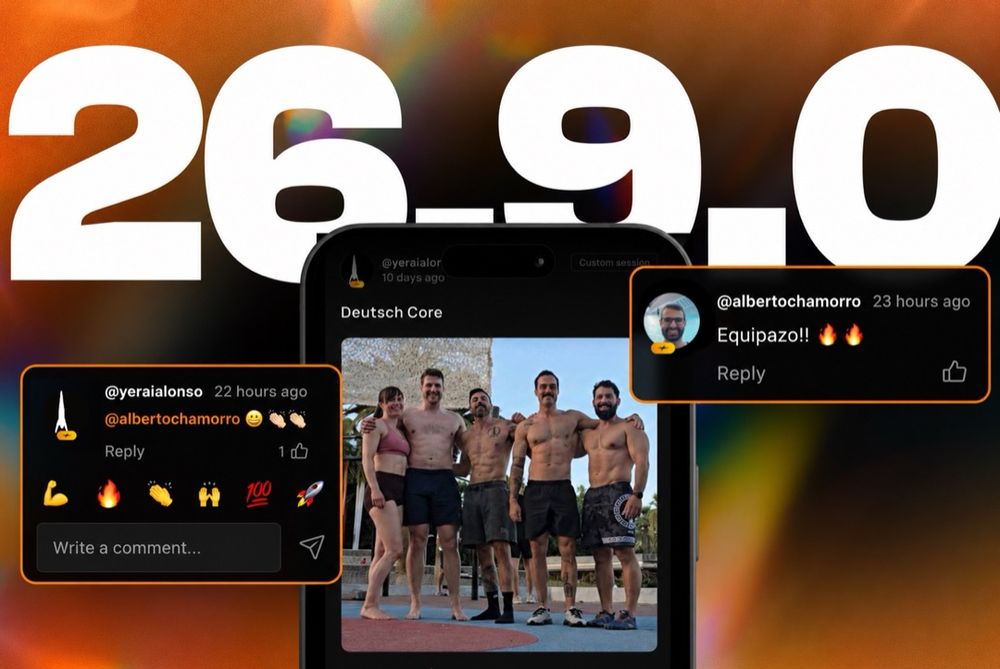
What's new in Calisteniapp v26.9.0: community comments, a new weighted calisthenics program with RPE, and improvements to the routine builder.
Find out how much water you need if you train calisthenics, when to drink it, and how hydration affects your strength and performance. A complete guide.