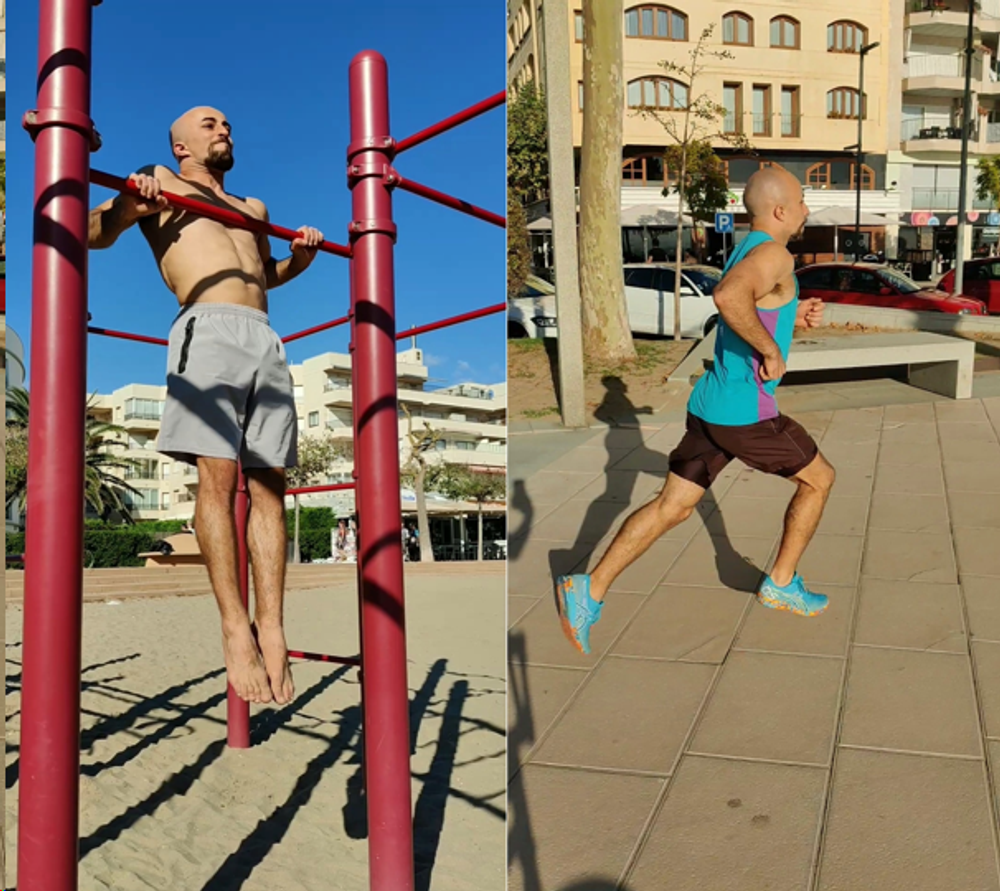
Does Running Hurt Your Calisthenics Progress?
Does combining running and calisthenics slow your progress? We explain what science says about cardio–strength interference and how to minimize it.
Want to learn how to make the best shakes for building muscle mass? Easy, protein-rich recipes with no need for expensive supplements.

Building muscle mass is not about drinking a particular shake, but about combining appropriate training with a diet that provides enough energy and protein. However, when it is difficult to meet those requirements through solid meals alone, shakes for building muscle mass can become a very practical tool.

They are quick to prepare, easy to adapt to individual needs, and allow you to combine protein, carbohydrates, and other nutrients in a single serving. Plus, there is no need to always rely on supplements or commercial products: everyday foods can be used to make well-rounded shakes that provide a substantial amount of energy.
Below, we will look at what a good muscle-building shake should contain and share several recipes, both with protein powder and made entirely from regular foods.
Before you start mixing ingredients, it is important to understand that a shake alone will not make you gain muscle. To promote hypertrophy, we need an appropriate training stimulus and must meet our energy and nutrient needs throughout the day.
That is why a shake designed for a muscle-building phase should primarily combine three components:
You can also include foods rich in fat, such as peanut butter or nuts, when you want to easily increase the shake's calorie content.
The amount of each ingredient should be adapted to individual needs. As a general guideline, physically active people typically aim for a daily protein intake of approximately 1.4–2.0 g/kg of body weight, and servings of around 20–40 g of high-quality protein can be a practical reference when distributing intake throughout the day.
So, rather than looking for a shake with the highest possible protein content, the goal is to make sure it fits into your daily diet.
Protein powder can be convenient when you are short on time or struggle to meet your requirements through food. It is not essential for building muscle mass, but it can be a practical tool. In fact, protein needs can be fully met through regular foods when your diet is well planned.
Here are three simple combinations.
Ingredients:
Blend all the ingredients until smooth. For a thinner shake, increase the amount of milk or add a little water.
This is a particularly simple combination because it brings together carbohydrates, mainly from the banana and oats, with a concentrated source of protein.
Approximate protein content: 35–40 g, depending on the milk and protein powder used.
Ingredients:
Blend until you reach the desired consistency.
Peanut butter increases the shake's energy density, which can make it particularly useful for people who struggle to consume enough calories during a muscle-building phase.
Approximate protein content: 35–40 g.
Ingredients:
Blend all the ingredients and adjust the amount of liquid to suit your preferred consistency.
Approximate protein content: 35–45 g, depending on the products used.
These amounts are guidelines. Not everyone needs a shake with 40 g of protein, and more protein does not automatically mean more muscle mass. What matters is considering your overall diet and daily requirements.
Can you make a muscle-building shake without using supplements? Of course.
Protein powder has no properties that make it essential for building muscle. It is simply a concentrated and convenient source of protein. Regular foods can also be used to make shakes that provide substantial amounts of this nutrient.
These three options are good examples.
Ingredients:
Blend everything until smooth.
In addition to protein, this shake provides a substantial amount of carbohydrates and energy. This can make it particularly useful for people who struggle to meet their calorie needs through solid meals.
Approximate protein content: 20–25 g.
Ingredients:
Blend all the ingredients. You can add ice for a colder, thicker consistency.
Approximate protein content: 25–30 g, depending on the yogurt and milk chosen.
Ingredients:
Blend all the ingredients until smooth.
Approximate protein content: 25–30 g.
In this recipe, it is especially important to use pasteurized eggs or egg whites suitable for consumption without cooking. We should not replace them with regular raw eggs due to the microbiological risk.
There is no set number of shakes you need to drink to gain muscle mass.
The answer to how many protein shakes to drink per day depends mainly on how much we need to eat and how much protein we are already getting from our regular diet.
Someone who fully meets their protein needs through food may not need any shakes. Someone else who struggles to meet their requirements due to their schedule, a lack of appetite, or convenience might use one.

For example, if we needed 120 g of protein per day and already reached that amount through our meals, adding several shakes simply to try to gain more muscle would not necessarily provide any additional benefit.
The priority is to reach an adequate total amount and spread it reasonably throughout the day. As a general guideline, servings of approximately 20–40 g of high-quality protein every 3–4 hours can help people who train distribute their intake appropriately.
A shake should therefore be seen as a supplement to our diet, not its foundation.
There is no mandatory time to drink it, either.
We can have a shake at different times depending on our needs and schedules. For example, it can work as a quick breakfast when we are short on time, as a meal or snack around a workout, or simply as a convenient way to increase energy intake when we are in a calorie surplus.
After training, it can be especially convenient for combining carbohydrates and protein, but there is no need to finish your last exercise and immediately rush to prepare a shake. The evidence places more importance on meeting daily protein needs and distributing intake appropriately than on an “anabolic window” lasting just a few minutes. Consuming protein before or after training can contribute to muscle protein synthesis.
Ultimately, the best time to drink it is whenever it helps us meet our nutritional needs conveniently.
One of the most common mistakes is thinking that a muscle-building shake has to be just water and protein powder. This combination provides protein, but if our goal is to increase muscle mass and we need to raise our energy intake, we can use the shake to include carbohydrates and, when needed, fats as well.
The second mistake is thinking that the more shakes we drink, the more muscle we will gain. Hypertrophy does not work that way. The results will depend on training, total energy intake, protein and carbohydrate intake, rest, and consistency, among other factors.
It is also worth avoiding reliance on commercial mixes simply because they are marketed as “mass-gaining” products. We can make a calorie-rich shake using ingredients as simple as milk, oats, banana, yogurt, or peanut butter.
The advantage of making it ourselves is that we can adjust the ingredients and quantities to suit our needs
There is no single recipe that we can consider the best shake for gaining muscle mass for everyone.
Someone who needs to increase their energy intake significantly may benefit from a shake with oats, banana, milk, and peanut butter. Someone else who already meets their calorie needs easily but struggles to get enough protein may need a different combination.
That is why, before asking ourselves which shake to drink, we should ask ourselves what gaps we need to fill in our diet.
Homemade shakes are simply a quick, affordable, and versatile tool to help us get the calories and protein we need. They can easily be made with everyday foods, and when practical, we can also add protein powder.
What truly matters for gaining muscle mass is still maintaining a diet tailored to our needs and combining it with training that provides the right stimulus.
If your goal is to gain muscle mass through calisthenics, you can complement your nutritional strategy with the program:
If you train specifically with rings, another option is the Hypertrophy with Rings program, designed to focus ring training on hypertrophy:
Personalized quiz
Answer 7 quick questions and we will recommend the program that fits you best.
Learn everything you need to know about calisthenics
Does combining running and calisthenics slow your progress? We explain what science says about cardio–strength interference and how to minimize it.

What's new in Calisteniapp v26.10.0: 20 new routines, AMRAP improvements, user blocking, and program start date changes.

Discover 20 easy, budget-friendly recipes to build muscle while you train. High-protein breakfasts, lunches, dinners, and snacks.