The best homemade shakes for building muscle mass
Want to learn how to make the best shakes for building muscle mass? Easy, protein-rich recipes with no need for expensive supplements.
Learn how to organize your calisthenics and running sessions around your goals: how many days to train, which session to prioritize, and how to schedule rest.

Combining calisthenics and running is an excellent way to develop both our strength and our aerobic capacity. But when we want to progress in both disciplines, simply adding calisthenics and running workouts isn't enough. To optimize results and progress safely, we need to consider how we organize our strength and endurance training.
Training both abilities at the same time, known as concurrent training, can cause interference between adaptations and affect our results when the training load (the stimuli) is not well planned. To learn more, you can check out the article we wrote on this topic: Does running hurt your calisthenics progress?
That's why, in this article, we'll look at how to organize calisthenics and running training, taking into account session order, available time, training load, and recovery. We'll also look at some examples of how to fit these sessions into our weekly schedule.
Before deciding how many days we'll dedicate to calisthenics or running, there's one essential thing we need to be clear about: what do we want to achieve with our training?
Wanting to maximize our calisthenics performance while using running as a complement is not the same as prioritizing running performance and using strength training to improve it.
We may also want to improve both abilities in a more balanced way, without necessarily aiming to compete or achieve peak performance in either one.
And all of these options are perfectly valid.
What matters is being realistic about our goals and understanding that our available time and capacity to recover are limited.
We can prioritize one discipline and keep improving in the other. However, the more advanced we are and the more ambitious our goals, the more important it becomes to decide where we invest our time and resources.
For example, if our main goal is to progress in calisthenics, we'll need to prioritize calisthenics sessions. On the other hand, if our priority is to improve running performance, we'll need to adapt our calisthenics training to the demands of running.
So, defining our main goal will be the first step in deciding how to organize the rest of our sessions.

Once we're clear on our main goal, the next step is to realistically assess how much time we have available to train.
Being able to do two workouts a day is very different from having only three or four days a week available.
Above all, there's no point in creating a plan we can't maintain in the long term.
We can organize our training in many different ways, depending on our goals and availability.
For example:
Main goal: Sample weekly schedule
These schedules are just examples. They don't mean we necessarily need to train this often to achieve our goals.
In fact, we can also do strength training and running on the same day, or even in the same session.
What matters is that the number of workouts and the stimulus each one provides are tailored to our goals, availability, and capacity to recover.
In addition, the stimulus provided by each discipline should align with our priorities.
If our main goal is strength, the volume and intensity of our aerobic training should not cause so much fatigue that it hinders our calisthenics progress.
On the other hand, if our main goal is running performance, strength training should focus on supporting that performance and have an appropriate place within our training plan.
If we're looking for an accessible strength training option to combine with other activities, we can use a program like Get Fit at Home by Calisteniapp, adjusting the rest of our activity to our goals and needs.

One of the most important aspects of organizing concurrent training is allowing adequate recovery between sessions.
Whenever possible, the ideal approach is to do strength training and running on different days, alternating training days and adding rest days to reduce accumulated fatigue.
But this schedule isn't always possible, nor is it necessarily always the best option, especially if we train frequently.
If we do two sessions on the same day, a good option is to space them several hours apart, preferably around six hours or more, although the time needed will depend on the intensity, volume, and characteristics of each workout.
For example, we can train calisthenics in the morning and go for a run in the afternoon or evening.
This gives us a little more time to recover from the first session before starting the second.
However, separating sessions is not enough if we accumulate too much training load.
We also need to organize our training stimuli to allow adequate recovery between demanding sessions, especially when both types of training place a significant load on the same muscle groups.
Ultimately, it is not just about how much we rest between workouts, but also how much training stimulus we are accumulating and our recovery needs and capacity.
As we have discussed, whenever possible, it is a good idea to separate strength and running sessions to minimize interference.
But if our schedule requires us to do both workouts back-to-back, the order in which we do them also matters.
In general, we should prioritize the type of training that aligns with our main goal.
In that case, if we have to do both workouts back-to-back, it is generally better to prioritize strength training, since fatigue from running can impair subsequent strength performance more than the other way around.
After all, the closer we want to perform to our maximum capacity, the more important it is to start training with as little fatigue as possible. This is especially important in exercises that require high levels of strength or power, where pre-existing fatigue can limit our ability to perform at our best.
That said, it will also depend on the characteristics of each session.
A short, easy run is not the same as a demanding interval workout, just as a leg strength session is not the same as an upper-body session.
So, in addition to the order, we need to consider the stimulus we are generating and how it may affect the next workout.
Now let's look at how we could organize a week of training.
Imagine someone who wants to improve both their strength and aerobic capacity, has five days available for training, and can do one session a day.
One possible schedule would be:
Day - Workout
This schedule allows for three strength sessions and two running sessions, alternating between the two types of training and leaving some days for recovery.
But it is important to understand that there is no single weekly schedule that works best for everyone.
For example, if we want to prepare for a long-distance race, we may need to include an extra running day and adjust the other sessions in our plan.
If our main goal is calisthenics, on the other hand, it may be worth reducing running volume or intensity to maintain higher-quality strength workouts.
We will also need to consider which muscle groups we work in each session, since doing a demanding leg session before a running workout is not the same as focusing mainly on the upper body.
For example, based on the same situation as above, another possible schedule could be:
Day - Workout
These examples are therefore only a reference to help us understand how we can spread out our workouts, not an individualized plan to follow without adjustments.
If you need ideas on how to use calisthenics training to help improve your running performance, check out our article: How to train calisthenics to improve your running performance.
For strength sessions, we can also use a structured program such as Calisteniapp's Beginner Upper/Lower Split, adjusting its schedule and load to fit the rest of our training.
Although this article has focused on how to combine calisthenics and running, the principles explained also apply to other types of aerobic training. For example, if we prefer to do cardio at home, we can use programs such as Calisteniapp's Fat Burn - Cardio, keeping in mind that we will need to adjust the training load to our goals and recovery capacity, just as we would with running.
Even with a well-organized plan, we still need to monitor how we are responding to training.
Because a schedule that works at first may stop working if we increase the intensity or volume, or if our circumstances change.
Some signs that may indicate we need to review our plan are:
These signs do not necessarily mean that we are training too much or that combining calisthenics and running is the problem.
But they may indicate that we need to review our training load, recovery, or other lifestyle factors.
And here it is important to remember that we do not always need to train more to improve.
Sometimes, adjusting the volume, intensity, or scheduling of our sessions can allow us to keep progressing without adding more training.
At certain times, it may even be necessary to reduce training to allow for better recovery.
As we have seen, there is no single weekly schedule that works for everyone.
The first step is to define what we want to achieve and, from there, decide how many sessions to devote to each activity, which workouts to prioritize, and how to schedule them to manage accumulated fatigue while taking into account the time we actually have available.
As a general rule, it is best to space calisthenics and running sessions as far apart as possible to minimize how much fatigue from one affects the other. If we have to combine them in a single session, we should organize them around our main goals. Ultimately, however, all of this will depend on our goals, fitness level, availability, and ability to recover.
With that in mind, we can do strength training and running on separate days, do two sessions on the same day, or even combine them in a single session.
What matters is that our training plan aligns with our goals and allows us to keep progressing.
And if you are looking for structured strength and conditioning programs to complement your training, on Calisteniapp you will find a range of options that you can adapt to your goals and needs.
Personalized quiz
Answer 7 quick questions and we will recommend the program that fits you best.

Isaac Brandão
Graduado en Educación Física (CAFYD) y entrenador especializado en calistenia y running. Creador del Método AthleticV, combina el entrenamiento de fuerza con calistenia y la carrera bajo un enfoque de Calistenia Híbrida para desarrollar fuerza, resistencia y una condición física completa mediante una planificación estructurada y progresiva, sin necesidad de ir al gimnasio.
Learn everything you need to know about calisthenics
Want to learn how to make the best shakes for building muscle mass? Easy, protein-rich recipes with no need for expensive supplements.
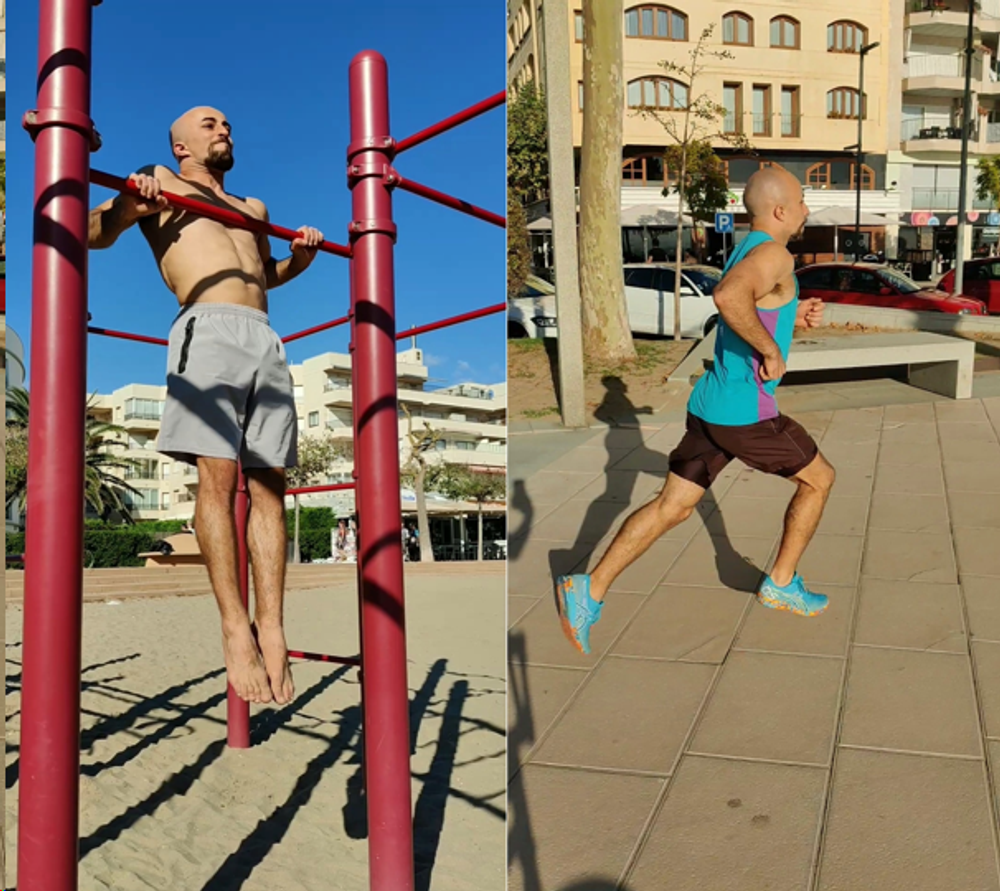
Does combining running and calisthenics slow your progress? We explain what science says about cardio–strength interference and how to minimize it.
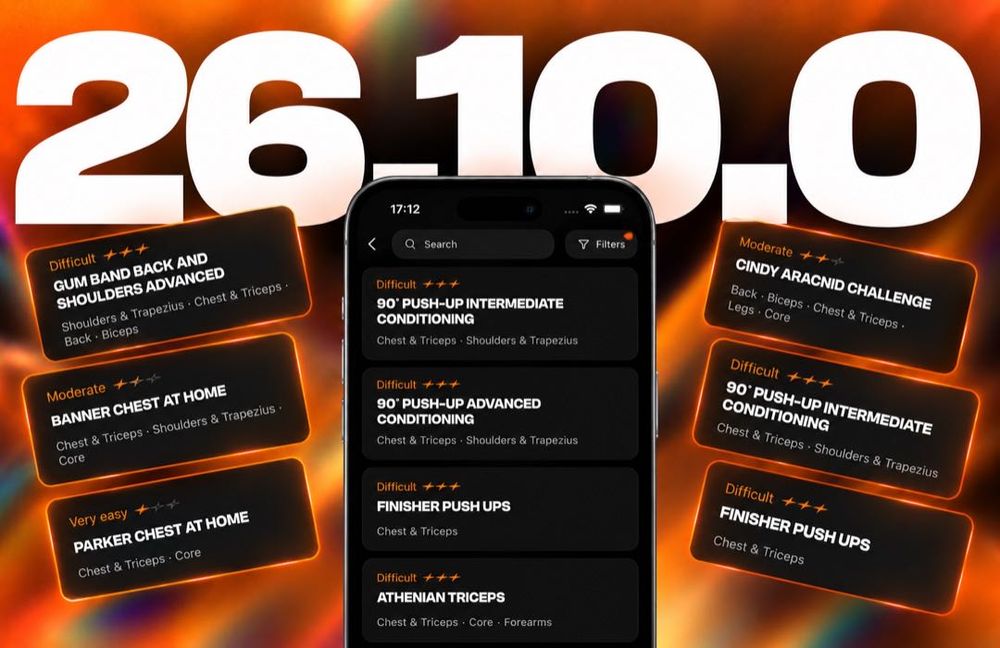
What's new in Calisteniapp v26.10.0: 20 new routines, AMRAP improvements, user blocking, and program start date changes.