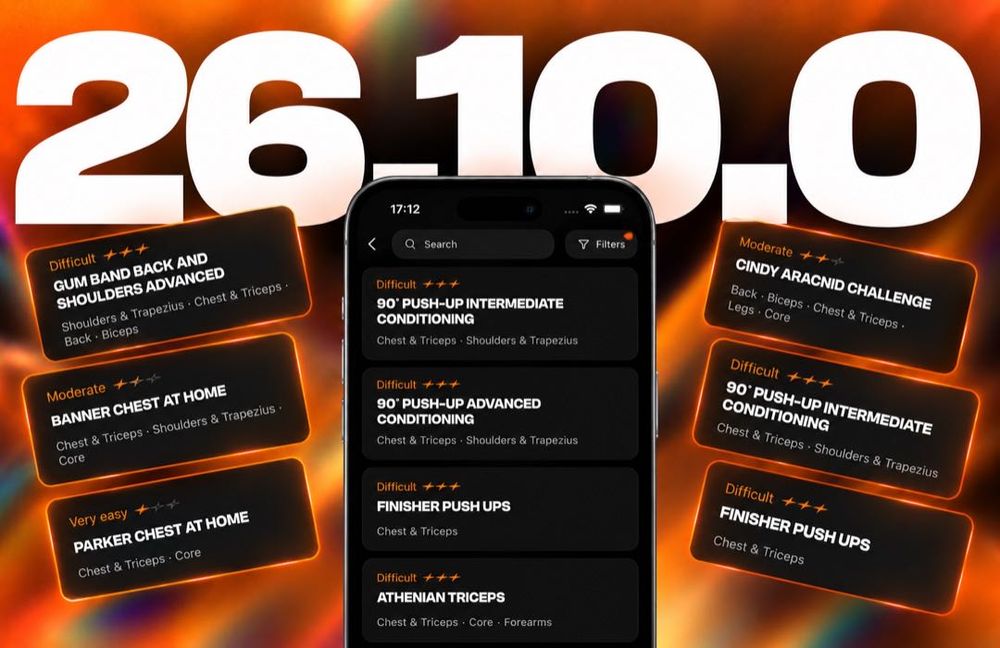
Latest Calisteniapp Update - v26.10.0
What's new in Calisteniapp v26.10.0: 20 new routines, AMRAP improvements, user blocking, and program start date changes.
Does combining running and calisthenics slow your progress? We explain what science says about cardio–strength interference and how to minimize it.
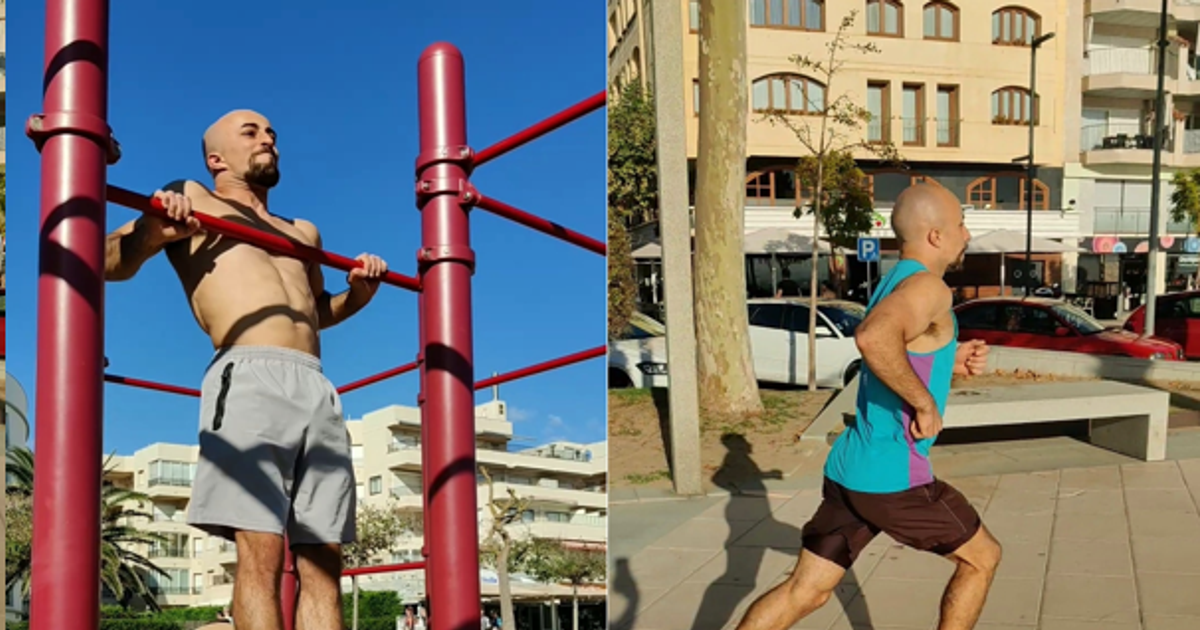
If you train calisthenics and are thinking about taking up running, you may have wondered: could running cause me to lose strength or muscle mass, or stop making progress in calisthenics?
And the answer is yes, it can happen.
Training strength and endurance at the same time—what we call concurrent training—can create an interference effect between the adaptations to both types of training when the training load is not properly planned.
This means that taking up running could cause us to plateau or even lose strength and muscle mass. But this does not mean that running and calisthenics are incompatible, or that taking up running will automatically hurt our strength progress.
If we account for the variables that can cause interference between the two types of training and adjust our training load, rest, and recovery to suit our goal, we can avoid that interference and keep progressing while reaping the benefits of both strength training and aerobic training.

When we train strength and endurance at the same time, we aim to trigger different adaptations in our bodies.
And when the training load is not properly planned, these adaptations can interfere with each other and affect the results we achieve.
This is what we call the interference effect.
In practice, this means that if you start running while training calisthenics and simply keep adding more training without considering total volume, intensity, rest, or your ability to recover, you could start to plateau or even lose strength and muscle mass.

This graph is from one of the first studies to observe the interference effect by comparing a specific protocol of strength training, strength + endurance training, and endurance training.. Hickson, R. C. (1980)
But running itself is not the problem.
The problem arises when we try to pile on different stimuli without considering how they interact or whether our bodies have enough time and resources to recover.
Endurance training and strength training create different stimuli and, therefore, different adaptations.
Among other things, aerobic training promotes adaptations related to the muscle's oxidative capacity, such as improved mitochondrial function and increased mitochondrial content. Strength training, on the other hand, focuses more on adaptations related to force production, hypertrophy, and various neuromuscular adaptations, such as improved motor unit synchronization and recruitment.
At the molecular level, different signaling pathways are also involved, including AMPK, which is more closely associated with adaptations to endurance exercise, and mTOR, which is especially important in processes related to protein synthesis and muscle hypertrophy.
This does not mean that our bodies have to "choose" between getting stronger and improving endurance. But when we accumulate too much training stimulus and do not properly manage training load and recovery, the adaptations we seek from both types of training can interfere with each other.

Molecular signaling in strength training vs. aerobic training. Hawley, J.A. (2009)
There is no universal amount of running that we can define as "too much."
The amount of running we can do without hurting our calisthenics progress depends on several factors: our main goal, our level, our availability, the rest of our lifestyle, our total training load, and our ability to recover.
Adding a small amount of running to a training plan focused mainly on calisthenics is not the same as accumulating a very high volume of strength and endurance training at the same time.
For example, our main goal might be to maximize our calisthenics performance while also improving our aerobic capacity.

However, the more advanced we are and the more ambitious our goals—especially at a competitive level—the more resources we will need to devote to calisthenics-specific training, and the less room we will have to add other stimuli without affecting our overall training plan.
That is why supplementing calisthenics with 1-2 short running sessions is not the same as preparing for a marathon while trying to maximize our calisthenics performance. In the latter case, both disciplines require a significant amount of time, training, and recovery, and it will be much harder to maximize performance in both simultaneously.
But recovery and the interference effect are not the only factors we need to consider.
Our training time is also limited.
Adding 15 or 20 minutes of aerobic work might not physiologically hinder our strength progress, and we may be perfectly capable of recovering and continuing to progress while reaping its benefits. But we could also use those same 15 or 20 minutes to practice a handstand, improve muscle-up technique, or work on any other specific aspect of our performance.
And this becomes even more important as we get more advanced.
Calisthenics requires more than just strength. Depending on our goals, we may need to devote time to technique training, mobility, visualization, or, if we compete, even aspects such as tactics, strategy, and creating and practicing combos.
Therefore, being able to recover from a workout does not necessarily mean it is the best way to spend our training time.
That does not mean it is not worth spending some of that time improving our aerobic capacity. It simply means we need to decide how much room we want to give it based on our goals and priorities.
If we are combining running and calisthenics, there are some signs that may indicate we should review our training plan.
One of them would be starting to plateau or even seeing a drop in performance in exercises that require high levels of strength, such as the front lever, planche, human flag or back lever, or noticing a loss of power in explosive movements like the muscle-up.
Another sign could be accumulating too much fatigue and noticing that it is becoming increasingly difficult to recover between sessions or maintain the quality of our strength workouts.
We may also notice unintentional weight loss or difficulty maintaining our muscle mass, especially if we have significantly increased our training load — that is, the stimulus we are generating — without adjusting other factors such as our nutrition and recovery.
None of these signs on its own means that running is the problem.
But if they appear after increasing our running load, they can be a good reason to assess whether we are trying to take on too much or need to fine-tune our training.
If we want to train both at the same time, the first step is to be clear about what our main goal is.
From there, we need to adapt our training to our availability and needs, stick to our rest periods, manage our training load (stimulus) and allow enough recovery.
It is not simply a matter of adding together a separate calisthenics routine and running routine.
We need to see them as parts of a single training plan.
If our main goal is to maintain or gain strength and muscle mass while running, we can use a program like Calisteniapp’s Full-Body Muscle Building as a foundation for structuring our strength work, then adjust the rest of our training load to our priorities.
We will also need to consider other factors that affect our recovery, such as nutrition. If we significantly increase our energy expenditure when we start running but do not adjust our food intake, it may be harder to maintain our weight and muscle mass.
Exactly how to spread calisthenics and running sessions throughout the week will depend on our goals and priorities, so this deserves a dedicated discussion in a future article.

So far, we have mainly discussed how to prevent the two types of training from interfering with each other, but aerobic training can also offer benefits even if our main goal is to progress in calisthenics.
The most obvious benefit is developing our cardiorespiratory fitness and endurance, while also gaining the cardiovascular health benefits associated with aerobic training.
We can also infer that better aerobic capacity could help us recover more efficiently between sets, exercises and even training sessions.
After all, many recovery processes depend on aerobic metabolism. A greater ability to transport and use oxygen and deliver nutrients to our tissues could make these processes more efficient.
In fact, studies involving athletes in primarily strength-focused sports show that it is possible to improve aerobic capacity without necessarily compromising strength gains, as long as both stimuli are properly integrated into training [4,5,6].
And not all benefits have to be measured solely in terms of performance.

Going for a run can help us switch off, explore different places, add variety and break away from the monotony of our usual workouts. It can also allow us to take part in other activities we simply enjoy.
That is why developing our aerobic capacity does not have to conflict with making calisthenics our priority.
We can aim to maximize our calisthenics performance while improving our endurance. We simply need to understand that the more advanced we become and the more specific our needs are, the smaller the window we will have for introducing less specific work, such as running.
If you want to keep your legs strong and continue building muscle mass even while running, you can supplement your training with a targeted program like Calisteniapp’s Bigger Legs, always keeping in mind the load we are already generating through running.

Despite everything mentioned above, in my view, combining calisthenics and running is an excellent way to develop well-rounded fitness and become stronger, healthier and more enduring.
Both disciplines are based on moving and controlling our bodies through space. We do not need to go to a gym to do them, they require relatively little equipment and we can train almost anywhere.
What is more, if we plan our training properly, we can continue building strength while improving our aerobic capacity and gain both the musculoskeletal health benefits of strength training and the cardiovascular benefits of aerobic training.
The problem, then, is not combining the two disciplines.
It lies in trying to simply combine both types of training without considering our goals, our recovery capacity, and the total training load we are generating.
It can, but it doesn't have to.
Training strength and endurance at the same time can create an interference effect and affect our adaptations when the training load is not properly planned.
But that doesn't mean we have to choose between running and making progress in calisthenics.
The key is to tailor our training plan to our goals, manage the total training load, and allow enough recovery.
We can even prioritize and aim to maximize our performance in one while continuing to develop the other, keeping in mind that the higher our level and the more ambitious our goals, the more important it becomes to decide where we invest our time and resources.
And that is precisely the key: not thinking of calisthenics and running as two separate types of training, but as parts of the same plan.
If you want to build your strength with a structured training plan and progressions tailored to different levels, in Calisteniapp you'll find a range of programs to help you keep progressing while developing more well-rounded fitness.
1. Hickson, R. C. (1980). Interference of strength development by simultaneously training for strength and endurance. European Journal of Applied Physiology and Occupational Physiology, 45, 255–263.
2. Wilson, J. M., et al. (2012). Concurrent training: A meta-analysis examining interference of aerobic and resistance exercises. Journal of Strength and Conditioning Research, 26(8), 2293–2307.
3. Hawley, J. A. (2009). Molecular responses to strength and endurance training: Are they incompatible? Applied Physiology, Nutrition, and Metabolism, 34(3), 355–361.
4. Androulakis-Korakakis, P., et al. (2018). Effects of exercise modality during additional “high-intensity interval training” on aerobic fitness and strength in powerlifting and strongman athletes. Journal of Strength and Conditioning Research, 32(2), 450–457.
5. Dolan, C., et al. (2024). The effect of time-equated concurrent training programs in resistance-trained men. Journal of Human Kinetics, 91, 87–103.
6. Schumann, M., et al. (2022). Compatibility of concurrent aerobic and strength training for skeletal muscle size and function: An updated systematic review and meta-analysis. Sports Medicine, 52, 601–612.
7. Petré, H., et al. (2018). The effect of two different concurrent training programs on strength and power gains in highly-trained individuals. Journal of Sports Science and Medicine, 17(2), 167–173.
Personalized quiz
Answer 7 quick questions and we will recommend the program that fits you best.

Isaac Brandão
Graduado en Educación Física (CAFYD) y entrenador especializado en calistenia y running. Creador del Método AthleticV, combina el entrenamiento de fuerza con calistenia y la carrera bajo un enfoque de Calistenia Híbrida para desarrollar fuerza, resistencia y una condición física completa mediante una planificación estructurada y progresiva, sin necesidad de ir al gimnasio.
Learn everything you need to know about calisthenics
What's new in Calisteniapp v26.10.0: 20 new routines, AMRAP improvements, user blocking, and program start date changes.

Discover 20 easy, budget-friendly recipes to build muscle while you train. High-protein breakfasts, lunches, dinners, and snacks.

Discover how calisthenics can improve your running performance: which exercises to focus on, how to train for strength, and why it can help you run better.