How to organize your calisthenics and running sessions to avoid interference
Learn how to organize your calisthenics and running sessions around your goals: how many days to train, which session to prioritize, and how to schedule rest.
Are you an ectomorph struggling to build muscle? Discover how many calories to eat, which foods to prioritize, and how to adapt your calisthenics routine.
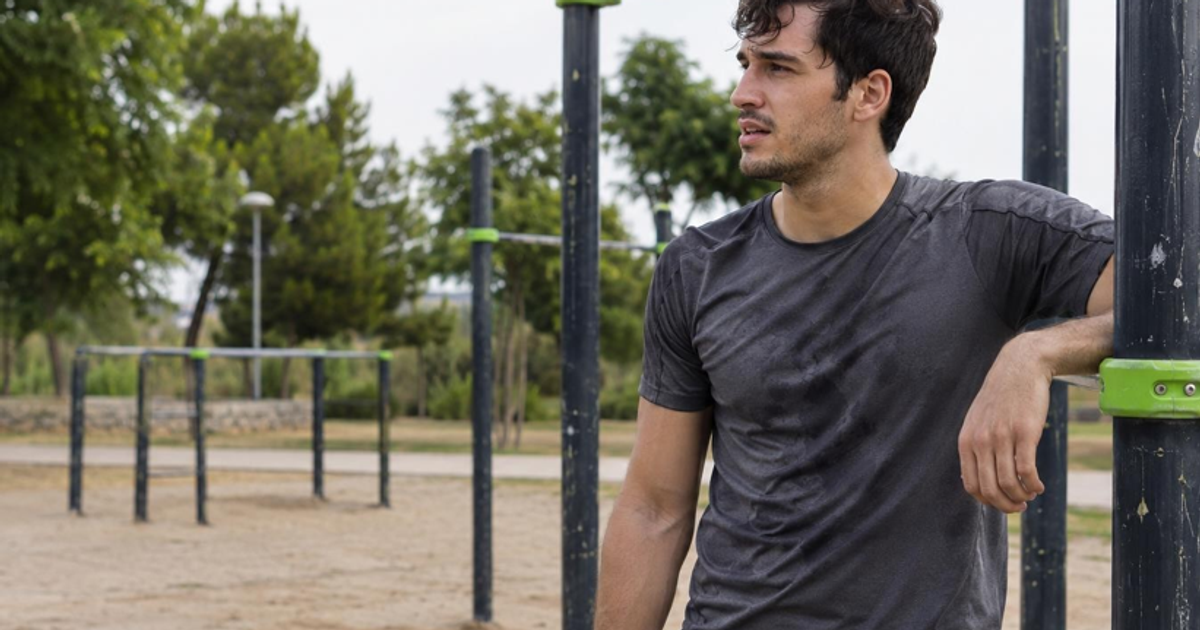
You train consistently and try to eat more, yet you still struggle to gain weight. If this sounds familiar, you may have searched for how to build muscle as an ectomorph.
This term is often used to describe people with a slim build. However, your physical appearance does not reveal your metabolism or determine how much muscle you can develop.
Calisthenics can help you build strength and muscle if you adjust exercise difficulty, make progress, and support your training with enough food and
recovery. You do not need a radical strategy just because you are thin; you need to identify what is holding back your progress.
In this guide, you will find practical tips for eating more without feeling overly full, organizing your workouts, and moving beyond the “ectomorph” label.
In everyday fitness language, an ectomorph is someone with a slim appearance, relatively long limbs, and little visible muscle mass.
The term comes from somatotypes, a way of describing body build using three components:
COMPONENT: WHAT IT DESCRIBES

These components can be combined. They are not three rigid categories that everyone fits into perfectly, nor do they represent an unchangeable physical destiny.
Being thin does not prove that you have a metabolism that is extraordinarily fast or that you respond less well to training. There is also no at-home wrist test that can determine which diet you need.
To guide your nutrition and training, it is more useful to assess:
You can have a slim build and still gain muscle. You need to adapt your strategy to your current circumstances, without assuming that your somatotype requires special rules.
There can be several reasons why you struggle to build muscle. Often, a few overlap, and none can be identified simply by looking at your body.
One large meal does not reflect your entire week. You might eat a lot after training and, without realizing it, offset that by skipping breakfast, having a smaller dinner, or eating little on workdays.
If you want to gain weight, consistently eating enough matters. That is why it is worth reviewing your whole routine before concluding that you “eat loads but never gain weight.”
Walking, working on your feet, cycling to get around, or constantly moving also uses energy.
There are also individual differences in spontaneous movement and in how energy expenditure changes when food intake increases. This variability has been observed experimentally, but it cannot automatically be attributed to having an ectomorphic appearance.
Repeating the same push-ups and pull-ups for months may stop providing enough stimulus.
To support muscle growth, your training needs to remain challenging: increase repetitions, extend your range of motion, use harder variations, or add weight when appropriate.
Building muscle takes time. Early strength gains also involve learning and adapting to the exercises, so they do not always come with immediate visual changes.
Assess your progress over months and use several benchmarks: performance, comparable photos, measurements, and your weight trend.
If you are losing weight unintentionally or develop persistent symptoms, such as diarrhea, palpitations, or loss of appetite, it is worth consulting a healthcare professional rather than attributing them to your somatotype.
The so-called “ectomorph diet” does not require special foods. Its practical goal is to help you eat enough in a way you can sustain.
There is no set number determined by that label. Your needs depend on body size, daily activity, training, and other individual factors.
If your weight stays stable for several weeks, your usual intake is probably close to your average energy expenditure. To encourage gradual weight gain, you can increase your portions and observe how your body responds.

A small energy surplus can help support muscle growth, but eating much more does not guarantee better results. A trial involving trained individuals found that faster weight gain was mainly associated with greater fat accumulation, although its results should be interpreted with the small sample size in mind.
To learn about the calculations and how to adjust them, see the guide to a calorie surplus.
Before doubling your portions, try adding an option that works for you:
Stick with the change and review the trend over about two or three weeks. If there is no progress and you have been consistent, you can adjust again.
A practical range for healthy people who strength train and want to build muscle is approximately 1.6–2.2 g of protein per kilogram of body weight per day. You do not always need to reach the upper end of the range.
If you fill up on huge amounts of chicken, egg whites and shakes, there may be little room left for other foods. You'll find more detail in our article on how much protein you need if you train calisthenics.
You can have three, four or five meals. Choose the meal pattern that makes it easiest to meet your needs.
If you struggle to finish large meals, an afternoon snack may work better than making dinner even bigger. To build your overall meal plan, check out our diet for gaining muscle mass.
When your appetite is low, it often helps to increase calories without greatly increasing the volume of food on your plate.
Here are some simple additions:
ADDITION - SUGGESTED AMOUNT - APPROXIMATE ENERGY
The figures vary depending on the product. These are options to include according to your needs, not amounts you should add all at once.
You can make:
A smoothie can be convenient when eating feels difficult, but it has no special muscle-building properties.
There's no need to cut out vegetables, fruit or legumes either. You can spread them throughout the day and avoid letting large salads or excessive amounts of fibre fill you up before you finish your meals.
MEAL - SUGGESTION
(Amounts refer to uncooked weights, except for ready-to-eat foods. For canned products and mozzarella, drained weight is used).
This is an example of how to organise your meals, not a meal plan calculated to suit every slim person. Adjust portions and protein sources to your needs and preferences. You can find more shopping options in foods for building muscle.
Training for ectomorphs should be based on the same principles as any hypertrophy programme: suitable exercises, sufficient effort, progression and recovery.
To get started, three full-body sessions can be a practical setup. Include pushing, pulling and leg work.
You don't need to keep adding sets. If your performance declines and you start sessions without having recovered, review your training volume before doing more.
An example of progression could be:
EXERCISE - WAYS TO PROGRESS
Finishing many of your sets with a few repetitions left before failure is a practical guideline. You don't need to reach failure on every set.
As a starting guideline, you can rest for around two or three minutes between demanding sets of basic exercises, taking longer if you need to.
Record the variation, repetitions and load. This lets you check whether you're progressing rather than judging a session solely by how tired it makes you.
If you have rings and meet the requirements, the Hypertrophy with Rings programme offers another option for organising your upper-body training.
The label cannot predict your individual response. Review your nutrition, training and recovery before assuming you can't make progress.
Rapid weight gain does not equal rapid muscle gain. Adjust your intake gradually and monitor your performance too.
Recovery continues between sessions. Make sure you eat enough on rest days too.
Constant variety makes it difficult to measure progress. Keep a consistent structure long enough to assess whether it works.
Finishing exhausted doesn't guarantee a better workout. Prioritise challenging sets with good technique and adequate recovery.
You don't need to give it up just because you're slim. Adjust the amount so it fits with your food intake and recovery from strength training.
If you're already improving your nutrition, the next step is to follow a progression you can evaluate.
Discover the Ectomorphs programme by Calisteniapp, designed to build muscle mass throughout the body using basic calisthenics exercises.
The programme includes different phases and has entry requirements, so it's worth checking that it suits your level before starting. Its name helps identify the goal, but it doesn't mean there is a training physiology unique to ectomorphs.
Eating consistently, logging your workouts and adjusting based on your progress will give you more useful information than any body-type label. Start with a sustainable structure and build progress session by session.
Personalized quiz
Answer 7 quick questions and we will recommend the program that fits you best.
Learn everything you need to know about calisthenics
Learn how to organize your calisthenics and running sessions around your goals: how many days to train, which session to prioritize, and how to schedule rest.
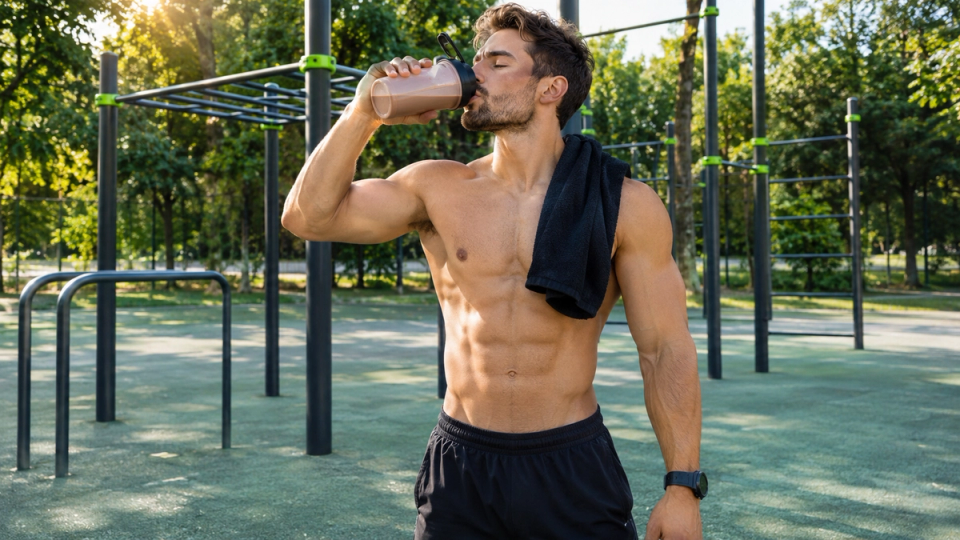
Want to learn how to make the best shakes for building muscle mass? Easy, protein-rich recipes with no need for expensive supplements.
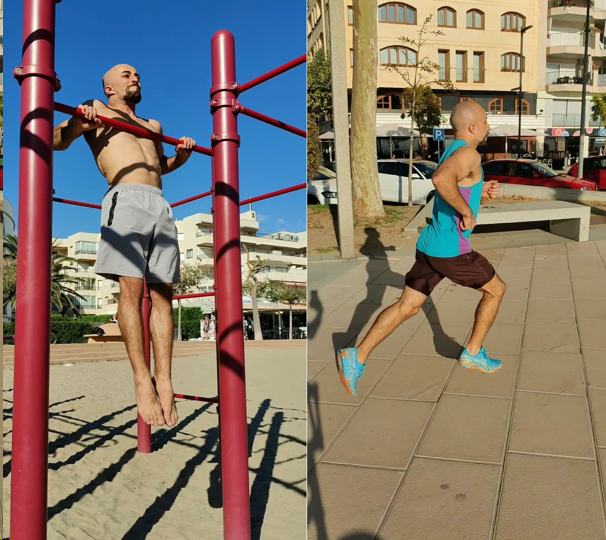
Does combining running and calisthenics slow your progress? We explain what science says about cardio–strength interference and how to minimize it.