
How to Train Calisthenics to Improve Your Running Performance
Discover how calisthenics can improve your running performance: which exercises to focus on, how to train for strength, and why it can help you run better.
Not sure how much protein you need per day if you train calisthenics to build muscle, recover better, and keep progressing? Here’s what you need to know.
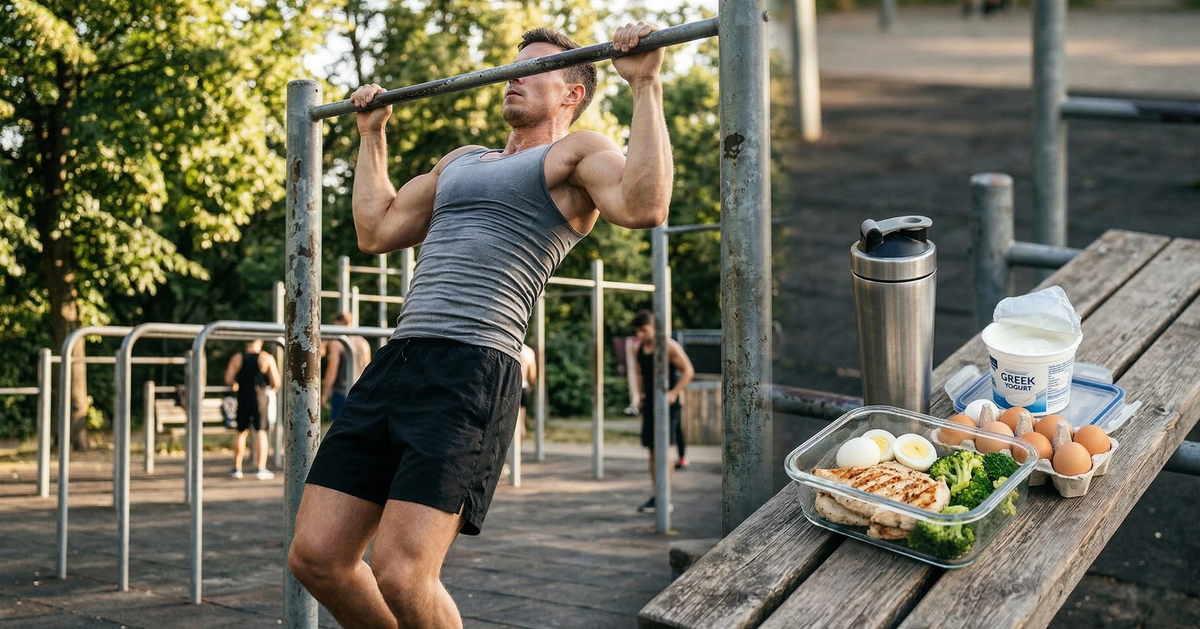
Protein is a key nutrient when you train calisthenics. Still, there’s a lot of confusion around how much protein you actually need. Between myths, exaggerated numbers, and one-size-fits-all recommendations, it’s easy to get lost.
In this article, I’ll explain how much you need based on scientific evidence and how to calculate it simply, with practical examples.
The amount depends on three main factors:
According to the scientific evidence, for people who do strength training—and calisthenics is strength training—the current recommendation is:
1.6–2.2 g of protein per kg of body weight per day
Body weight (kg) × 1.6–2.2
(walking, yoga, basic Pilates, etc.)
(calisthenics, CrossFit, combat sports, gym training, etc.)
Protein is one of the three essential macronutrients and plays key structural and functional roles in the body. It is made up of amino acids, which act as the “building blocks” of muscle tissue.
Muscle is largely made up of proteins such as actin and myosin. If you don’t consume enough protein, your body doesn’t have the material it needs to maintain or build muscle mass after training.
Strength training causes micro-tears in muscle fibers. This process is normal and necessary for adaptation.
Protein helps to:
Adequate protein intake in athletes is associated with:
It’s not just about “building muscle,” but about optimizing performance and sustaining long-term progress.
If you’re wondering how much protein per kilo you need, the answer depends mainly on your physique goal. Maintaining muscle mass is not the same as building muscle or cutting body fat.
If you train but your goal is to maintain your current body composition:
1.2–1.6 g of protein per kg of body weight per day
Enough to preserve muscle mass and support recovery.
If your goal is to increase muscle mass:
1.6–2.2 g/kg/day
This is the range with the strongest scientific support in strength training.
When you’re in a calorie deficit, protein becomes even more important to avoid losing muscle mass:
2.0–2.4 g/kg/day
A higher range helps preserve muscle while you reduce body fat.

From a physiological standpoint, protein does not work differently in calisthenics than it does in weight training. Both are forms of strength training that stimulate muscle protein synthesis (MPS).
Systematic reviews on strength training show that:
Calisthenics is based on relative strength—strength in relation to your body weight. That’s why:
Protein needs in calisthenics are not different from gym training from a physiological point of view.
What matters is not eating “more,” but eating the amount supported by scientific evidence and adapted to your goal.

For years, people talked about a very narrow “anabolic window” after training. However, current scientific evidence shows that what matters most is your total daily protein intake, not the exact minute when you consume it.
Systematic reviews in strength training conclude that:

Post-workout protein can be useful, especially if:
In these cases, consuming around 0.3–0.5 g/kg after training helps stimulate protein synthesis.
But if you ate protein 1–2 hours before training, the anabolic stimulus is still active, and there’s no immediate urgency.
Here are some of the most interesting high-protein foods based on protein quality and nutritional profile:
Here’s an example of a high-protein diet.
Breakfast:
250 g plain 0% Greek yogurt, 30 g whey protein, 40 g oats, 15 g peanut butter, and 100 g berries.
Lunch:
190 g chicken, 100 g rice (raw weight), 10 g extra virgin olive oil, and 180 g vegetables.
Snack:
2 eggs, 200 ml egg whites, 80 g wholegrain bread, and 1 piece of fruit.
Dinner:
220 g fish (white fish), 350 g potato, 10 g extra virgin olive oil, and 160 g vegetables.
According to the scientific evidence, you do not need protein powder if you already meet your daily requirements through food.
The deciding factor is your total daily protein intake, not the supplement itself.
It can be useful if:
In other words, it’s about convenience and efficiency, not physiological necessity. It’s not mandatory.
It is the protein source with the strongest scientific backing in a sports context.
(pea, soy, rice, etc.)
The evidence shows that when total protein and leucine intake are matched, the results for muscle gain are similar.

Evidence:
Meta-analyses in strength training show that total daily protein is what matters, not the format (food vs. supplement).
If you reach 1.6–2.2 g/kg/day through food, a shake provides no additional benefit.
Consuming almost all your protein in one meal—for example, only at dinner.
Evidence:
Muscle protein synthesis is optimized when you consume around 0.3–0.5 g/kg per meal, spread across 3–5 meals.
Eating 100 g in a single sitting does not create a proportionally greater response.
Daily total matters, but so does strategic distribution.
Thinking you need to increase protein and reduce the other macronutrients.
Evidence:
Protein does not compensate for a poorly planned calorie deficit.
During a calorie deficit, increasing protein helps to:
Current sports nutrition guidelines recommend:
That would mean around 140–170 g/day during a fat-loss phase.
Total energy intake remains the main factor for losing fat, but protein helps protect muscle mass.
In healthy people, current evidence shows that intakes of up to 2.2–2.5 g/kg/day are safe. Kidney damage has not been shown in healthy individuals, and there is no solid evidence that it “damages the liver” in people without pre-existing disease.
It should, however, be individualized in people with diagnosed kidney disease.
The issue is usually displacing other nutrients, not protein itself.
Protein synthesis responds more to the weekly average than to a single isolated day. One low day won’t ruin your progress. What matters is long-term consistency. In athletes, maintaining an adequate weekly average is enough.
Adherence matters more than daily perfection.
It depends on the amino acid profile, leucine content, and digestibility.
Animal protein usually has a higher leucine density and a better protein quality score.
However, when total protein intake—and leucine—is matched, muscle gain results are similar.
Strategies for plant-based diets:
Train with structured hypertrophy and strength programs, plus guided routines designed to help you progress intelligently and safely.
Start training today with a real plan. Download it here:
https://calisteniapp.com/es/download
Personalized quiz
Answer 7 quick questions and we will recommend the program that fits you best.
Learn everything you need to know about calisthenics
Discover how calisthenics can improve your running performance: which exercises to focus on, how to train for strength, and why it can help you run better.
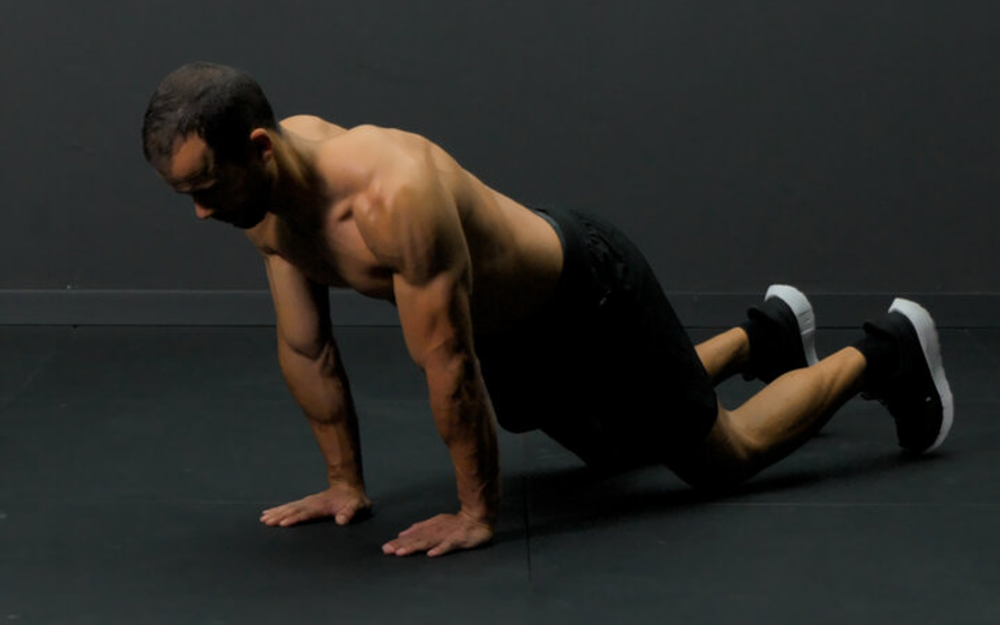
Discover the best wrist mobility and warm-up exercises for calisthenics. Rotations, progressions, and tips to protect your wrists during handstands and push-ups.

Find out which supplements are worth taking if you train calisthenics (and which aren’t). Creatine, protein, caffeine, and more, backed by scientific evidence.