Glute Exercises in Calisthenics: The Complete No-Equipment Guide
Discover the best glute exercises in calisthenics to train at home without weights. Glute bridge, isometric variations, progressions, and stretches.
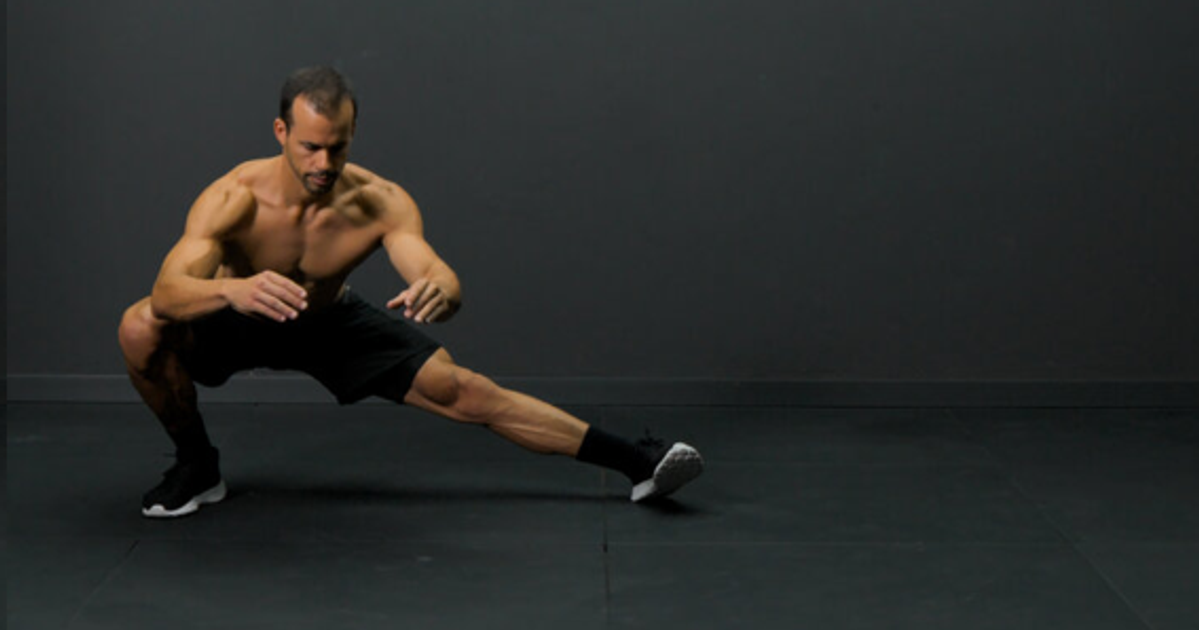
Calisthenics is usually associated mainly with pull-ups, dips, and other upper-body exercises. For this reason, there is a belief that it is not a good option for developing the legs or that, sooner or later, you have to use weights in order to progress. However, the truth is that the legs can also be trained very intensely using only bodyweight, as long as you choose the right exercises and progressions.
In fact, there are many leg exercises you can do at home that allow you to work your quads, glutes, hamstrings, calves, and even less commonly discussed muscles such as the hip flexors or the tibialis anterior. And although many people think that leg exercises without weights are too easy, the difficulty can be increased significantly through unilateral variations, larger ranges of motion, or more advanced progressions.
In this complete guide to calisthenics for legs, we’ll go over the main muscles of the lower body, the best exercises for each muscle group, the most useful progressions to keep improving, and a complete routine you can use as a starting point to begin training legs with calisthenics effectively.
When it comes to leg training, many people believe that you absolutely have to go to a gym or lift weights. However, this belief is wrong.
For muscles to grow and get stronger, they need to receive a stimulus that generates the necessary adaptations. Once the muscle adapts to that stimulus, you need to apply a progressively greater one. This is what is known as progressive overload.
The biggest advantage of the gym is that you start with a weight that matches your level and progress from there. However, not everything comes down to weight. There are multiple ways to increase the intensity of exercises without adding extra weight or changing our bodyweight.
It’s all about knowing how to choose the right exercises and progressions that, from a biomechanical standpoint, generate a good stimulus using your own bodyweight.
Before moving on to the exercises, let’s quickly review the muscles of the leg so you can understand exactly what you are working in each exercise.
In the fitness world, when we say “leg,” we generally refer to the entire lower body, meaning all the muscles from the hip or pelvis downward.
Since we are talking about practically half the body, I will only mention the largest and most superficial muscles, and I will divide them according to their main location.
Now that we know all the muscles, it’s time to go over the best leg exercises you can do using only your bodyweight.
To do this, we will divide these exercises into two main categories: compound exercises and isolation exercises.
Let’s start with compound exercises. These are all exercises that work several lower-body muscle groups at the same time.

The first exercise is the squat. This consists of performing a movement as if you were going to sit down, bending your knees and keeping your torso upright.
The squat is one of the most basic and fundamental human movements. For this reason, it is part of the major lifts in powerlifting and streetlifting, and it is essential in weightlifting or Olympic lifting.
The main muscles involved in the squat are the quadriceps and the gluteus maximus. However, other secondary muscles are also involved, such as some adductors that assist in hip extension, the calves in plantar flexion, and stabilizing muscles such as the gluteus medius and minimus, the spinal erectors, and the abdominal muscles.

The split squat, or static lunge, consists of performing a squat with one foot farther forward than the other. This way, a greater proportion of the weight will fall on the front leg.
Lunges are similar to the previous exercise, with the difference that, in this case, you start with both feet together.
You can do lunges by stepping forward, stepping backward, or walking forward in a straight line.
The easiest option is the split squat, as it is more stable and requires less coordination.
If your goal is to place greater emphasis on the quadriceps, the best option is the forward lunge, returning afterward to the starting position.
If your goal is to place greater emphasis on the glutes, the best option is the walking lunge in a straight line, especially if you take long steps.

The Bulgarian squat, or Bulgarian split squat, is very similar to the split squat. However, in this case, the back foot is supported on an elevated surface, whether that is a chair, a bench, or any platform that is roughly at knee height.

This exercise consists of stepping up onto an elevated platform with one leg, as if you were climbing a relatively high step.
Here, the level of difficulty will depend mainly on the height of the platform.
Try to perform the exercise primarily with the leg that is stepping up, as it is very common to cheat by pushing off with the other leg.
If you notice that you can only get up by pushing off with the other leg, it is better to use a lower platform.

The pistol squat consists of performing a squat on one leg.
For this exercise, I recommend trying it only if you can already do a very strict step-up onto a fairly high platform. Otherwise, you probably won’t have enough strength to perform it correctly.
In addition, I recommend starting by doing the pistol squat on an elevated surface, as this way you won’t have to bend the free leg as much.
Generally, people do not struggle with this exercise because of a lack of strength, but because of a lack of lower-body mobility.
As you progress, you can use increasingly lower platforms, until you can finally perform the exercise on the floor.

Lastly, I can’t finish this list without mentioning the popular lateral lunge or cossack squat.
As the name suggests, it consists of performing a lunge by moving sideways.
To do this, you have to start as if you were going to perform a squat, with your feet quite far apart. Then, you lower yourself toward one side while keeping the other leg completely straight.
This variation slightly increases the activation of the adductors of the leg that remains extended.

The second exercise is the deadlift. This consists of performing a movement as if you were bending down to pick something up from the floor, keeping your back straight.
The deadlift is also a basic and fundamental movement, which is why it is part of the major lifts in powerlifting and is essential in weightlifting.
The main muscles involved in the deadlift are the glutes and hamstrings. Other muscles are also involved, such as the spinal erectors and, to a lesser extent, the quadriceps.
There is also a variation known as the Romanian deadlift, which consists of keeping the knees slightly bent while emphasizing the hip hinge movement.
In this case, there will be greater involvement of the hamstrings and spinal erectors and, consequently, less involvement of the quadriceps.

The third exercise is hyperextensions, also known as back extensions.
This exercise is very similar to the Romanian deadlift, as it consists of supporting the legs and thighs on a specific bench to perform a hip hinge movement.
Therefore, the main muscles will also be the hamstrings, glutes, and spinal erectors.

The fourth exercise is reverse hyperextensions.
As the name suggests, they consist of performing the same hip hinge movement, but this time with the torso fixed and supported on a bench. Therefore, the legs are what move during the exercise.
Now let’s go over the exercises that work a muscle group in a more isolated way.
It should be clarified that stabilizing muscles will always be involved, but in this case we are referring to exercises that allow you to emphasize specific muscle groups in the leg.

The glute bridge consists of lying on your back with your knees bent and raising your hips until you form a straight line from your knees to your shoulders.
On the other hand, the hip thrust is basically the same movement, but with the upper back supported on an elevated surface.
Technically, both are multi-joint exercises. However, I decided to include them in this category because the glutes do most of the work, since the involvement of the rest of the lower-body muscles is relatively low (1).

This exercise consists of lying on your side and raising your hip from a position similar to a side plank.
The easiest progression consists of supporting yourself on the knee and the lower part of the thigh. The more advanced variation consists of supporting yourself on the outer edge of the foot. This way, the lever will be longer and the exercise more difficult.
Through this movement, we perform hip abduction, so you will work the upper portion of the gluteus maximus, the gluteus medius, the gluteus minimus, and also the obliques.

The first exercise for the hamstrings is the floor hamstring curl, which consists of lying on your back in a glute bridge position and extending the knees by sliding the heels along the floor, without letting the hips touch the ground.
In theory, this is also a multi-joint exercise because it involves hip extension. However, the glutes work isometrically and at a relatively low intensity compared to the hamstrings, which do most of the work.
This exercise can also be performed hanging from a low bar. In this case, the feet remain fixed and the whole body moves. This variation is uncommon, but it is an excellent option for working the hamstrings in a calisthenics park.

The second exercise for the hamstrings is the Nordic curl or assisted Nordic curl.
To perform it, you must get on your knees and secure your feet under a bench or have a partner help you prevent them from lifting off the floor.
From that position, you can perform a kind of leg curl with your feet fixed, letting the rest of your body fall forward.
Despite how it looks, this exercise is quite difficult.
The most common way to practice it is with negative reps, lowering slowly as far as you can and returning with assistance using a push-up.
You can also perform partial reps or use a resistance band to reduce the difficulty.

The first exercise for the quadriceps is the sissy squat.
This exercise basically consists of performing a squat while keeping the hip relatively fixed throughout the movement, so that most of the work falls on knee extension.

The second exercise for the quadriceps is the floor knee extension, also known as the reverse Nordic curl.
As the name suggests, it consists of getting into a position similar to the Nordic curl, but leaning the body backward instead of forward.
If you want to learn more quadriceps exercises with a more detailed explanation, I recommend the following blog article: The 10 Best Quadriceps Exercises in Calisthenics

This exercise is very similar to side hip raises, with the difference that, in this case, you must support the inner part of the leg that stays on top.
This way, you will be working the opposite movement: hip adduction.
As with side hip raises, you can support yourself on the inner part of the thigh or on the inner edge of the foot to modify the difficulty of the exercise.
The hip flexors are a fairly forgotten muscle group. In addition, they have a certain “bad reputation” because they are heavily involved in abdominal exercises, which is why many people try to minimize their activation in order to focus the work completely on that area.
On the other hand, there is also a belief that the hip flexors should be stretched, but not trained. However, they are still muscles that, when weakened, can cause problems.
In addition, they are very important in sports such as athletics and even in calisthenics, especially for elements such as the L-Sit, the V-Sit, and presses to handstand from a pike position.

The best exercises for this muscle group in calisthenics are L sit raises or leg raises to L sit.
This exercise can be performed both on parallel bars and hanging from a bar.
If you want to increase the difficulty, you can raise your legs higher and higher, progressing toward a V sit position or even performing toes to bar if you do it hanging.

This exercise consists of rising onto the balls of your feet, lifting your heels, a movement known as ankle plantar flexion.
In this case, I recommend performing the exercise on an elevated platform so you can stretch the muscle well and take advantage of the full range of motion.

The tibialis anterior is another fairly forgotten muscle. However, just because it is a small and not very aesthetic muscle does not mean we should not strengthen it.
To work it, simply perform the opposite movement to the previous exercise.
Lean against a wall and lift the tips of your feet, feeling the tension in the front of the lower leg.
As you have probably already noticed, there are relatively easy exercises, but also some quite difficult ones, such as the pistol squat or the Nordic curl.
I have already given you some tips to reduce the difficulty of the more complex exercises. Now I’m going to explain how to progress in those that are simpler.
To start, try to perform each exercise with good technique and using a full range of motion.
It is very common for people to think an exercise is too easy, but when you look at how they perform it, you realize they are using poor technique, a very short range of motion, or too much momentum.
If you already perform the exercise with very clean technique, the next logical step is to increase the number of repetitions.
You can try to reach a range of 15 to 20 repetitions. If your goal is to improve endurance and increase muscle mass, you could even reach 40 repetitions.
However, I do not recommend going over 50 repetitions, as beyond that point the exercise is no longer especially efficient, both in terms of stimulus and time invested.
In that case, I recommend using the following form of progression.
I already explained that in the gym you normally progress by adding more and more weight to the exercises.
Since we cannot easily increase our bodyweight, one of the strategies we have to progress is to distribute a greater proportion of the weight onto one leg.
The most popular variation is the pistol squat, but you can also perform unilateral variations in most of the exercises we have reviewed: deadlift, hyperextensions, hip thrust, hamstring curl, or calf raises.
You can also progress by developing explosive strength, performing the exercises as fast as possible or incorporating jumps when appropriate.
The only thing I want you to keep in mind is that this is simply a different path. Generally, explosive variations are not the best option if your main goal is to increase muscle mass. In that case, it is usually more advisable to apply the previous progression methods.
If you want to learn more about leg training in calisthenics, I recommend the following article: Legs and Calisthenics: Yes, You Can Gain Muscle Mass (If You Do This Right)
If you are looking for a basic routine that works the main muscles of the legs, I recommend the following:
With this routine, you will work the glutes and adductors through any of the squat variations, the quadriceps through the squat and one of the isolation exercises for this muscle group, the hamstrings through one of the knee flexion exercises, the calves with calf raises, and the hip flexors together with the abs in the L sit raises.
Clearly, this is just an example. If you are not interested in training a particular muscle or you want to emphasize another one more, you can replace an exercise with any of the ones we reviewed throughout the article.
In addition, if you are looking for something more complete and structured in the long term, I recommend the Bigger Legs Program that you can find in the Calisteniapp app.
As you can see, it is possible to perform a complete leg workout using only calisthenics exercises. Although we cannot add weight in the same way as in a gym, there are enough exercises and progressions to work all the muscle groups of the lower body and keep improving for a long time.
The key is not to limit yourself to traditional squats. As you progress, you can use more demanding variations, unilateral exercises, and different methods to increase intensity without needing additional equipment. This way, you will be able to keep developing strength, muscle mass, and body control using only your own weight.
And best of all, you don’t need equipment to get started. With a few well-chosen exercises and an appropriate progression, you can already build an effective routine to train legs at home.
If you are looking for more complete planning, with structured progressions and routines for all levels, you can find specific leg programs inside the Calisteniapp app.
References
Plotkin et al. (2023). Hip thrust and back squat training elicit similar gluteus muscle hypertrophy and transfer similarly to the deadlift.
By Alex Belt
Quiz personalizado
Responda 7 perguntas rápidas e vamos recomendar o programa que melhor se adapta a você.
Aprenda tudo o que precisa saber sobre calistenia
Discover the best glute exercises in calisthenics to train at home without weights. Glute bridge, isometric variations, progressions, and stretches.
Discover what foods to eat to gain muscle while training calisthenics. A complete list of proteins, carbohydrates, and healthy fats with examples and practical tips.
Discover the best calf exercises in calisthenics to train at home without equipment. Standing calf raises, single-leg, elevated, and progressions.