Calisthenics Supplements: Which Ones Work and Which Are Unnecessary
Find out which supplements are worth taking if you train calisthenics (and which aren’t). Creatine, protein, caffeine, and more, backed by scientific evidence.
If you want to know everything about how to make dragon flags, here's a complete guide geared towards real progressions.
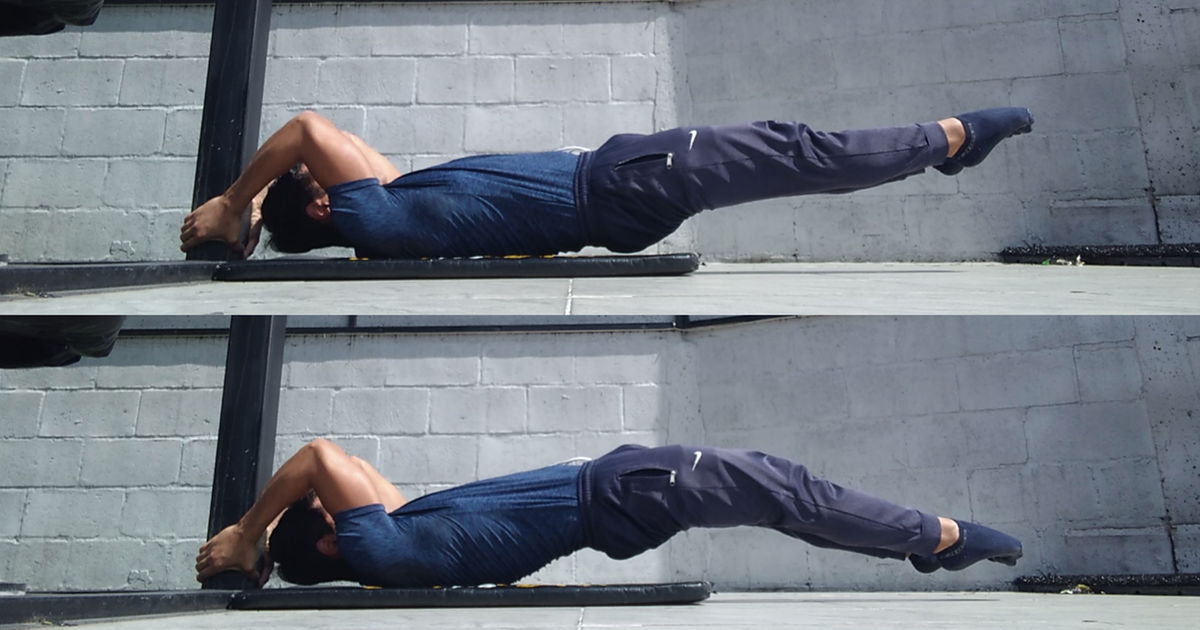
The Dragon Flag is a calisthenics exercise that stands out for its high demand for strength, body control, and core stability. Although it is often classified as an abdominal exercise, it actually requires the coordinated activation of multiple muscle groups to keep the body perfectly aligned and suspended in the air.
In this article, we will analyze the Dragon Flag in depth: what it is exactly, how to execute the correct technique, which muscles are involved, common mistakes, variations, progressions, and how to train it intelligently based on different goals.

The Dragon Flag is a calisthenics exercise popularized by Bruce Lee; he was known worldwide as "The Little Dragon," hence its name. While "Flag" describes the posture—maintaining the body completely straight and suspended in the air—the exercise uses the upper back and hands as the primary support points.
To perform the Dragon Flag, all you need is a solid anchor point. This can be a weight bench, a pole, a low bar, or any other support that allows you to grip firmly.
In the Dragon Flag, the entire body must be perfectly aligned from shoulders to feet. Therefore, you must maintain the spine and hips in a neutral position; they should not be flexed or extended. You must perform a posterior pelvic tilt, strongly contracting the abdominals and glutes. To complete the alignment, the knees should be fully extended and the toes pointed (though the latter is more for aesthetics).
Note: Do not confuse joint positions with the muscular actions involved. Even though the spine and hips stay in a neutral position, the involved muscles must isometrically flex these joints; otherwise, the spine and hips would extend, causing you to lose body alignment.

It is generally claimed that the Dragon Flag is an "ab exercise," and while true, you cannot lift your body using only your abs. You must apply force throughout almost the entire body. Let’s break down the muscles one by one:

Any action that causes you to lose body alignment is considered a mistake.
The "Banana" Posture: Arching the entire body. This usually happens when the athlete lacks the strength to maintain full alignment. Repeating this can lead to joint pain or injury.

Hip Flexion during the Concentric Phase: Bending at the hips while lifting the body. This is a "cheat" that shortens the lever to make the exercise easier due to a lack of strength.

Soft Knees: Having good alignment everywhere except the knees. Remember to keep your entire body under tension, including the quads.

The Dragon Flag is not a beginner exercise. You need:
I recommend mastering the Hollow Body Hold first. Once you can hold a perfect Hollow Body for at least 30 seconds without losing form, you are ready to start training for the Dragon Flag.

There are two main ways to progress:
Changing the Angle: If performing it isometrically, start with your body in a more vertical/diagonal position and gradually lower it toward the horizontal. The closer to the floor, the harder it gets.

Changing Body Length (Leverage):

We can categorize the Dragon Flag based on the type of movement and muscle emphasis:


The Dragon Flag acts as a complementary exercise here.
Use the dynamic shoulder extension variant.
The exercise becomes the main focus of the routine.
What are the benefits? It develops immense core stability, full-body coordination, and raw pulling strength. It is a vital stepping stone for advanced moves like the Front Lever.
How long does it take to learn? If you already have a solid base (can hold a Hollow Body), you can typically achieve it in under 6 months. However, progress varies for everyone.
Why don't I feel my abs? This usually happens due to poor form. Ensure you are maintaining a posterior pelvic tilt and a neutral spine. If you relax your core, your hip flexors will take over the load, and your back will arch.
By Álex Belt
Personalized quiz
Answer 7 quick questions and we will recommend the program that fits you best.
Learn everything you need to know about calisthenics
Find out which supplements are worth taking if you train calisthenics (and which aren’t). Creatine, protein, caffeine, and more, backed by scientific evidence.
What's new in Calisteniapp v26.9.0: community comments, a new weighted calisthenics program with RPE, and improvements to the routine builder.
Want to train your lower trapezius? Improve your posture and technique in pull-ups and handstands. No equipment, with progressions