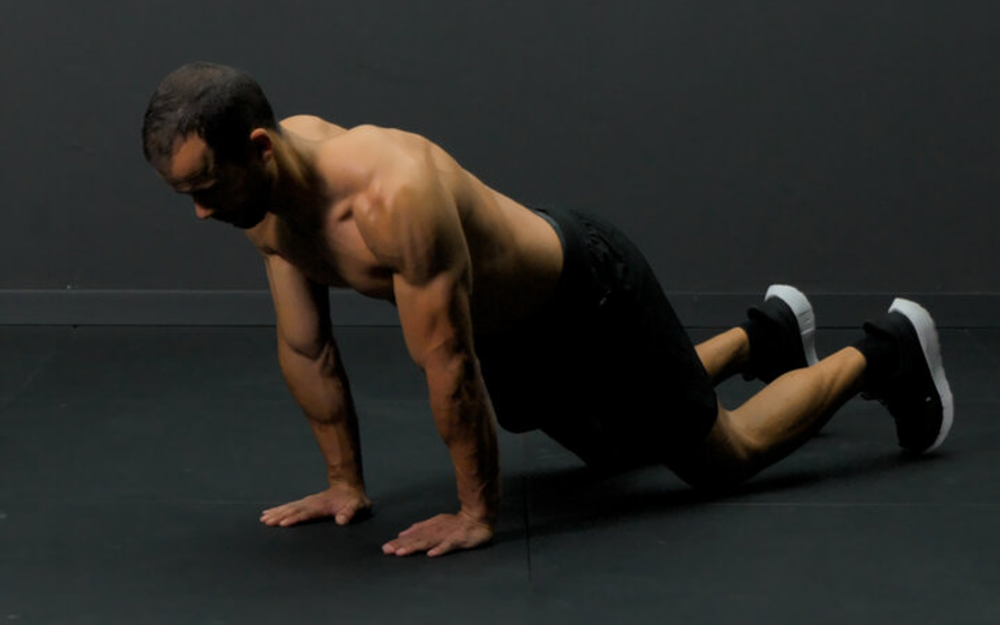
Wrist Exercises for Calisthenics: Mobility and Warm-Up Without Equipment
Discover the best wrist mobility and warm-up exercises for calisthenics. Rotations, progressions, and tips to protect your wrists during handstands and push-ups.
Here’s how to estimate the calories you need for calisthenics based on your body weight, goals, and activity level. Read the full guide.

A lot of people train calisthenics consistently, improve their technique, and increase their training volume, but still don’t see the results they expect. In many cases, the problem is not the training itself. It’s nutrition, and more specifically, not knowing how many calories they actually need.
Physical progress, whether that means building muscle, losing fat, or improving performance, depends heavily on energy balance. In other words, the relationship between the calories you eat and the calories you burn throughout the day. Without that balance, progress is hard, no matter how well you train.
Calorie needs are not the same for everyone. Factors like body weight, sex, activity level, and physique goals directly affect how many calories you should eat. So if you’re asking how many calories you need, or how many calories you should eat if you train calisthenics, the answer is always the same: it depends on your context.

A calorie is a unit of energy. In nutrition, it’s used to measure both the energy food provides and the energy your body needs to function and move.
When you train calisthenics, your body needs energy to perform, recover, and adapt. That energy comes directly from the calories you eat. If you don’t eat enough, your performance can drop. If you eat too much, you may gain body fat.
This is where energy balance comes in:
Each of these states serves a different purpose. For example, a surplus is necessary for building muscle, while a deficit is key for losing fat.
Understanding this is essential when we talk about calories for athletes, because it directly affects the outcome of your training.
To understand how many calories you need, it helps to know two concepts:
Your TDEE is what really determines how many calories you should eat.
It varies based on:
That’s why the answer to how many calories you should eat is never fixed. It has to be personalized.

Calculating your calories is not complicated if you follow these steps:
You can use formulas like Mifflin-St Jeor. As a general reference:
For a person who weighs 70 kg and trains calisthenics 4 days per week:
From there, you adjust based on your goal.

To build muscle, you need to be in a calorie surplus, which means eating more calories than you burn.
The general recommendation is to increase intake by:
That allows you to gain muscle progressively without adding too much fat.
If you’re wondering how many calories you need to build muscle, the key is not to overdo it. A surplus that’s too high does not speed up the process. It just increases fat gain.
It’s also important to:
If you want to go deeper, you can combine this with a muscle-building diet and also review how much protein you need if you train calisthenics.
To lose fat, you need a calorie deficit, which means eating fewer calories than you burn.

The usual recommendation is to reduce intake by:
That allows you to lose fat in a sustainable way without compromising performance or muscle mass.
A few important points:
In calisthenics, maintaining strength is essential, so a moderate deficit is usually the best strategy.
Example for a person who weighs 75 kg and maintains their weight at 2,500 kcal:
Approximate distribution:
Carbohydrates are especially important in calisthenics because they provide energy for hard training sessions.
This split can be adjusted based on personal preferences and goals, and it is directly related to overall macronutrient balance.

Some of the most common mistakes are:
These mistakes can slow down your progress even when your training is solid.
Calculating your calories is only the first step. What really matters is adjusting them over time.
You may be eating at maintenance without realizing it. In that case:
Your surplus is probably too high. Reduce calories slightly.
You may not actually be in a surplus, or your training stimulus may not be enough.
Calories are one of the most important factors in making progress if you train calisthenics. It doesn’t matter how well you train. If your nutrition does not support your goal, your results will be limited.
Understanding how many calories you need, adjusting them to your goal, and reviewing them over time is key to improving performance, building muscle, or losing fat.
Training hard matters, but doing it with the right nutrition strategy is what makes the difference.
At Calisteniapp, you’ll find training programs designed to support your physical goals.
Personalized quiz
Answer 7 quick questions and we will recommend the program that fits you best.
Learn everything you need to know about calisthenics
Discover the best wrist mobility and warm-up exercises for calisthenics. Rotations, progressions, and tips to protect your wrists during handstands and push-ups.

Find out which supplements are worth taking if you train calisthenics (and which aren’t). Creatine, protein, caffeine, and more, backed by scientific evidence.
What's new in Calisteniapp v26.9.0: community comments, a new weighted calisthenics program with RPE, and improvements to the routine builder.