Calf Exercises in Calisthenics: Complete Equipment-Free Guide
Discover the best calf exercises in calisthenics to train at home without equipment. Standing calf raises, single-leg, elevated, and progressions.
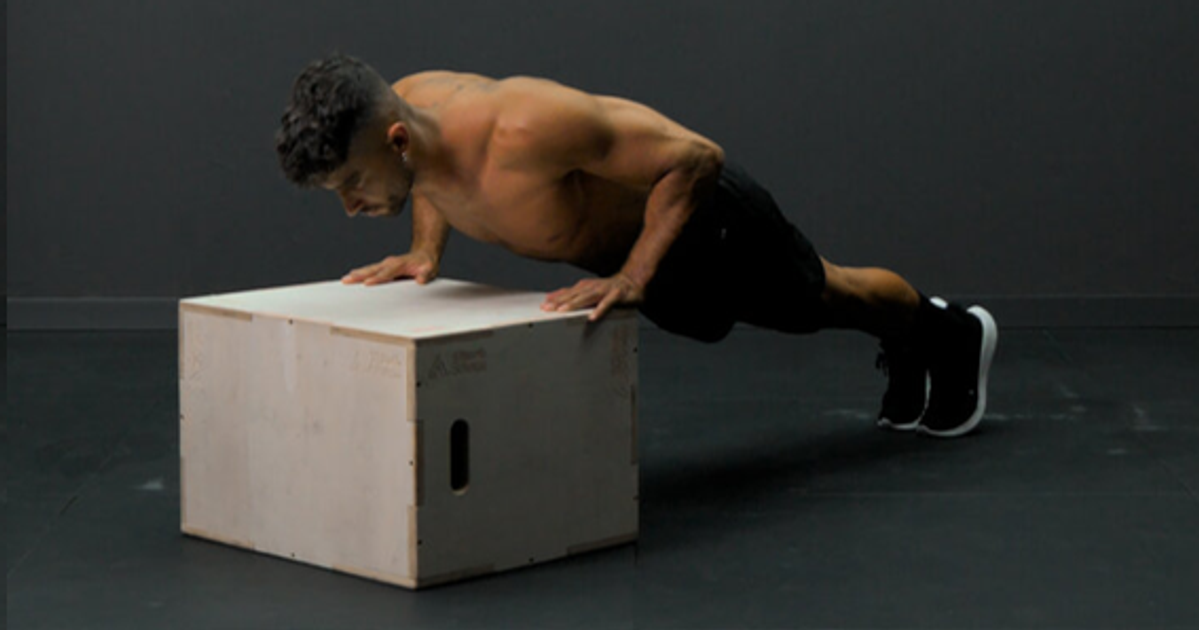
Many people believe that to build a great chest, going to the gym and lifting weights is mandatory. But the reality is quite different. Nowadays, there are multiple ways to work the pectorals without needing machines or complex equipment, and calisthenics is one of the most effective.
Through at-home chest exercises using only your own body weight, you can generate the necessary stimulus to build muscle mass. It’s not about whether you use weights or not, but how you apply principles like mechanical tension and progression. That is why bodyweight chest exercises can be just as effective if they are well-structured.
In this article, I am going to teach you everything you need to know about training your chest with calisthenics: from how the muscle functions to the best exercises, progressions, and a complete routine so you can start applying it right away.
First of all, is it possible to develop your chest without having to go to the gym and without lifting a single weight?
To develop the pectoral, and generally any muscle, the most important factor is mechanical tension (1). This can be generated through an external weight or via your own body weight.
The muscle only cares that there is sufficient mechanical tension to force it to grow; it doesn't care where that tension comes from or what generates it.
That being said, to train the chest properly, we first need to understand the basics of its anatomy and the functions it performs.
The technical name for this muscle is the pectoralis major. It is one of the largest muscles of the torso. Its insertion point is on the humerus; however, its origin is quite broad, shaped similarly to an open fan.
Therefore, the pectoral participates in a vast number of movements: horizontal adduction, internal rotation, flexion, extension, and shoulder adduction.
Since it is involved in so many movements, it is normal that figuring out how to train it correctly can seem complex. But don't worry: my goal with this article is for you to understand this topic intuitively and to learn, with good judgment, which are the best calisthenics chest exercises.
As I mentioned earlier, the pectoralis major is a very large, fan-shaped muscle, as not all of its fibers follow the same direction. Therefore, it is usually divided into three major portions:

The main function of the pectoralis major is horizontal shoulder adduction. This movement consists of bringing the arms from an open position toward the center, keeping them parallel to the ground, as if you wanted to hug someone.
This is its primary function because all portions of the pectoral participate in this movement. Therefore, any exercise that involves horizontal adduction will work the entire chest, though with greater emphasis on the middle fibers.

The exercises that perform this movement are chest flies in all their variations (with dumbbells, on machines, cables, etc.) and chest presses, especially when performed with the elbows flared out away from the body, also in their different variations (barbell, dumbbell, or machine). Later on, we will look at the best chest exercises in calisthenics.
If you wanted to target the upper portion of the chest more, you would have to perform horizontal adduction in a diagonal direction, from bottom to top, following the alignment of the upper fibers of the pectoral.
This happens, for example, in low cable flies or an incline bench press. The more vertical the movement becomes, the greater the activation of the upper pectoral and the lower the activation of the lower pectoral. However, you also have to keep in mind that if the movement becomes completely vertical (known as shoulder flexion), the anterior deltoid will become the primary mover (2). The exercises that perform this type of movement are front raises and chest presses with the elbows tucked close to the body.
If, on the other hand, you are looking to target the lower portion of the chest more, you will need to perform horizontal adduction in a diagonal direction from top to bottom, again following the orientation of the lower fibers. This happens, for example, in high cable flies or a decline bench press. Just like in the previous case, the more vertical the movement, the greater the activation of the lower pectoral and the lower the activation of the upper pectoral. For this reason, the lower portion of the chest also participates in shoulder extension, which is the opposite movement to flexion.
In this case, it is important to keep in mind that the lower pectoral participates in shoulder extension primarily when the arms are elevated, as occurs in a dumbbell pullover (3, 4).

Up to this point, this whole topic is relatively easy to understand. However, the pectoral is a bit more complex than that.
I already explained that in shoulder flexion, the upper pectoral is the portion that contributes most to the movement. But this only applies when the arm is in front of the body. As the arms descend, the activation of the middle portion of the chest increases.
Furthermore, if you bring your arms behind your body (hyperextension), the contribution of the lower pectoral will increase, as occurs during dips.

This means that the lower pectoral participates both in shoulder extension at one extreme of the movement and in shoulder flexion at the other extreme.
But it doesn't end there: there is still another movement, shoulder adduction, which consists of bringing the arms from top to bottom laterally. In this case, the middle and lower pectorals are the main muscles involved.

This means that the pectoral also participates in vertical pull exercises, either through shoulder extension or shoulder adduction (5-7). Therefore, it is incorrect to state that the chest only participates in push exercises. By the same token, it is also incorrect to say that the biceps are only present in pull exercises. If you want to delve deeper into this topic, I recommend the following article: Biceps Exercises in Calisthenics: A Complete Guide Without Weights.
Having understood how to train the chest, now we are going to look at how to apply this knowledge to identify the best calisthenics exercises.

You already know that to work the entire pectoral, you must perform horizontal adduction. To achieve this, the best exercises are push-ups, especially with a wide grip, so that the elbows stay flared out from the body and this movement is accentuated. However, this exercise has two main drawbacks. On one hand, the range of motion is limited, and on the other hand, it can be very easy for some people.

The Bulgarian push-up is basically the previous exercise performed on gymnastic rings. This solves both of the mentioned drawbacks.
Since your hands are no longer fixed to the floor, it is possible to perform horizontal adduction through its full range of motion, from a position of maximum stretch to one of peak contraction. Additionally, because the rings increase instability, this variation significantly increases the intensity of the exercise. Even if it is still too easy for you, you can increase the difficulty by spreading the ring anchor points further apart, as you will not only have to overcome a vertical force but also a horizontal component.

The ring fly is the bodyweight version of chest flies. If it makes it easier to understand, you can think of it as a Bulgarian push-up with extended arms. Therefore, this variation is much more demanding, as it increases the distance between the point of force application and the shoulder. Additionally, this exercise puts a significant load on the biceps. That is why, if you are a beginner or have never done it before, you must exercise great caution when executing it.

This exercise sits at an intermediate point between the previous two. Therefore, it is a great option to progressively increase the difficulty of Bulgarian push-ups without excessively overloading the biceps.

As I explained earlier, to focus the work on the upper pectoral, it is necessary to perform the adduction in a slight upward diagonal direction. In the gym, this is achieved with the incline bench press. In calisthenics, it is achieved by altering the body's inclination—placing your feet on an elevated surface—which is known as decline push-ups.

Another way to work the upper pectoral is to perform standard push-ups but keep your elbows as close to your body as possible throughout the movement. To do this, you need to use a narrower grip. In this way, you will work the upper portion of the pectoral through shoulder flexion. Although this is an important function of the anterior deltoid, this variation is not the best option for developing the shoulders. If you are interested in this topic, I recommend the following article: Push-Ups for Shoulders: Variations, Technique, Mistakes, and Progressions.

This exercise is practically the same as the previous one, but performed on rings. The main difference is that a neutral hand position is used here, making it easier to keep the elbows close to the body.

To work the lower pectoral, you need to do the opposite of the previous exercises: perform the adduction in a slight downward diagonal direction.
The best way to achieve this movement in calisthenics is through dips. However, not just any execution will do: it is recommended to use a slightly wider grip and keep your torso leaning forward.
If you want to learn everything about this exercise, I recommend the following article: Parallel Bar Dips: Complete Guide, Technique, and More.

Bulgarian dips work the chest through shoulder adduction. Therefore, unlike the previous case, here the body must be kept almost vertical.

This exercise consists of moving the body vertically with your arms resting on the parallel bars, as if you were "flapping your wings."

As I explained earlier, the lower portion of the pectoral participates in shoulder extension when the arms are overhead, as occurs in the dumbbell pullover. The calisthenics exercise that most closely resembles this movement is the ab wheel rollout. Although it is normally used to work the abs, it also involves a great deal of shoulder extension, especially when the arms are overhead, which is precisely where the lower pectoral has better leverage. This exercise can also be performed with rings; in that case, it is known as a ring rollout.
Below, I am going to show you a highly effective routine for a complete chest workout in calisthenics:
The first exercise is Bulgarian push-ups. Personally, I consider it the best chest exercise in calisthenics, as it allows you to work all portions of the pectoral throughout the entire range of motion, from a position of maximum stretch to one of peak contraction. Furthermore, it offers room for progression even for intermediate and advanced levels.
The second exercise is dips. On one hand, it is one of the best exercises for the lower portion of the chest, especially if performed with the aforementioned adjustments. On the other hand, it is a foundational calisthenics movement that will help you gain upper body strength and progress toward other goals, such as competing in streetlifting or learning skills like the muscle-up.
The third exercise is decline push-ups, focusing on the upper pectoral. If you have the opportunity, I recommend performing them on parallel bars to increase the range of motion.
Keep in mind that this is a generic example routine; you must adapt it to your own context. For instance, if you want to emphasize a specific portion of the chest, you can modify the order or the volume of the exercises. Likewise, if you are at an advanced level and these exercises are easy for you, you can opt for more demanding variations or add weight to increase the intensity.
If you still find it difficult to perform these exercises, don't worry. Below, I show you some progressions so you can work your chest regardless of your current level.

The first option is to incline your body by placing your hands on an elevated surface. The greater the incline, the easier the exercise will be.

The second option is to perform the push-ups with your knees resting on the floor.

The third option consists of using a resistance band for assistance. You can place it around your hips or chest to make the movement easier. Remember that the level of assistance will depend on both the thickness of the band and the height of the anchor point.
If, on the other hand, dips are the exercise you find difficult or you can't even do a single repetition yet, but you want to take advantage of this movement to work your lower pectoral, I recommend the following article: How to Do Your First Parallel Bar Dip.
Many people focus solely on the push, but neglect the eccentric phase of the movement. The pectoral responds very well to working in stretched positions, so dropping down too quickly or shortening the range of motion cuts out a large part of the stimulus. Controlling the descent and allowing the muscle to stretch properly can make a massive difference in your development.
Another frequent mistake is staying stuck with the same exercise variations without increasing the demand. The body adapts quickly to the stimulus, and if there is no progressive overload (more reps, greater range of motion, harder variations, or added weight), growth will stall. In calisthenics, this is especially important, as simply "doing more reps" without a clear progression strategy isn't enough.
Another common mistake is training the chest with an inappropriate volume, either too much or too little. Doing too few sets might not generate enough stimulus to progress, but doing too many can impair recovery and decrease performance in subsequent sessions. Finding a sweet spot, tailored to your level and training frequency, is key to making consistent progress.
As you have seen throughout this article, going to the gym is not necessary to build a great chest. Calisthenics, when properly applied, allows you to generate enough mechanical tension to stimulate muscle growth and improve strength. Understanding how the pectoral works, choosing the right exercises, and, above all, applying proper progression are the keys to getting real results. It’s not about the equipment you use, but how you train and how you evolve over time.
If you want to put all of this into practice in a structured way, you can do so with Calisteniapp. There, you will find routines, progressions, and programs adapted to your level so you know exactly what to do in every workout and can make steady progress without over complicating things.
References
By Álex Belt
Quiz personalizado
Responda 7 perguntas rápidas e vamos recomendar o programa que melhor se adapta a você.
Junte-se ao nosso boletim informativo
Aprenda tudo o que precisa saber sobre calistenia
Discover the best calf exercises in calisthenics to train at home without equipment. Standing calf raises, single-leg, elevated, and progressions.
Discover what’s new in Calisteniapp versions 26.5 to 26.7: customised warm-ups, a load index, personal records, and photos in your logs.
Discover how to lose fat without losing muscle through calisthenics training. Nutrition strategies, moderate caloric deficit, and training for real body recomposition.