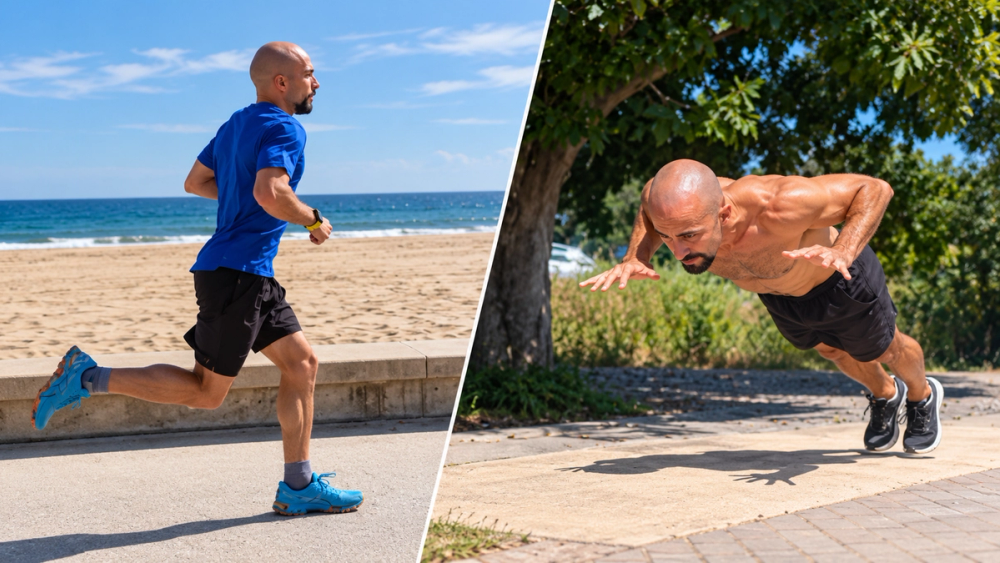
How to Train Calisthenics to Improve Your Running Performance
Discover how calisthenics can improve your running performance: which exercises to focus on, how to train for strength, and why it can help you run better.
Discover the best calf exercises in calisthenics to train at home without equipment. Standing calf raises, single-leg, elevated, and progressions.
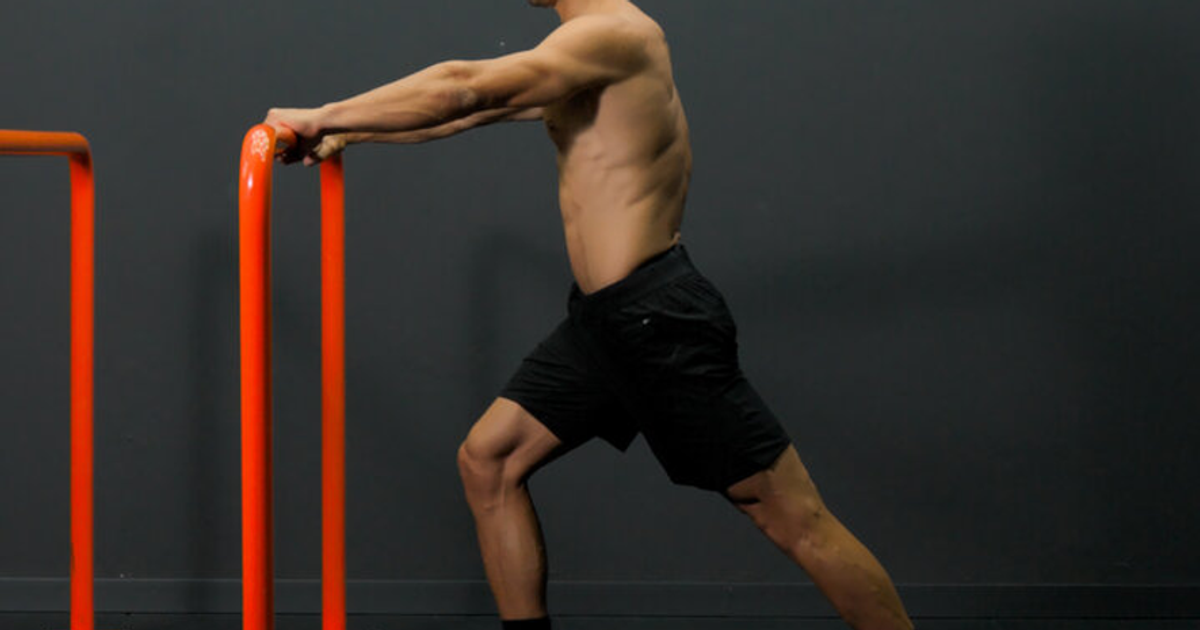
Calves are a muscle group many people tend to neglect when training at home, mainly because they don't have a specific machine to work them. However, you don't need a calf machine to get a good stimulus. With your own body weight, you can train them effectively.
In this article, we'll cover the main calf exercises in calisthenics, from two-leg calf raises to elevated and single-leg variations. We'll also look at why many people struggle to develop their calves, the most common mistakes when training them, and finally, an equipment-free calf routine to achieve a good stimulus.
The calves are the largest and most superficial muscle in the lower leg. The technical name for the calf muscle is gastrocnemius, which is made up of two heads: a medial head and a lateral head. These two heads of the gastrocnemius, along with a third muscle known as the soleus, make up the triceps surae ("three heads" + "relating to the calf").

The function of both the gastrocnemius and the soleus is plantar flexion of the foot, the movement we make when standing on our toes or when pointing our feet in certain calisthenics exercises.
A key factor to keep in mind for properly training these muscles is that the calves cross the knee joint, and consequently, the gastrocnemius will be in a more favorable position to produce force when performing plantar flexion with the knees extended.

Let's start with the most basic exercise: calf raises or heel raises. This consists of standing up and lifting your heels, resting on the balls of your feet.
In this exercise, keep your knees fully extended at all times. This way, we ensure a good stretch of the gastrocnemius and avoid assisting the movement with the quadriceps to rise.
Note: it's one thing to assist yourself with the quadriceps by flexing and extending the knees, and another to isometrically contract the quadriceps to keep the knees extended throughout. The former should be avoided; the latter is recommended.
If you have trouble balancing, you can lean against a wall or hold onto a bar. Just make sure you don't use your hand to help you rise.

The next step is to perform the previous exercise on an elevated platform in order to increase the range of motion.
At first, you can start with small elevations, for example, doing the exercise on a book or thin plates. However, it's best to perform it on a platform high enough to allow you to fully stretch your calves, such as a high step or a step-up platform.
This part is important because current evidence suggests that training the calves in positions where the muscle is more lengthened may favor hypertrophy. That's why it's advisable to take advantage of a wide range of motion and pay special attention to controlling the lower part of the movement (1).

One way to increase the difficulty of this exercise is to perform it unilaterally, shifting your entire body weight onto one leg.
For this exercise, follow the same guidelines given for the previous exercises.

In this variation, since the knees are fully bent, the gastrocnemius is in a shortened position and therefore has a reduced capacity to contribute to plantar flexion, giving the soleus a greater role.
This muscle may seem unimportant, but having a well-developed soleus will make your calves stand out a bit more; it's also quite visible on the sides of the calves, making the leg look larger and more defined.
To do this, get into a deep squat position and perform heel raises from there. Follow the same guidelines as above.
Note: I want to emphasize that this claim is based on physiological mechanisms. However, some studies suggest that this type of exercise for the soleus may be unnecessary. Still, the evidence isn't strong enough yet to make firm claims.
If you want to maximize the development of these muscles, or if you believe you don't have great genetics for it, it may be worth adding this exercise. Otherwise, the previous exercises may be more than enough.
It has become common knowledge in the fitness world that calves are a fairly difficult muscle group to develop compared to others. However, this is a somewhat more complex topic. So, to better understand this issue and avoid falling into myths, let's break it down into two parts.
On one hand, the calves are among the most active muscles in daily life for most people, since they have to support the entire weight of our body every time we stand, walk, and climb stairs. Additionally, the soleus has a high proportion of fatigue-resistant fibers.
On top of this, it's important to keep in mind that the appearance of the calves largely depends on the length of the Achilles tendon. The longer this tendon is, the shorter the calf muscle will be, making the calves look thinner.
The length and proportions of these structures depend largely on our genetics, so we can't easily change how our muscles and tendons are distributed.
Taking these two factors into account, a large part of the population will clearly have difficulty developing this muscle.
However, we still need to look at the other side of the coin.
Unfortunately, the bad reputation calves have gotten is largely due to people not training them correctly.
If we look at the scientific literature, we can see that these muscles can indeed grow considerably when trained properly (1).
As explained earlier, the calves have very high fatigue resistance; therefore, they need a sufficiently high stimulus, using appropriate difficulty, strict technique, and training close to muscle failure.
Below, I'll mention the most common mistakes people make when training this muscle.
A very common mistake is slightly bending the knees. While this wouldn't be a major issue as long as the knees stay completely fixed, that's almost never the case. People bend their knees on the way down and extend them on the way up, using the quadriceps to help complete the movement.
Additionally, if we're aiming for the most optimal stimulus, it's best to stretch the calves as much as possible by fully extending the knee.
This mistake is related to the previous one, since some people don't go all the way down in the exercise, either due to discomfort from the stretch or fear of injury.
But, as I've mentioned several times in this article, for maximum stimulus, you should prioritize a good stretch, which means tolerating a certain degree of discomfort.
Also, if you perform the exercise in a controlled manner and with an appropriate load, you'll be able to progress more safely, while also strengthening the muscle and tendon, increasing their capacity to tolerate loads.
As I just explained, make sure to perform the exercise as controlled as possible. You can even add a brief pause at the bottom of the movement.
Avoid doing the exercise too quickly or bouncing on each repetition. The goal is to keep the movement under control and avoid using momentum or bouncing off the stretch-shortening cycle.
In addition to the above, try to get as close as possible to muscle failure on each set. Avoid the mistake of stopping as soon as you feel a burning sensation in the muscle. That sensation doesn't necessarily mean you're close to muscle failure. Instead of using the burn as a reference, pay attention to how hard the last repetitions feel and how close you actually are to failure.

As explained in the pistol squat article, calf flexibility is very important for good ankle mobility, especially having enough dorsiflexion, in order to comfortably perform a deep squat with good technique.
If you want to learn more about this topic, I recommend reading the following blog article: Pistol Squat: Technique, Progressions, and How to Achieve It From Scratch
If your goal is to optimize the work on this muscle group, rather than a specific routine, you should actually perform the following exercises at the beginning of other routines you're doing.
You can perform this selection of exercises two or more times per week, depending on the rest of your training and your recovery capacity.
You can also do these exercises at the beginning of the routine recommended in the following article: Leg Exercises in Calisthenics: Complete Equipment-Free Guide
If you avoid the mistakes mentioned above and start your routines by training these muscles, you'll be applying a very high stimulus to this muscle group.
Calves can indeed be trained effectively without machines or specific equipment, as long as we use sufficiently challenging exercises, a wide range of motion, and get close to muscle failure. We can combine different variations, such as standing, elevated, and single-leg calf raises, to progressively increase difficulty and achieve a good stimulus for this muscle group.
If you want to track your workouts and find more calisthenics exercises and routines, you can do so with Calisteniapp, where you'll find different options to keep progressing.
Research and references compiled by House of Hypertrophy on calf training: https://houseofhypertrophy.com/calf-references/
Personalized quiz
Answer 7 quick questions and we will recommend the program that fits you best.
Learn everything you need to know about calisthenics
Discover how calisthenics can improve your running performance: which exercises to focus on, how to train for strength, and why it can help you run better.
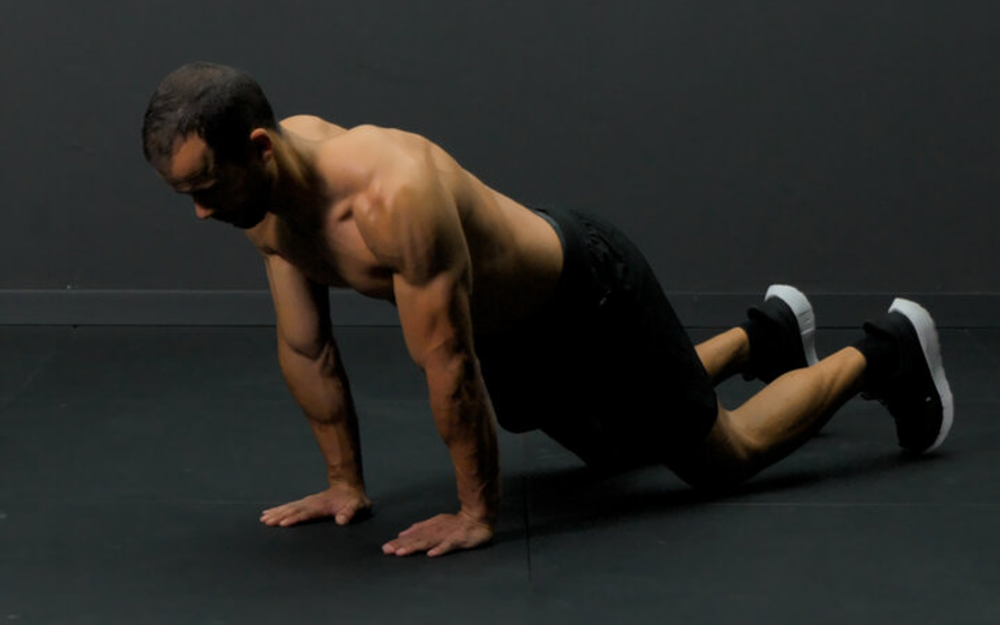
Discover the best wrist mobility and warm-up exercises for calisthenics. Rotations, progressions, and tips to protect your wrists during handstands and push-ups.
Find out which supplements are worth taking if you train calisthenics (and which aren’t). Creatine, protein, caffeine, and more, backed by scientific evidence.