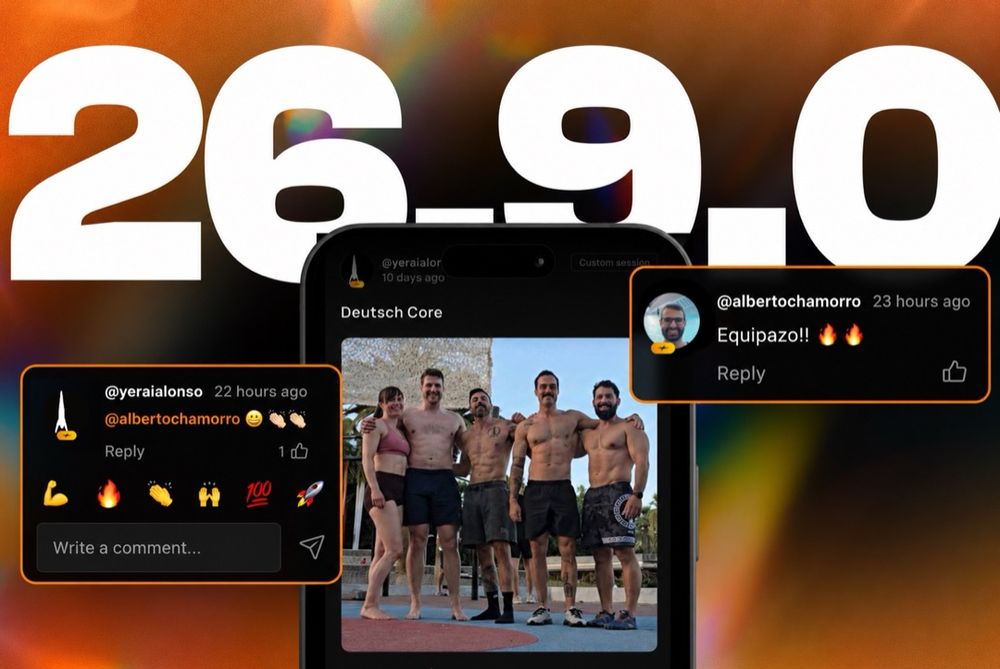
Latest Calisteniapp Update - v26.9.0
What's new in Calisteniapp v26.9.0: community comments, a new weighted calisthenics program with RPE, and improvements to the routine builder.
Find out which supplements are worth taking if you train calisthenics (and which aren’t). Creatine, protein, caffeine, and more, backed by scientific evidence.
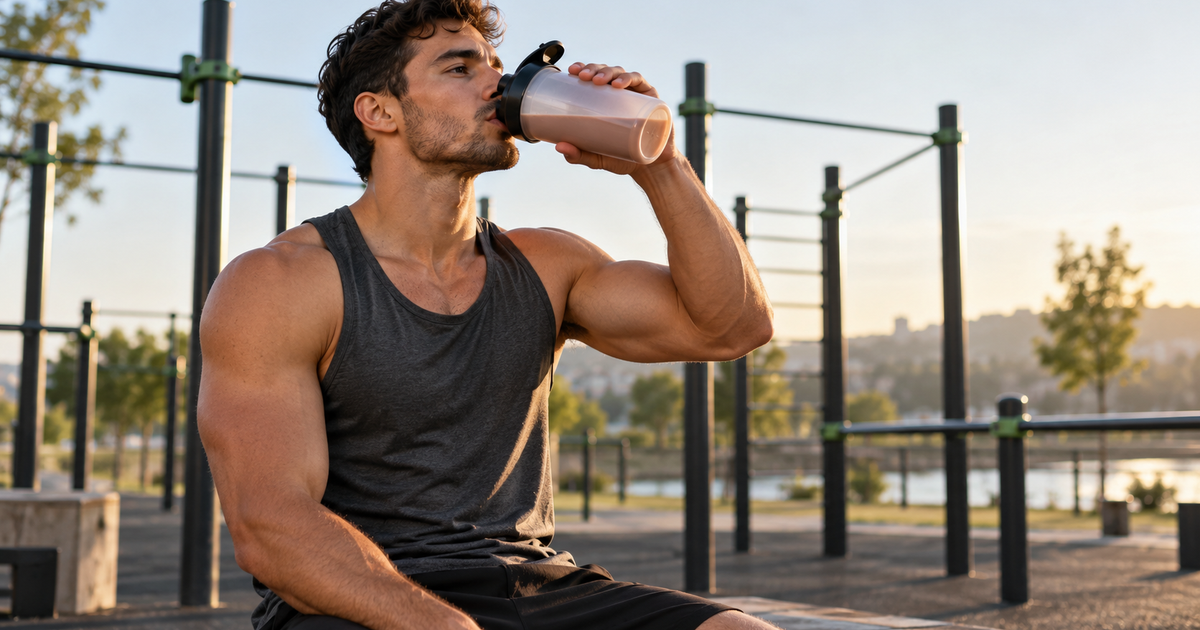
If you practice calisthenics, it’s easy to come across a wide range of sports supplements that promise to help you build muscle, get stronger, or improve your performance. However, your results depend mainly on how you train, how you eat, and how you recover—not on how many supplements you take.
That doesn’t mean all calisthenics supplements are useless. Some are backed by solid scientific evidence and can provide additional support in certain situations. The key is knowing which supplements to take, which ones may make sense for your needs, and which ones you can do without.
No. You don’t need to take supplements to make progress in calisthenics.
Strength, muscle mass, and performance depend mainly on training, a diet that meets your energy and nutritional needs, and adequate recovery. Supplements can provide additional support, but their effect is secondary to these factors.

That’s why your priorities should be clear: rest and recovery first, followed by proper nutrition, a well-designed training program, and supplementation last.
Before looking for supplements to build muscle, first make sure you’re getting enough calories and meeting your total daily protein needs. If these aspects aren’t in order, no supplement will make up for it.
Protein and strength training work together to support muscle protein synthesis, and a general guideline for most people who train is a daily intake of approximately 1.4–2.0 g of protein per kg of body weight.
Supplements should be seen as an addition to proper nutrition and training, never as the foundation. If your goal is to build muscle, you can find out more in our dedicated guide to diet for building muscle and also check how much protein you need for calisthenics: How Much Protein Do I Need for Calisthenics?
Of the many workout supplements available, only a few have sufficiently strong scientific backing. Some of the most useful include creatine, protein powder when needed, and caffeine.
Creatine is one of the most widely studied sports supplements. It can support performance during high-intensity efforts and help improve adaptations to strength training.3
The most well-supported form is creatine monohydrate, and once muscle stores have been saturated, a typical intake of 3–5 g per day is enough to maintain them.
In calisthenics, it may be particularly useful when your training includes strength exercises, weighted movements, or repeated high-intensity efforts.
To avoid repeating all the information about how it works, its dosage, and how to use it, you can read the dedicated article: Using Creatine for Calisthenics
What is protein powder for? Mainly, it makes it easier to meet your daily protein intake when you can’t comfortably get enough from food.
It isn’t essential, nor does it have any special effect simply because it comes in supplement form. If you already get enough protein from your diet, adding a shake won’t, by itself, lead to greater muscle gains.
However, it can be convenient when you need to increase your protein intake and find it difficult to do so with food alone because of your schedule, appetite, or convenience. Protein supplements are simply a practical way to reach an adequate intake when needed.
Taking caffeine before training can improve performance and reduce perceived exertion. Benefits have been observed across different physical abilities, including muscular endurance, strength, movement speed, and certain high-intensity efforts.
The doses with the most consistent evidence are around 3–6 mg/kg of body weight, although lower doses can also have an effect, and responses vary from person to person. Studies most commonly use caffeine approximately 60 minutes before exercise.
This doesn’t mean you should start with high doses right away. It’s best to assess your individual tolerance and consider possible side effects, especially sleep disruption, nervousness, or anxiety.
Not all supplements can simply be classified as useful or useless. Some may make sense in specific situations, but there’s no reason to recommend them across the board to everyone who practices calisthenics.
BCAAs. If you already get enough total protein and it provides all the essential amino acids, BCAA supplementation generally adds little value.
Multivitamins. They may be useful when specific nutritional deficiencies exist, but shouldn’t be used routinely to make up for a diet that lacks variety.
Omega-3. Supplementation may make sense when your diet provides little oily fish or other significant sources of EPA and DHA. So, whether you need it will depend mainly on your diet.
Among the products marketed as essential sports supplements, there are also many that offer little benefit to most people.
Fat burners are a good example. No supplement can replace the energy deficit needed to lose fat, and many products marketed for this purpose deliver results that fall far short of what their advertising promises.
Something similar applies to many nitric oxide supplements or products designed solely to increase the “pump.” A product creating a greater feeling of muscle fullness does not automatically mean it will lead to a meaningful improvement in strength or muscle growth.
Glutamine also generally offers no significant benefit for increasing strength or muscle mass in the general population when dietary intake already adequately meets nutritional needs.
It is also worth being wary of “all-in-one” products that combine numerous ingredients without clearly stating the amount of each one. Including many components does not automatically make a supplement more effective.
Just because an ingredient has scientific evidence behind it does not mean that every product containing it is a good choice.
First, check the actual dose it provides and compare it with the amounts used in studies. A supplement may highlight an ingredient on its label yet contain too little to expect the effect observed in research.
It is also worth being wary of so-called proprietary blends that do not list the exact amounts of each ingredient. Without that information, it is difficult to know whether the product provides truly effective doses.
If you compete, it becomes even more important to choose supplements with quality controls and certifications that reduce the risk of contamination with banned substances. When evaluating a sports supplement, its safety, effectiveness, and whether it is permitted in competition should all be considered together.
No, supplements are not essential for making progress in calisthenics. The foundation for improving performance, gaining strength, or building muscle mass is still meeting your nutritional needs and maintaining a body weight that aligns with your goal, along with following a well-planned training program.
Supplementation may provide a marginal benefit, but it cannot make up for an inadequate diet, poorly designed training, or insufficient recovery. Even supplements with the strongest scientific evidence should be viewed as a complement, not a necessity.
Therefore, your priorities should be, in order: sleep and rest, nutrition, training, and finally, supplementation.
You don't need a long list of supplements to make progress in calisthenics. Some of the best-supported sports supplements include creatine, protein powder when it helps you meet your daily needs, and caffeine.
Other supplements may be useful in specific situations, while many are completely optional or unnecessary for most people.
A well-balanced diet and a well-designed training program will remain the foundation. Supplements can complement that work, but they cannot replace it.
If you want to improve your performance and make progress in your workouts, Calisteniapp offers programs tailored to different levels and goals.
Personalized quiz
Answer 7 quick questions and we will recommend the program that fits you best.
Learn everything you need to know about calisthenics
What's new in Calisteniapp v26.9.0: community comments, a new weighted calisthenics program with RPE, and improvements to the routine builder.
Want to train your lower trapezius? Improve your posture and technique in pull-ups and handstands. No equipment, with progressions
Find out how much water you need if you train calisthenics, when to drink it, and how hydration affects your strength and performance. A complete guide.