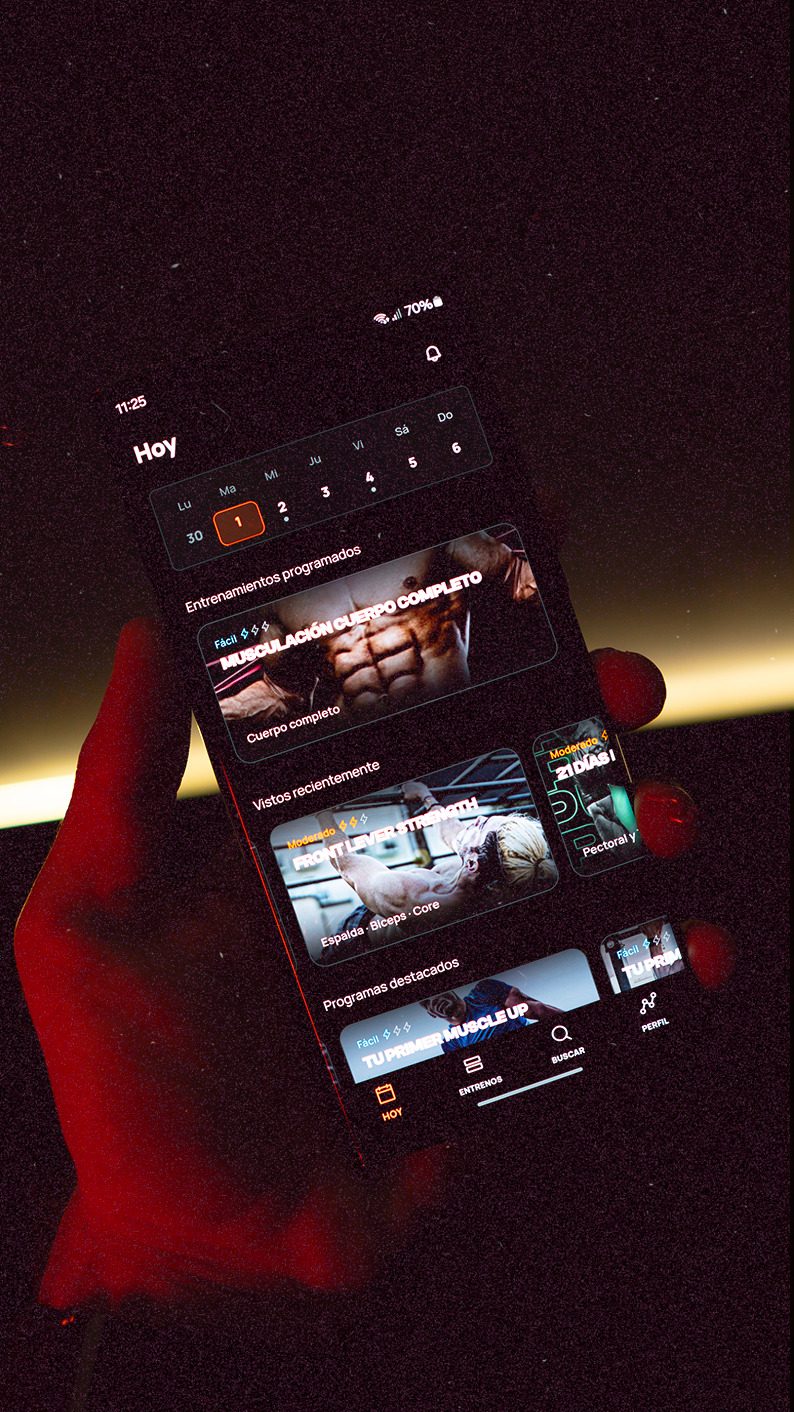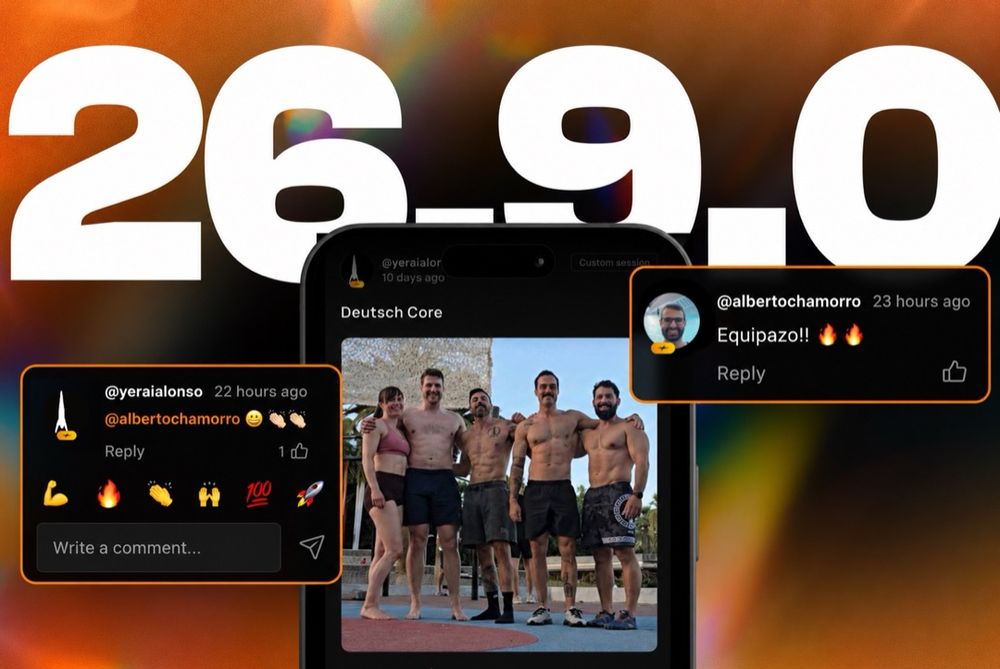
Latest Calisteniapp Update - v26.9.0
What's new in Calisteniapp v26.9.0: community comments, a new weighted calisthenics program with RPE, and improvements to the routine builder.
Discover what equipment a calisthenics park should have: bars, structures, stations, and key elements to train correctly.
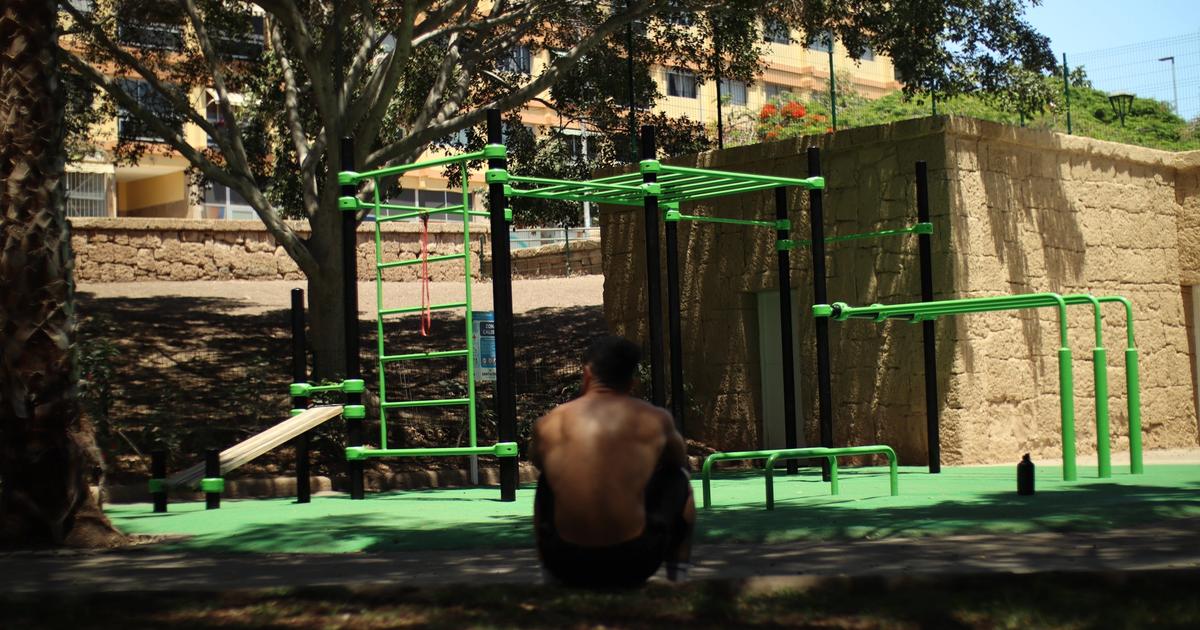
With the rise of calisthenics worldwide over the last two decades, many parks have been built around the world, so major cities increasingly have more of this type of equipment.
But this has also raised a question: What equipment should these parks have to fulfill their purpose correctly? How can someone make sure their park is well built and has everything needed to practice this sport satisfactorily, without wasting money?
In this article we'll cover all the details on this topic, so no doubt remains.

We consider a calisthenics park to be a space with bar structures for exercising, mainly using bodyweight. Its most characteristic elements, though not the only ones, are pull-up bars and parallel bars for dips.
Traditionally, these parks are outdoors and free to access, but they can also be found in indoor settings, private buildings, or gyms that charge a fee for their use. Most commonly, the bars are made of metal and the ground is rubber, artificial turf, sand, or another material that cushions falls, even if only slightly.
A very common situation that continually arises worldwide with calisthenics parks is that public entities want to build a calisthenics park but don't properly inform themselves about what this park should be like: what specific characteristics it should have and what equipment is correct, what the measurements are, the materials, etc.

Many times they hire companies that also don't know this information, so the parks they build are inadequate, poorly made, have shortcomings, have incorrect measurements, and don't allow optimal use for the people who want to train in them.
If the park doesn't have the right characteristics, it can cause injuries when used or when performing exercises on facilities that aren't appropriate, and it may not allow the execution of certain specific exercises that are important.
It can also happen that the bars deteriorate quickly, move, come unscrewed, or don't adapt well to extreme temperatures, preventing training under those conditions.

One of the most frustrating mistakes is when the park includes an element originally designed for one function but installed in such a way that function can't be performed. For example, we find parallel bars that, although intended for dips, are placed at an incredibly high height. Other cases include elements designed for wheelchair users that don't actually allow them to use them, or pull-up bars that are too low or too high.
In these cases, the company responsible for installing the park has simply copied and pasted a design from a professional park, but failed on the height, the thickness of the bars, or another important element for its correct use.
Why do public entities bear a large responsibility in this regard? When a city council installs a calisthenics park without getting proper advice and without hiring a professional company that can create a correct park, it is committing negligence that can lead to the following outcomes:

Let's now build a step-by-step structure for how a park that is truly useful, fulfills the function it was designed for, and doesn't result in wasted money should be planned and installed:
The first thing would be to define roughly how much money you want to spend on this park and how much physical space is available for its installation.
This would be the first step so that, when contacting the company that will build it, they can generate a budget and design for it.
This is the step where the most important mistake is usually made.
Fortunately, there are now many companies worldwide that specialize in building calisthenics parks. However, city councils or public entities usually choose cheaper companies that aren't calisthenics specialists, but instead focus on installing playgrounds, foundries, and other structures. Therefore, they are much more prone to making design and installation errors.
This selection process is often carried out through a public tender, choosing the company that presents the cheapest budget and meets the requirements set by the city council. The trick for this process to work correctly is for the requirements requested by the city council or public entity to have a very high technical specificity, so that any company focused on playgrounds or foundries can't meet them, and only companies presenting a high-quality project specialized in calisthenics can do so.

Once the company is involved, it will be necessary to go into detail about the elements that will make up the park. Later on, we'll present a list of the main components and examples of what a park should include depending on its size, so that it fulfills the basic functions.
Fortunately, by having the guidance of a company specialized in calisthenics, much of the work is already done, since they know which structures to install for each given size and budget.
The ideal thing at this stage is to consult the design with local athletes who will use the park, to find out if they have any special needs or if they're missing any element that could be added or modified. This way, an agreement is reached between what the city council is willing to pay, what the specialized company proposes, and what the athletes who will use it want.
It's also important to define the type of ground for the park, since it varies depending on whether a firm surface, rubber, artificial turf, gravel, or sand is required. This decision depends on how the athletes will use it, the budget, the location, and the climate conditions, so it deserves careful attention.

At this step you need to be careful, since even when a company specialized in calisthenics is selected, sometimes the actual installation of the park is carried out by an external company or professionals hired by the city council or public entity, who aren't necessarily experts in calisthenics or as diligent as we would like.
Therefore, ideally someone should supervise that the installations are being placed correctly, that the bars are level, and that there are no errors in the installation. It's not the first time I've seen a park where, on the posts meant for bars, they install parallel bars, and on the posts meant for parallel bars, they install pull-up bars. So we end up with extremely tall parallel bars at over 2 m in height and pull-up bars just 1 m off the ground.
In my experience, it's important that both someone from the city council and some of the athletes who are going to use the park keep an eye on it periodically to make sure the installation is being carried out correctly. Because if errors aren't corrected at the time of installation, it can later be very difficult to correct them, or it can take a very long time.

Once the park is installed, it's also advisable to review it periodically for maintenance, since some structures may wear out, move, or need repainting.
It may also happen that, based on how the park is being used, it's worth making some small changes, such as:
All of this should happen based on feedback from park users and in constant contact with the city council or public entity responsible for it.
Let's look at a list of some of the most characteristic elements that can be installed in a calisthenics park.
Obviously, not all of them are included, since the possibilities are practically endless, but I consider these to be the most interesting for building as complete a park as possible.
It's worth noting that most of these elements, although mainly intended for a specific exercise, can be used for countless variations, exercises of all kinds, and adaptations, which is one of the main characteristics of calisthenics: being able to use a simple bar for so many different exercises.

The pull-up bar is usually at a height of between 1.90 m and 2.30 m and consists of two posts and a horizontal bar.
It's usually linked with other bars to form square or triangular structures, so that a single post can hold two bars and place them at different heights, adapting to the characteristics or needs of the users.
The thickness of the bar, like most of the bars we'll see below, has been set at a standard of 35 mm, considered optimal for most exercises.

This bar is designed for use in the freestyle calisthenics discipline, which requires ample space and needs to be clear in front, behind, and to the sides, so that dynamic and static-hold tricks can be performed.
Main requirements:

This pull-up bar allows a person in a wheelchair to lift themselves out of the chair on their own, holding onto the side posts, and perform pull-ups.
Therefore, it must be at a relatively low height; otherwise, the person wouldn't be able to grab onto it.
I've seen parks that have this type of bar placed at over 2.30 m in height, so that after getting up from the chair, the person would have to "climb" up the grips in order to hang, a nonsensical result caused by not understanding what's being installed.


Similar to a pull-up bar but at a height of approximately one meter to one meter thirty, so you can hang underneath it and perform Australian pull-ups.
It can also be used to do high incline push-ups, ideal for beginners.

The classic parallel bars. They should generally be at a height of about 1.50 m, with a spacing of between 55 and 65 cm. Parallel bars are usually thicker than pull-up bars, with a thickness of 50 mm.

This type of parallel bars has an opening and a ramp so that a person in a wheelchair can go inside, get up using the ramp, and perform dips on the parallel bars.
Again, the heights and spacing must be very carefully considered so that they are actually usable by a person in a wheelchair, since real disasters have been seen in this regard.

These parallel bars are usually used to practice handstands, planche, and can also be used to perform push-ups. They usually have the same thickness and spacing as the tall parallel bars.

A consecutive series of pull-up bars that can be used to move from one to the next or to perform pull-ups with a pronated grip, neutral grip, wide grip, etc.
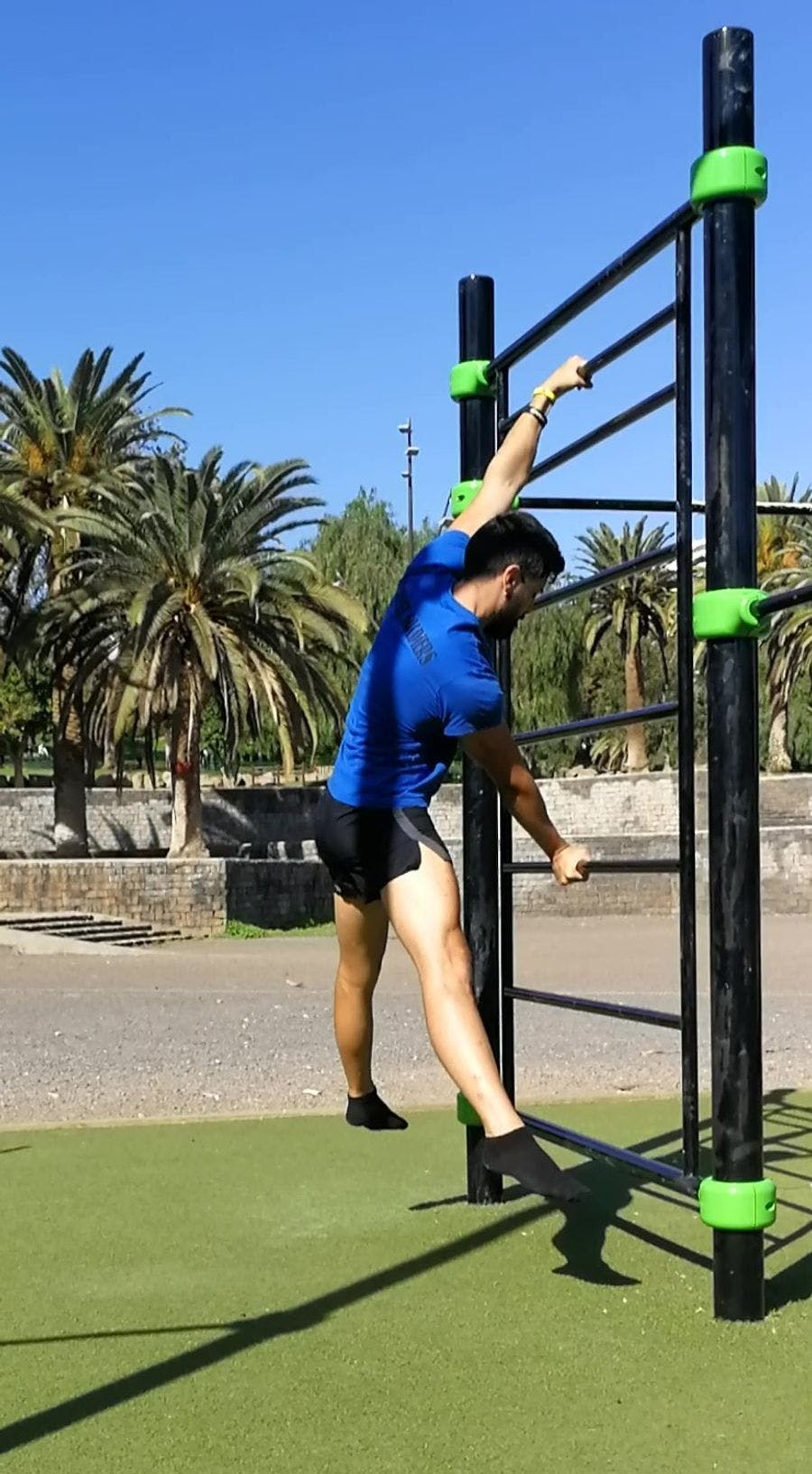
A succession of bars in a vertical line, parallel to the ground, that allows us to perform ab exercises, stretches, flag, dragon flag, etc.

These are usually at three heights: one closer to the ground, one a bit higher (roughly knee height), and another at the height of the Australian pull-up bars (roughly hip height). This way, push-ups can be performed at different difficulty levels.

This element presents a certain amount of complexity, since to be usable it must offer adequate freedom of movement and resemble Olympic rings as closely as possible.
It must also have high anti-vandalism security, since they are very vulnerable to being broken, stolen, or cut by people.

One of the simplest and most useful elements, since it consists solely of a vertical post that can be used for pole dance practice, human flag, and other elements.
It's important for it to have the right thickness, which in the case of pole dance bars is 40–45 mm, and to have the correct ratio between height and buried depth, since otherwise it can be prone to bending or even breaking.

A simple ab bench that is usually made of wood and has a slight incline. It's not one of the most essential elements, since most exercises done on the bench can also be done on the ground.

A bar with a particular shape that allows training with a pronated grip and a neutral grip. It allows training muscle ups by tucking the chest between the two bars and offers some extra possibilities.

A bar that attaches to the post and can be used to practice the flag with a vertical grip. Although, as we saw with the wheelchair-adapted pull-up bar element, it can have a dual use in that case.
Regarding the specific materials of a calisthenics park, it's important to consider the following factors:

Parks must withstand the passage of time, weather conditions, and use that can sometimes be quite intense from the people training there.
Also, if the park is in an area near the sea, it's very important for it to have very good corrosion resistance.
The highest-quality parks are usually made of galvanized steel with an extra layer of anti-corrosion protection. They also usually have bar clamps that are extremely resistant to all kinds of forces so that, over time, they don't move, fall, or change their height.
It's important for the paint on the bars to create a feel that isn't too slippery or too rough, and to withstand high temperatures without heating up excessively, so that during hot seasons and in case of direct sunlight, the bars don't burn to the touch.

If the park has different repeated elements, such as, for example, several pull-up bars, several sets of parallel bars, etc., it would be important for these to be at different heights to accommodate the different heights of users, the different exercises they want to do, and to give them more variety in their training.
It's common to see parks that have many bars but all at the same height, which is a real waste of possibilities.
As we mentioned earlier, the ground is a very important part since it affects both the safety and usability of the park. Usually, the most interesting options are:
For parks that will have intensive use for freestyle training, the best option is a beach-sand-type ground that allows falling very safely. But sometimes, depending on the park's characteristics and location, this isn't possible or can create problems.

Regardless of that, what should be avoided is leaving the park with a firm ground of cement or asphalt, since these rigid materials don't allow for safe falls.

Another point to consider in parks installed outdoors is having some shade.
Awnings, sails, or canopies are usually installed, or the park is placed near trees so that users can take shelter in the shade during the hottest and sunniest hours.
If sails or awnings are installed, it's very important to make sure they can withstand wind, since many parks with these installations have had problems. During strong wind storms, awnings can come loose, posts can break, or fixings can come undone.
Below are some examples of parks of different sizes with the elements that could be minimal and essential for it to be a complete park that satisfies the users who will train in it.


To the previous park we add (keeping the same thicknesses and spacings):
Here we can add whatever we want; below are some example images of large, complete parks:


At Calisteniapp we work with the company Barmania Pro, which we recommend for its excellent quality, durability, and attention to all the details needed for calisthenics parks to be as professional as possible.
Below are some links that may be useful once you have your park set up.
Installing a calisthenics park involves a certain amount of complexity if you want to do it right and make it useful for its purpose; that's why it shouldn't be taken lightly, especially when it's installed by public entities using taxpayer money.
To guarantee a proper result, it's necessary to hire specialized companies and carefully verify that the entire process is carried out correctly.
We hope this information is very helpful to you.
By Yerai Alonso
Personalized quiz
Answer 7 quick questions and we will recommend the program that fits you best.

Yerai Alonso
Cofundador de Calisteniapp, referente en calistenia y el street workout en Español. Con más de una década de experiencia, es creador de uno de los canales de YouTube más influyentes del sector. Autor del libro La calle es tu gimnasio, campeón de Canarias y jurado en competiciones nacionales e internacionales.
Learn everything you need to know about calisthenics
What's new in Calisteniapp v26.9.0: community comments, a new weighted calisthenics program with RPE, and improvements to the routine builder.
Want to train your lower trapezius? Improve your posture and technique in pull-ups and handstands. No equipment, with progressions
Find out how much water you need if you train calisthenics, when to drink it, and how hydration affects your strength and performance. A complete guide.